The Complete Beginner’s Guide to Mechanical Watches
If you’re new to the world of horology, this beginner’s guide to mechanical watches will help you understand exactly what makes them special — and whether you should own one.
In an era dominated by smartphones and smartwatches, mechanical watches remain surprisingly relevant. They are not powered by batteries. They do not rely on software. Instead, they operate through springs, gears, and precise mechanical engineering.
Understanding how they work changes the way you see them.
What Is a Mechanical Watch?
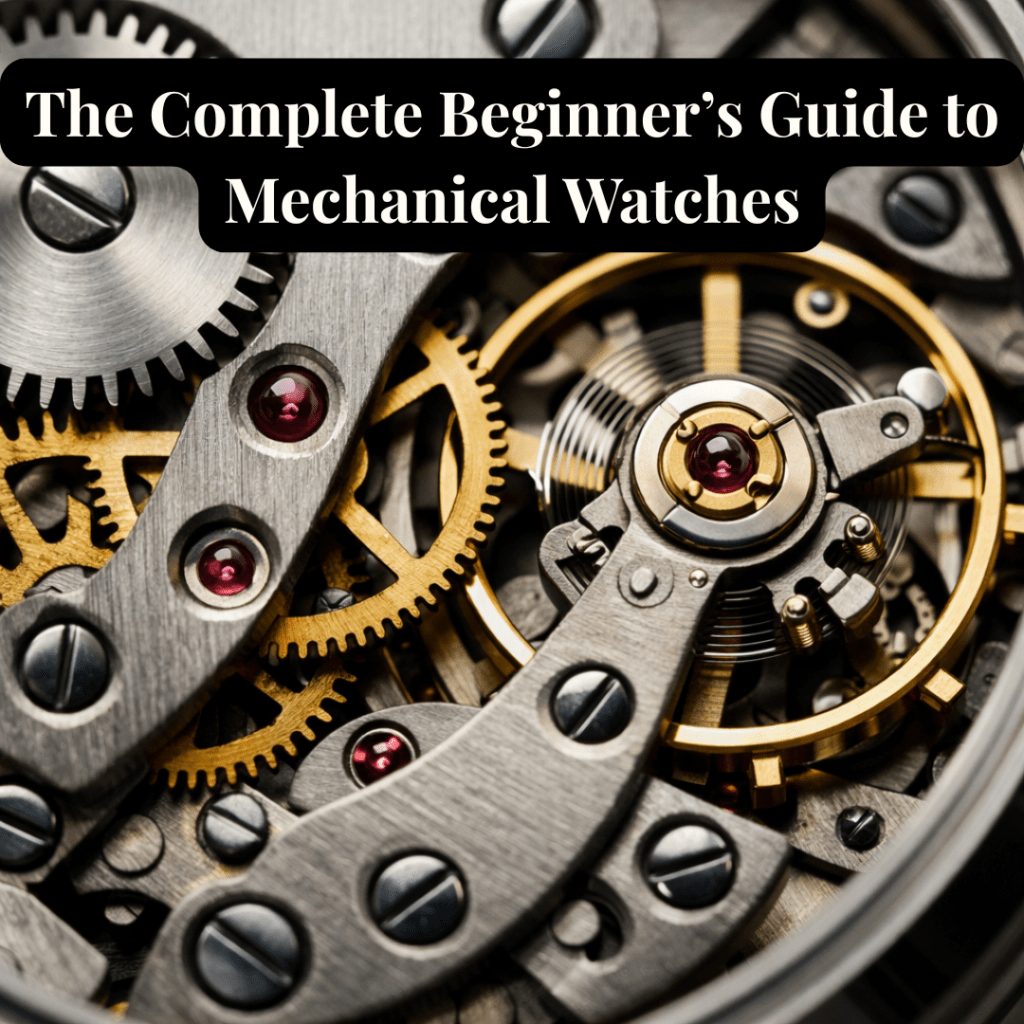
A mechanical watch is powered by a wound mainspring. When tension is stored inside the spring, it gradually releases energy through a system of gears that regulate time.
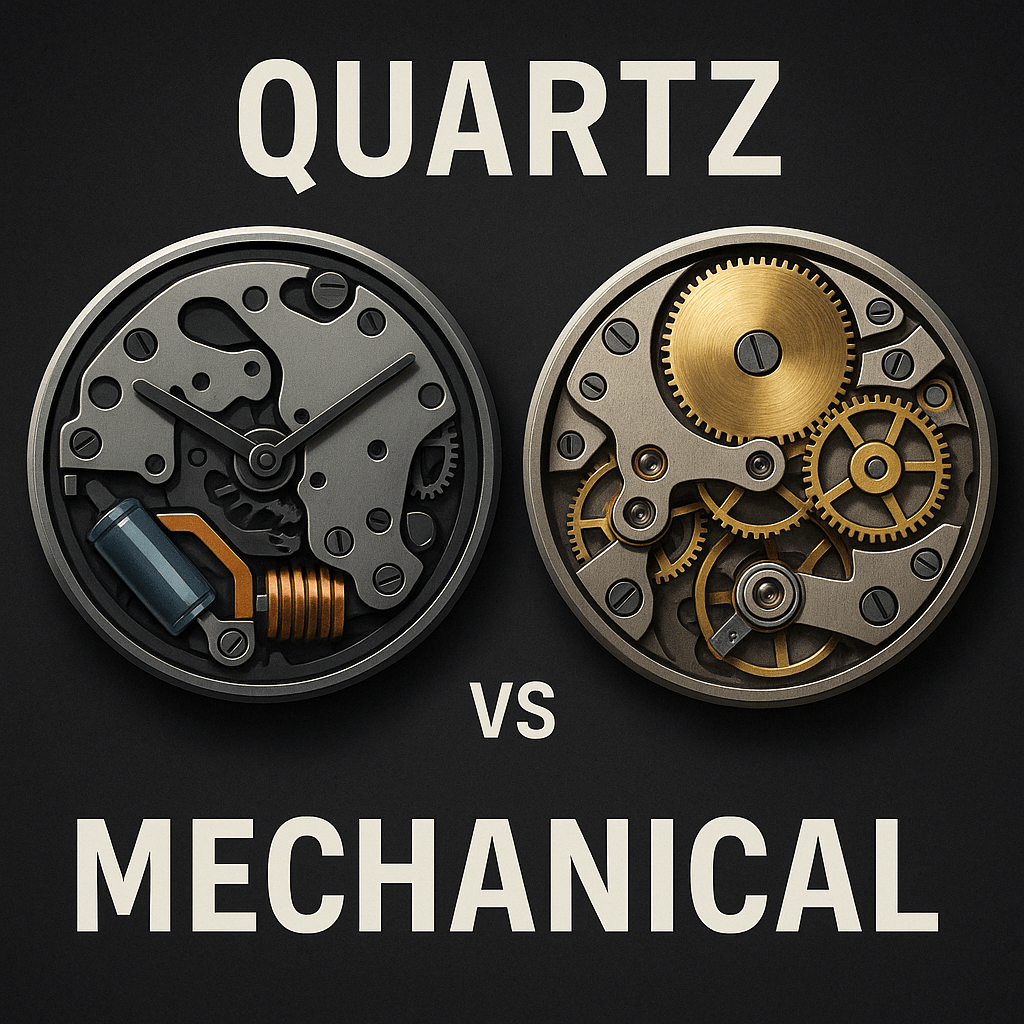
Unlike quartz watches — which use a battery and electronic oscillator — mechanical watches are entirely mechanical.
There are no circuits.
No chips.
No digital components.
Just physics and craftsmanship.
For a full comparison of movement types, see:
👉 Automatic vs Quartz vs Mechanical Watches
How Mechanical Watches Work (Step by Step)
Understanding how mechanical watches work doesn’t require engineering knowledge. Here’s the simplified version:
- The mainspring stores energy when wound.
- That energy moves through the gear train.
- The escapement controls how fast energy is released.
- The balance wheel oscillates back and forth.
- The hands move in controlled intervals.
The balance wheel typically beats 6–8 times per second, regulating time with impressive precision considering there is no electricity involved.
It’s one of the most elegant mechanical systems ever miniaturized.
Manual vs Automatic: What’s the Difference?
Many beginners get confused here.
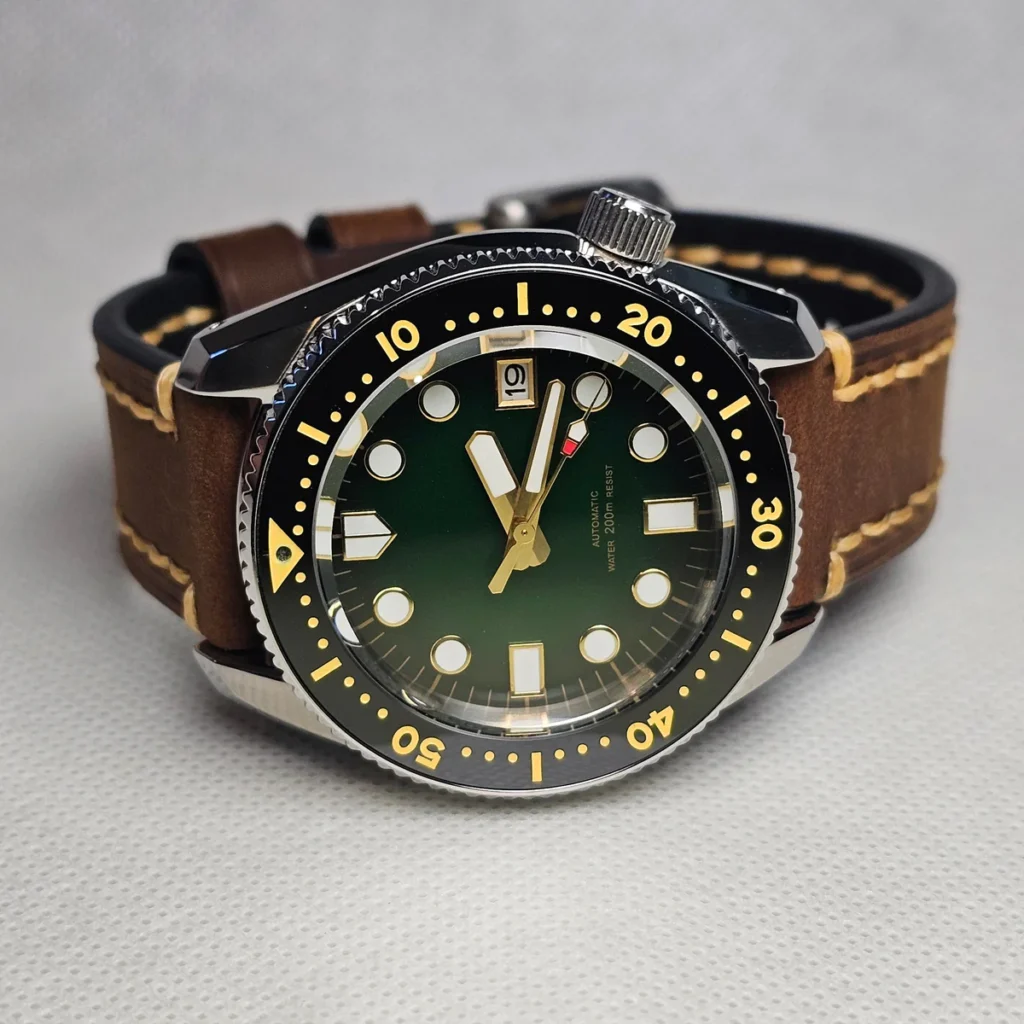
All automatic watches are mechanical — but not all mechanical watches are automatic.
Manual (Hand-Wound) Watches
- Must be wound daily
- Thinner profile
- More traditional experience
- Strong connection to watchmaking heritage
Automatic Watches
- Wind themselves via a rotor
- Powered by wrist movement
- More convenient for everyday wear
- Often slightly thicker
If you’re looking for affordable automatic options, read:
👉 Automatic Watches Under $500 – What Actually Makes Sense
Are Mechanical Watches Accurate?
Mechanical watches are generally less accurate than quartz.
- Mechanical: ±5 to ±20 seconds per day
- Quartz: ±15 seconds per month
So why choose mechanical?
Because accuracy is no longer the primary reason people wear watches.
Mechanical watches are about:
- Engineering appreciation
- Craftsmanship
- Emotional connection
- Mechanical beauty
- Longevity
They are machines you can feel working on your wrist.
Why Mechanical Watches Still Matter in 2026
Mechanical watches have survived the Quartz Crisis, the digital era, and the rise of smartwatches.
Why?
Because they offer something technology doesn’t:
Permanence.
A mechanical watch can last decades. With servicing every 5–10 years, it can be passed down generations.
Unlike digital devices, they don’t become obsolete.
They age.
They develop character.
If you’re curious about the psychological side of wearing one:
👉 The Ritual of Wearing a Watch
Pros and Cons of Mechanical Watches
Pros
- Long lifespan
- No batteries required
- Rich history
- Mechanical artistry
- Often serviceable indefinitely
Cons
- Requires maintenance
- Less accurate than quartz
- More expensive to produce
- Sensitive to shock and magnetism
For many collectors, the pros outweigh the cons.
Who Should Buy a Mechanical Watch?
A mechanical watch is ideal for:
- Enthusiasts who value craftsmanship
- People interested in heritage and tradition
- Those who enjoy tactile, intentional objects
- Collectors who appreciate engineering
If your only priority is precise timekeeping, quartz is more practical.
But if you want a machine that reflects personality and tradition, mechanical is unmatched.
Are Mechanical Watches Worth It?
Yes — if you understand what you’re buying.
You are not buying perfect accuracy.
You are not buying convenience.
You are buying a mechanical system designed to measure time using nothing but springs and gears.
That alone is remarkable.
Final Thoughts
This beginner’s guide to mechanical watches is meant to give you clarity — not sell you something.
Mechanical watches represent a conscious choice in a digital world.
They remind us that time can be measured mechanically.
Beautifully.
And intentionally.