Watch Case Materials Explained: Steel, Titanium, Gold & More
When buying a watch, most people focus on the dial, movement, or brand.
But the case material plays a major role in durability, weight, comfort, and long-term wear.
Understanding watch case materials helps you make smarter buying decisions — especially when building a collection.
This guide breaks down the most common materials used in modern watches and explains their pros and cons.
Stainless Steel
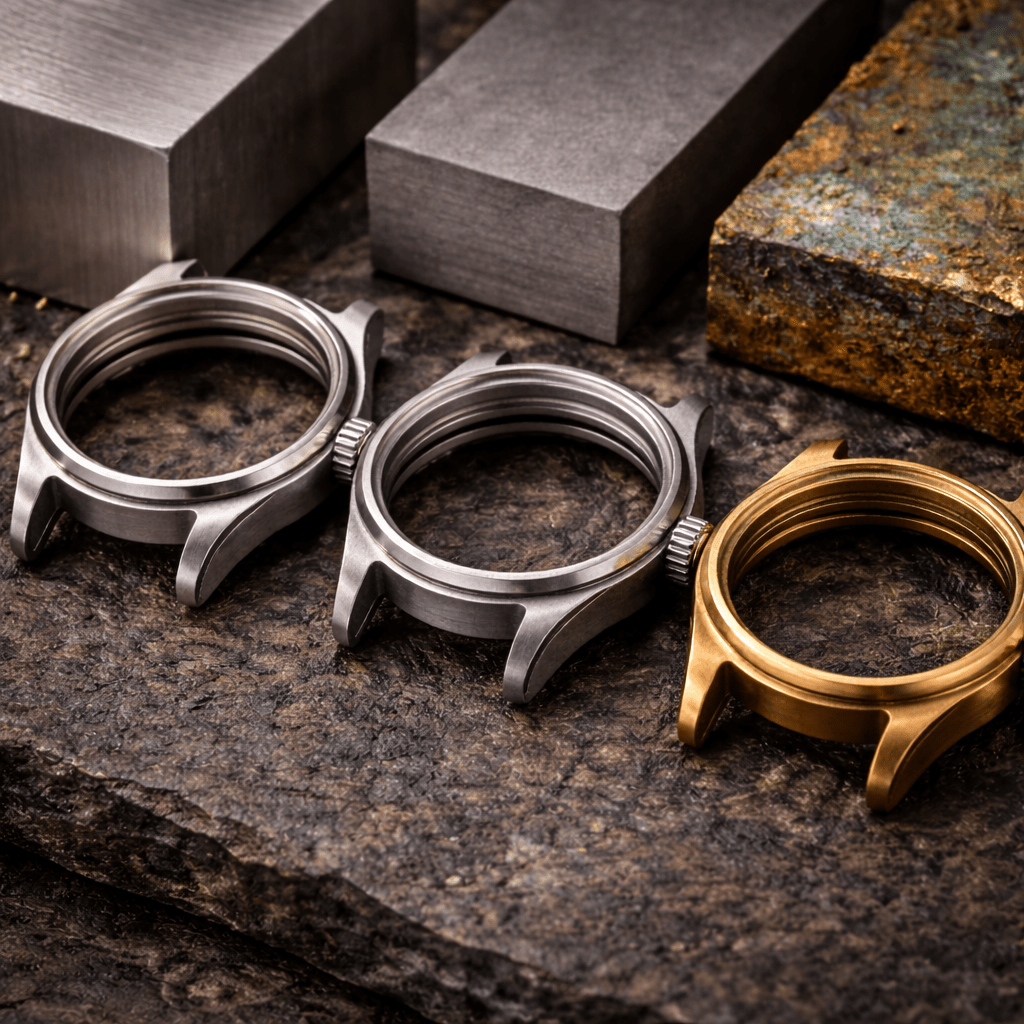
Stainless steel is the most common watch case material.
Most brands use 316L stainless steel.
Higher-end brands sometimes use 904L steel, known for increased corrosion resistance and slightly brighter polish.
Pros:
- Durable
- Scratch resistant (to a degree)
- Affordable
- Easy to refinish
Cons:
- Heavier than titanium
- Can show scratches over time
For most collectors, stainless steel is the safest and most versatile choice.
Titanium
Titanium has become increasingly popular.
It is roughly 40% lighter than steel and highly corrosion resistant.
Pros:
- Lightweight
- Hypoallergenic
- Strong
- Modern aesthetic
Cons:
- Scratches more easily
- Harder to polish
- Slightly more expensive
Titanium is ideal for larger watches where weight becomes noticeable.
Gold
Gold cases are typically 18k and come in yellow, white, or rose variations.
Luxury brands often use solid gold, not plating.
Pros:
- Prestigious
- Valuable
- Warm tone
Cons:
- Soft metal
- Expensive
- Scratches easily
Gold watches are more about elegance than rugged use.
Bronze
Bronze develops a patina over time.
This aging process gives each watch a unique look.
Pros:
- Unique character
- Vintage appeal
- Strong
Cons:
- Can discolor skin
- Oxidizes
- Heavier than titanium
Collectors who enjoy character and aging tend to love bronze.
Ceramic
Ceramic cases are highly scratch resistant and lightweight.
Pros:
- Extremely scratch resistant
- Modern look
- Lightweight
Cons:
- Can crack under strong impact
- Expensive
Ceramic is ideal for scratch resistance but less forgiving under shock.
Carbon Fiber & Forged Carbon
Used in modern sports watches.
Very lightweight and visually unique.
Often seen in high-end or experimental designs.
How Case Material Affects Price
Material impacts cost significantly.
Steel watches are typically the most accessible.
Gold and ceramic raise prices dramatically.
Titanium sits somewhere in between.
Understanding this prevents overpaying for material hype.
Which Material Is Best for a Beginner?
For most beginners:
Stainless steel offers the best balance of durability, cost, and versatility.
If weight is a concern, titanium is an excellent upgrade.
Final Thoughts
Watch case materials influence:
- Comfort
- Durability
- Weight
- Price
- Long-term appearance
Understanding them helps you build a smarter, more intentional watch collection.