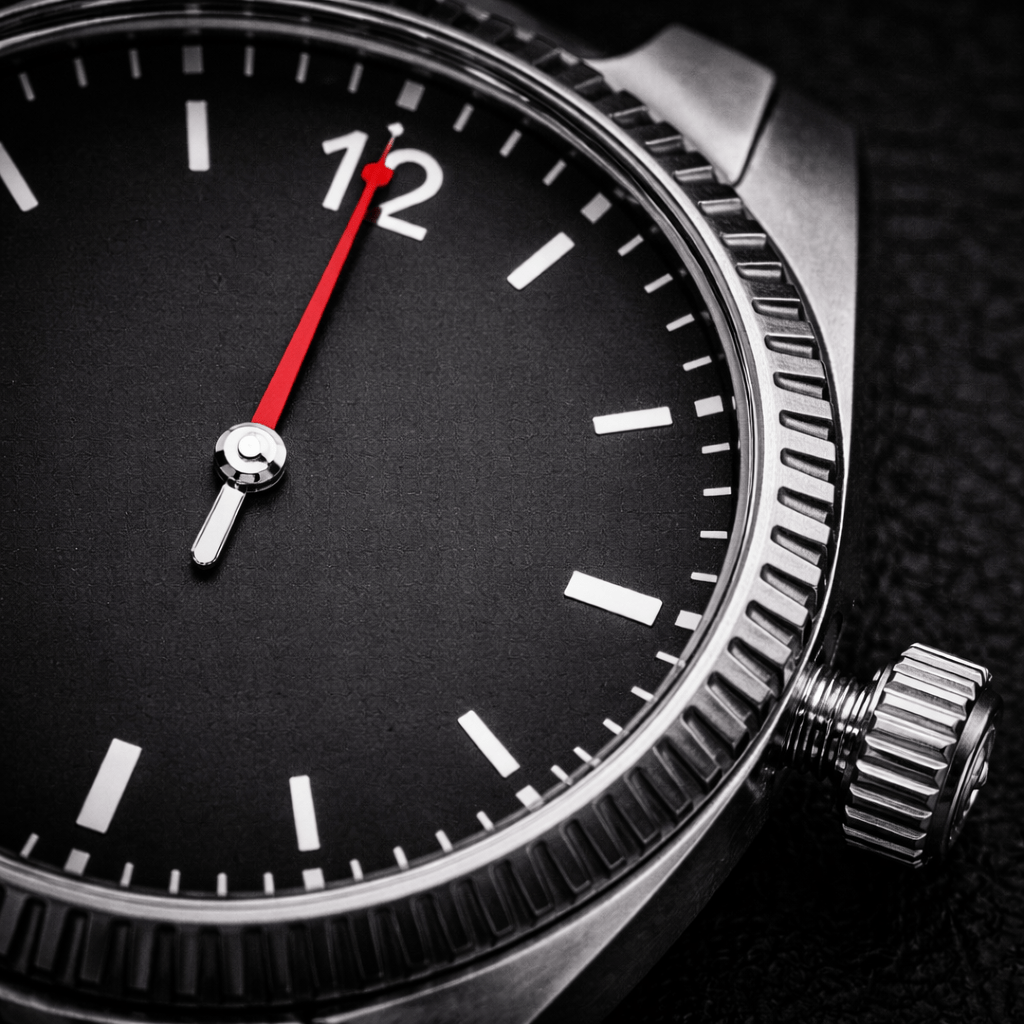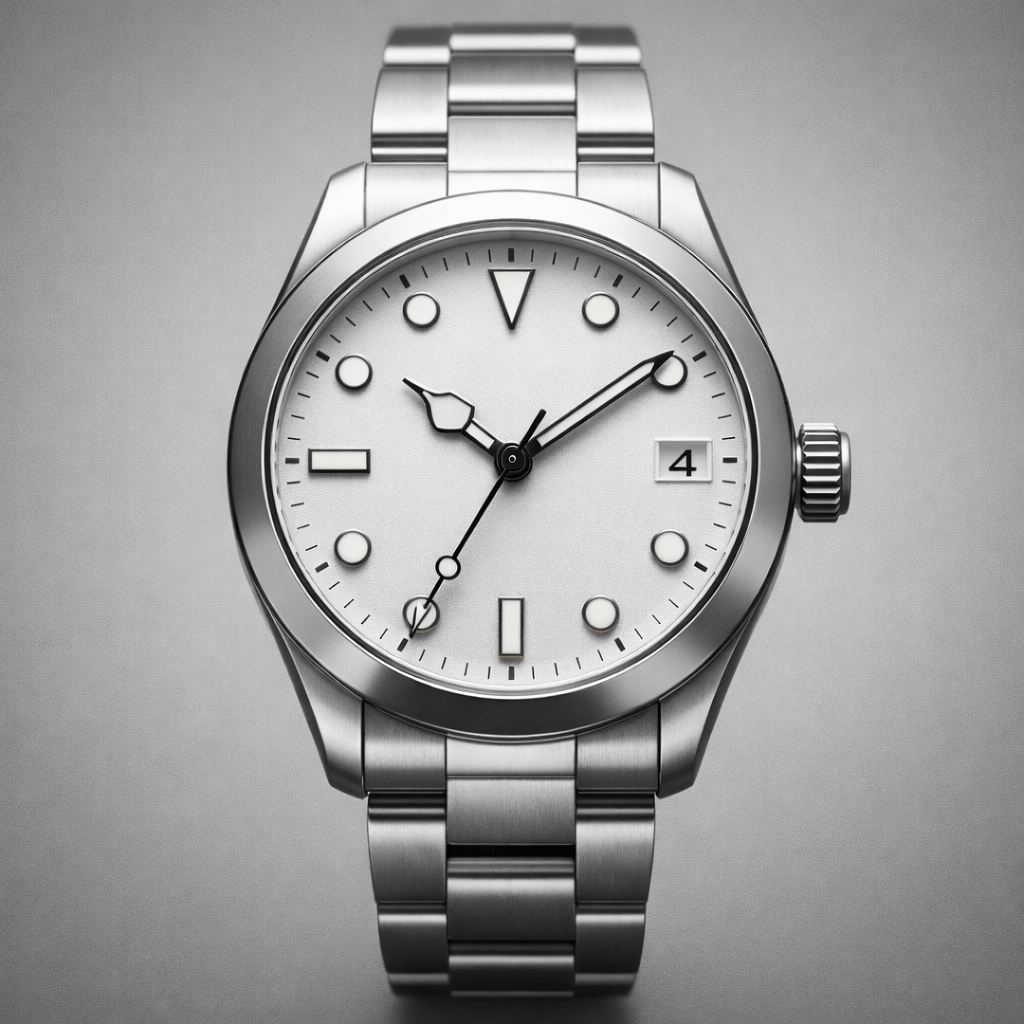
A counterweight is the short tail you sometimes see behind a watch hand’s center. Its job is to offset some of the mass on the long side of the hand.
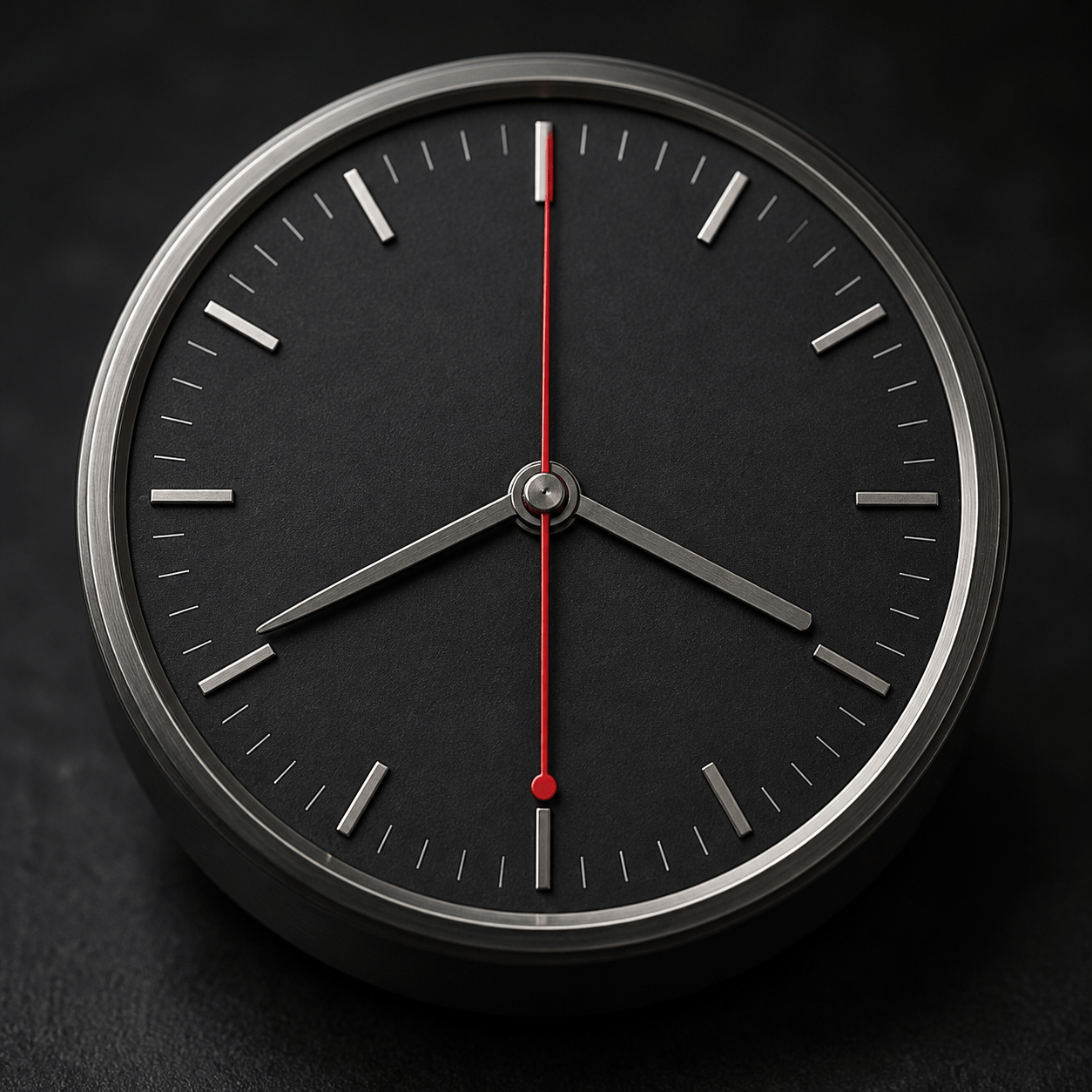
Without that tail, a long hand places more of its mass on one side of the central pivot. A well-proportioned counterweight can reduce that imbalance, helping the hand move more smoothly and placing less uneven load on its pinion.
It is especially easy to spot on seconds and chronograph hands because they can be long and thin. The shape is not merely decorative—but it does not need to mirror the pointer exactly. What matters is mass and distance from the pivot, not matching length.
A counterweight cannot rescue a hand that is too heavy, badly fitted, bent, or touching another hand. The movement still has limits, and the installed handset must remain free throughout a full rotation.
Watcher Insight: when choosing replacement hands, check more than the hole size. Length, total mass, balance, and clearance all affect whether the handset works properly.