Beat rate tells you how quickly a mechanical watch’s balance wheel oscillates. You will usually see it written as vibrations per hour (vph) or hertz (Hz).
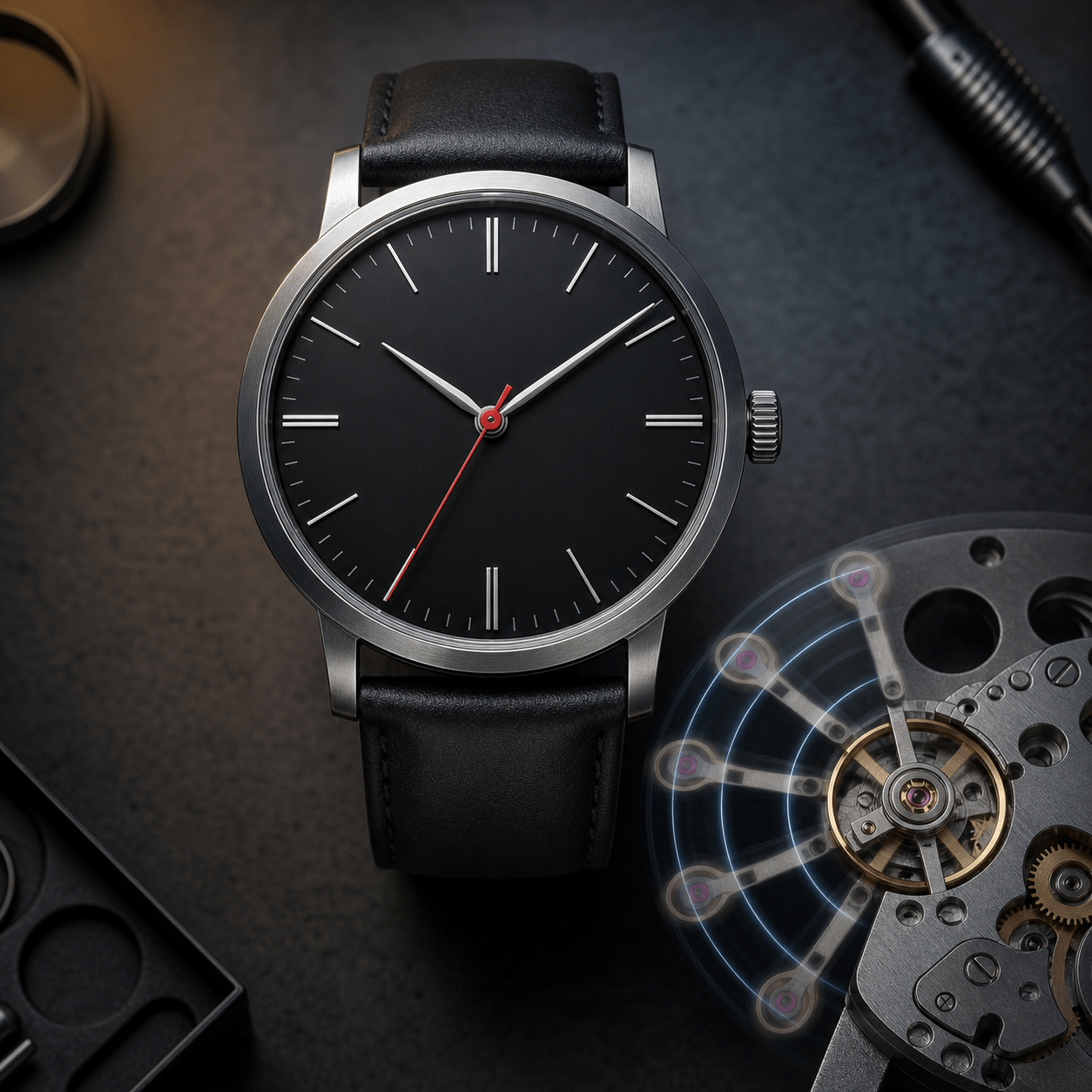
A 3 Hz movement completes three full oscillations each second. Because each oscillation has two vibrations, that equals six vibrations per second—or 21,600 per hour. On a conventional display, the seconds hand can therefore advance six times per second.
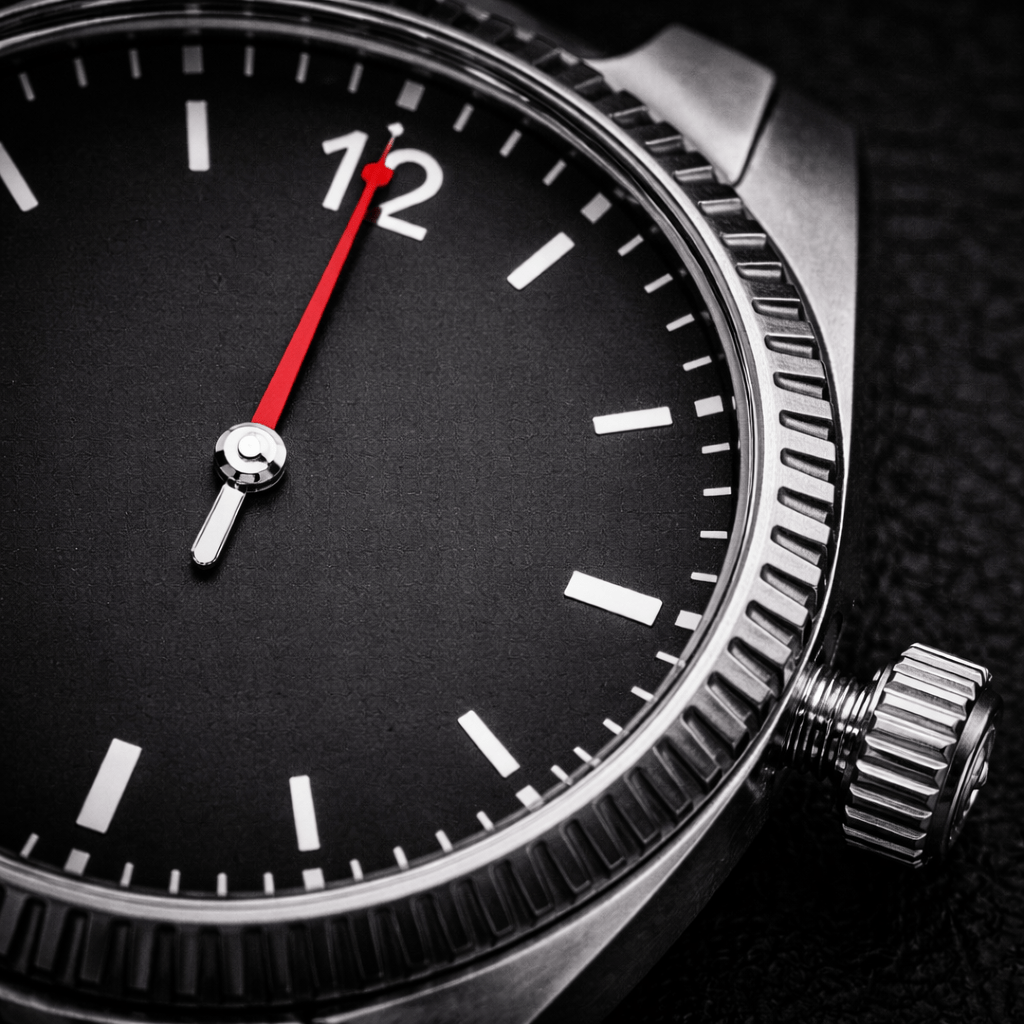
Higher frequencies create more, smaller steps, so the hand can appear smoother. For comparison, a 5 Hz movement runs at 36,000 vph and can advance the hand ten times per second.
But higher beat does not automatically mean better accuracy. Regulation, amplitude, construction, lubrication, wear, position, and power delivery still matter. A faster balance also asks the movement to manage greater energy use and component stress.
Watcher Insight: read beat rate as a movement characteristic, not a quality score. It explains the rhythm and potential seconds-hand motion; it does not guarantee real-world precision.