Those tiny red dots inside a mechanical watch are not decoration. They are bearings.
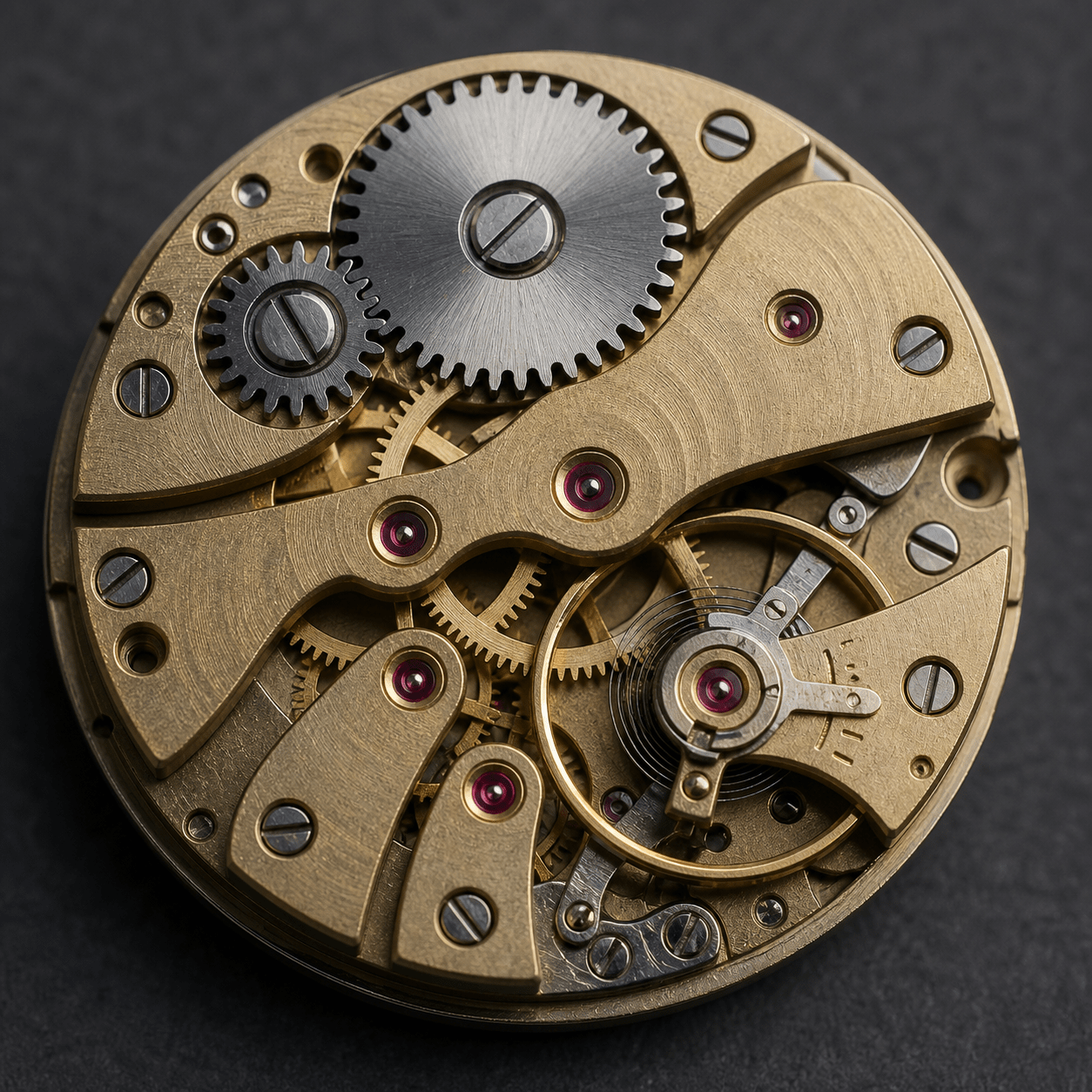
Most modern watch jewels are drilled and polished synthetic ruby or sapphire. A wheel’s tiny steel pivot can turn inside the smooth, hard jewel instead of wearing directly against the movement plate.
That reduces friction and wear, helping the movement use its limited stored energy efficiently. Jewels also appear in the escapement, where parts repeatedly lock, unlock, and transfer energy.
But a higher jewel count does not automatically mean a better watch. A simple movement needs fewer bearing points than an automatic movement or a complication. What matters is whether the jewels are functional and correctly placed for that design.
Watcher Insight: read “21 jewels” as a movement specification, not a luxury score. Design, adjustment, lubrication, and servicing still matter.