Automatic Watches Under $500 in 2026: What Makes Sense
Automatic watches under $500 can be genuinely good, but there is no single best watch for every buyer. A strong diver, an integrated-bracelet sports watch, a retro dress-casual watch, and a mod-friendly daily watch solve different problems.
The useful question is not, “Which model has the longest specification sheet?” It is, “Which compromises will I still be happy with after the first month?” Under $500, movement reliability is usually attainable. The harder differences are case size, bracelet quality, crystal choice, water resistance, dial execution, after-sale support, and whether the design suits your actual routine.
Price note: The official US prices below were checked on July 18, 2026. Some were promotional prices rather than permanent list prices, and availability varies by country. Use them as a current reference, then verify the final price, warranty, taxes, and return terms before buying.
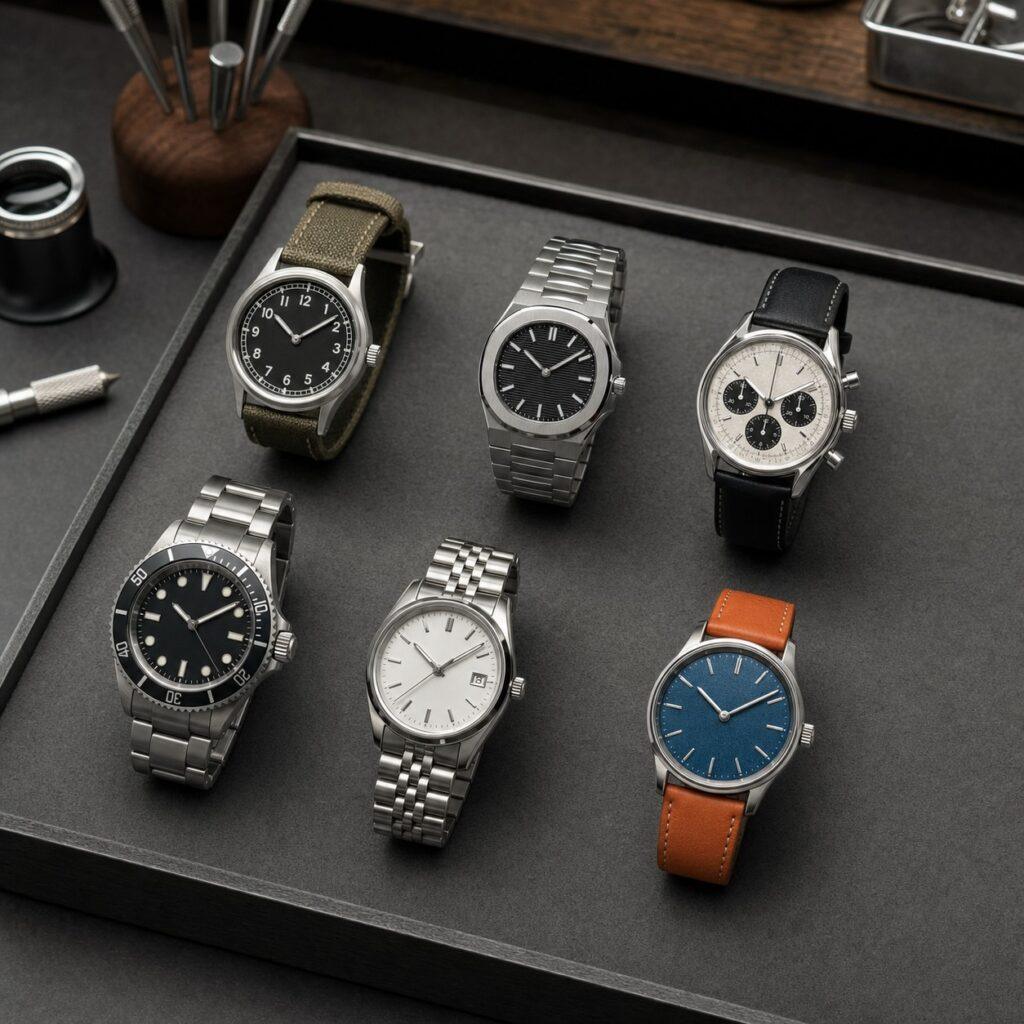
The Short Answer: Four Automatic Watches Under $500 Worth Comparing
- Seiko 5 Sports SRPD55: the practical mainstream sports-watch baseline, especially if you want a familiar platform and a large parts ecosystem.
- Orient Kamasu: the strongest specification-led choice here for swimming, water resistance, and sapphire crystal.
- Citizen Tsuyosa NJ0150-56A: the best fit for someone who wants a cleaner urban sports watch with an integrated-bracelet look.
- Timex Marlin Automatic TW2V44600: the most convincing vintage-style choice for dress-casual wear.
These are not four interchangeable “best buys.” They are useful reference points because each shows a different way to spend the same budget. If none of them suits your wrist or taste, that is useful information too.
How We Judged the Watches
A watch earned a place here by being available from an official US brand site at or below $500 when checked, using an identified automatic movement or clearly documented automatic specification, and offering a coherent reason to exist beyond a low price.
The comparison prioritizes five things:
- Wearability: diameter, lug-to-lug length, thickness, weight, and how the case sits.
- Purpose: whether the crystal, crown, water resistance, strap, and bezel match the intended use.
- Movement: reliability, hand-winding, hacking, power reserve, and realistic service options.
- Execution: legibility, dial balance, hand length, case finishing, bracelet or strap quality, and quality control.
- Ownership: warranty, returns, replacement parts, and whether the watch remains enjoyable after the novelty fades.
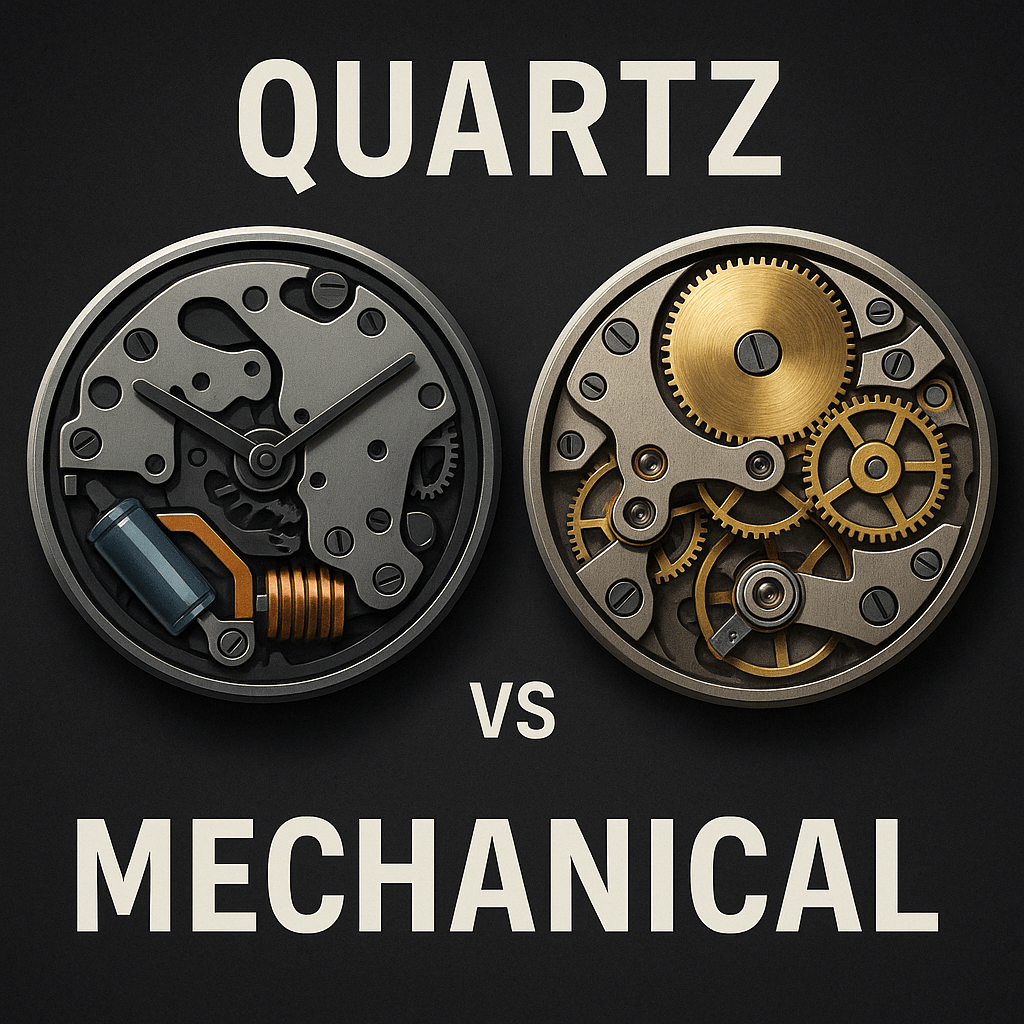
If the movement terms are unfamiliar, start with our guide to automatic, quartz, and mechanical watches. For fit, our watch-size guide explains why diameter alone is not enough.
Seiko 5 Sports SRPD55: The Familiar All-Rounder
Seiko listed the 5 Sports SRPD55 at $350 when checked. It uses the automatic 4R36 with hand-winding, hacking seconds, day-date display, and approximately 41 hours of power reserve. The stainless-steel case measures 42.5mm across, 46mm lug to lug, and 13.4mm thick. It has a Hardlex crystal, 100 meters of water resistance, a unidirectional bezel, and a steel bracelet.
Why it makes sense: this is an easy reference point for an affordable mechanical sports watch. The movement is familiar, the design is legible, and the wider Seiko-compatible parts world makes it attractive to owners who may later explore straps, bezels, inserts, hands, or dials.
The tradeoff: it is not a small watch, the 170-gram listed weight is substantial, and Hardlex is less scratch-resistant than sapphire. It also looks like a dive watch without being positioned by Seiko as a professional diver. Buy it as a robust everyday sports watch, not because the rotating bezel alone proves dive capability.
This is the clearest choice here for someone who wants a recognizable platform and may eventually become curious about why NH35-family movements and Seiko-compatible parts are so common in modding.
Orient Kamasu: The Specification-Led Diver
Orient listed the red-dial Kamasu RA-AA0003R39B at a promotional $375 against a displayed $580 list price when checked. Its 41.88mm stainless-steel case is 12.8mm thick and approximately 47mm lug to lug. The watch uses Orient’s F6922 automatic movement with hand-winding, hacking, day-date display, and about 40 hours of power reserve.
The practical specifications are the reason to look at it: sapphire crystal, screw-down crown, 200 meters of water resistance, a 120-click unidirectional bezel, and a steel bracelet with a safety clasp.
Why it makes sense: if swimming, water resistance, and scratch resistance matter more than brand recognition or bracelet refinement, the Kamasu is the most complete package in this group.
The tradeoff: a 41.88mm case and 47mm lug-to-lug span will not disappear on a small wrist. The bracelet is functional, but the watch head is the stronger part of the package. That is common under $500: the case and dial receive more attention than bracelet articulation, clasp feel, and end-link refinement.
Citizen Tsuyosa NJ0150-56A: The Urban Sports Choice
Citizen’s official US page showed the white-dial Tsuyosa NJ0150-56A at a promotional $380 against a displayed $475 original price when checked. It has a 40mm stainless-steel case, integrated-style steel bracelet, anti-reflective sapphire crystal, date display, and 50 meters of water resistance.
The caliber 8210 is an automatic movement with a stated 42-hour power reserve and hacking function. Citizen also advertises a five-year limited warranty in the United States, which matters in a price range where seller support can be as important as an extra line on the specification sheet.
Why it makes sense: the Tsuyosa is less tool-like than the Seiko or Orient. Its appeal is the combination of a clean dial, sapphire crystal, compact visual profile, and bracelet-led design. It works well as a daily watch for someone whose routine moves between work, restaurants, and ordinary city wear.
The tradeoff: 50 meters of water resistance is enough for normal daily exposure but does not make this the obvious swimming choice in this group. The integrated look also limits casual strap experimentation compared with a conventional 20mm or 22mm lug layout.
Timex Marlin Automatic TW2V44600: The Vintage-Style Alternative
Timex listed the green-dial Marlin Automatic TW2V44600 at $299 when checked. It combines a 40mm stainless-steel case, leather strap, domed acrylic crystal, exhibition caseback, and a 21-jewel automatic movement with approximately 40 hours of power reserve.
Why it makes sense: this is the most style-specific recommendation here. The acrylic crystal, sunray dial, and mid-century design are not attempts to win a specification contest. They create a warmer, more period-correct object than a sapphire-crystal sports watch.
The tradeoff: acrylic scratches more easily than sapphire, and a leather-strap vintage design is not the watch to choose for rough water use. Acrylic can often be polished, but that is still a different ownership experience. Buy the Marlin because you want its character, not because it defeats the Kamasu on paper.
What the Specification Sheet Does Not Tell You
Affordable-watch shopping often becomes a contest of sapphire versus mineral, 100 meters versus 200 meters, and 40 hours versus 42 hours. Those differences can matter, but several less measurable details decide whether the watch actually feels good.
Bracelet and clasp quality
A bracelet can look excellent in a front-facing image while feeling sharp, noisy, stiff, or top-heavy on the wrist. Check whether reviewers show the clasp, end links, side profile, and articulation rather than only the dial.
Case proportions
Diameter is only the beginning. Lug-to-lug length controls how far the watch spans the wrist. Thickness affects sleeve clearance and top-heaviness. A wide dial opening can make a 40mm watch appear larger than a 42mm watch with a thick bezel. Our guide to watch case materials also explains how steel, titanium, coatings, and finishing change the experience.
Dial and hand execution
Alignment, printing, marker placement, hand length, lume application, and date-window position are easy to underestimate online. These are the details you see every time you check the time. A theoretically superior movement does not rescue a dial that feels careless.
Real warranty support
Official pricing is not always the lowest pricing. An unauthorized seller may save money, but the warranty and return terms may be different. Decide whether the discount is worth the weaker support before buying, not after a problem appears.
Movement Choice: Reliable Is More Important Than Prestigious
The 4R36, F6922, and 8210 are not luxury movements. That is not an insult. In this price range, a proven architecture, available parts, and realistic service options are more useful than decorative language about “horology.”
Look for hand-winding if you rotate watches and want to restart one easily. Hacking seconds is useful for precise setting but does not make the watch inherently more accurate. Power reserve differences of one or two hours rarely matter as much as regulation, positional behavior, and how consistently the watch performs on your wrist.
If movement choice is the main reason you are shopping, compare the practical differences in our guides to Miyota 9015 versus NH35 and Sellita SW200-1 versus NH35. They show why thickness, beat rate, winding feel, serviceability, and project requirements matter more than country-of-origin shorthand.
When a Microbrand or Custom Watch Makes More Sense
The four watches above are useful mainstream references. A microbrand may make more sense if you want a less familiar case, a more distinctive dial, stronger enthusiast specifications, or a smaller production run. The risk is that service, returns, and long-term parts support vary more widely. Read our guide to microbrand watches and independent watch culture before treating “microbrand” as an automatic quality badge.
A custom build makes sense when the dial, case direction, hands, engraving, or personal meaning matters more than having a factory reference number. Rexx Timepieces works directly with custom mechanical watches, Seiko-compatible builds, engraved parts, and workshop assembly. A custom dial can also be ordered on its own or installed on a compatible Rexx watch. Rexx StudioWorks is the small-batch craft/store layer for handmade dials, engraved objects, and workshop-made pieces.
Custom is not automatically better, and factory-built is not automatically boring. The right route depends on whether you value repeatable specification, recognizable service support, or a more personal object.
What to Avoid When Buying Under $500
- Listings that say only “automatic movement” without identifying the caliber or manufacturer.
- Product images that never show the side profile, clasp, caseback, or watch on a wrist.
- Water-resistance claims that are not supported by a credible brand, seller, or testing standard.
- Fake logos, replica branding, and listings designed to create confusion about the maker.
- Huge crossed-out prices that make a permanent discount look like a rare opportunity.
- No visible return policy, warranty terms, or service contact.
- A case size chosen from diameter alone without checking lug-to-lug length and thickness.
Also avoid buying simply because a watch is “the best value.” A bargain that does not fit your wrist, wardrobe, or routine is still wasted money.
Which One Should You Choose?
- Choose the Seiko 5 Sports SRPD55 if you want a familiar everyday sports platform and may explore modding later.
- Choose the Orient Kamasu if sapphire, 200-meter water resistance, and dive-watch function matter most.
- Choose the Citizen Tsuyosa if you want a clean bracelet-led watch for daily urban wear.
- Choose the Timex Marlin Automatic if vintage styling and dress-casual character matter more than water-ready specifications.
- Choose none of them yet if you have not measured your wrist, handled a comparable case, or decided what problem the watch should solve.
If your budget can move higher, do not assume the next $500 automatically buys a better watch. Our guide to watches under $1,000 explains where additional money can improve the movement, bracelet, finishing, proportions, or brand support—and where it sometimes does not.
Final Verdict
The best automatic watches under $500 are not miniature luxury watches. They are honest mechanical watches built around a clear set of priorities.
The Orient Kamasu gives the strongest water-ready specification. The Citizen Tsuyosa gives the cleanest modern sports-watch presentation. The Seiko 5 Sports SRPD55 gives the most familiar platform and modding connection. The Timex Marlin gives the most distinctive vintage character at the lowest official price in this group.
Choose the watch whose compromises match your life. That is a more durable kind of value than winning a specification-sheet argument.