Automatic vs Quartz vs Mechanical Watches: Differences, Pros, and Cons
Automatic, quartz, and mechanical watches all tell time, but they do it in very different ways. The difference is not only technical. It changes accuracy, maintenance, price, ownership feel, and how connected you feel to the object on your wrist.
The short version is simple: quartz watches use a battery and are usually the most accurate. Mechanical watches are powered by a wound mainspring. Automatic watches are mechanical watches that wind themselves through wrist movement.
The better question is not which type is objectively best. The better question is which type fits your life, your taste, and the kind of relationship you want with a watch.
The Quick Difference
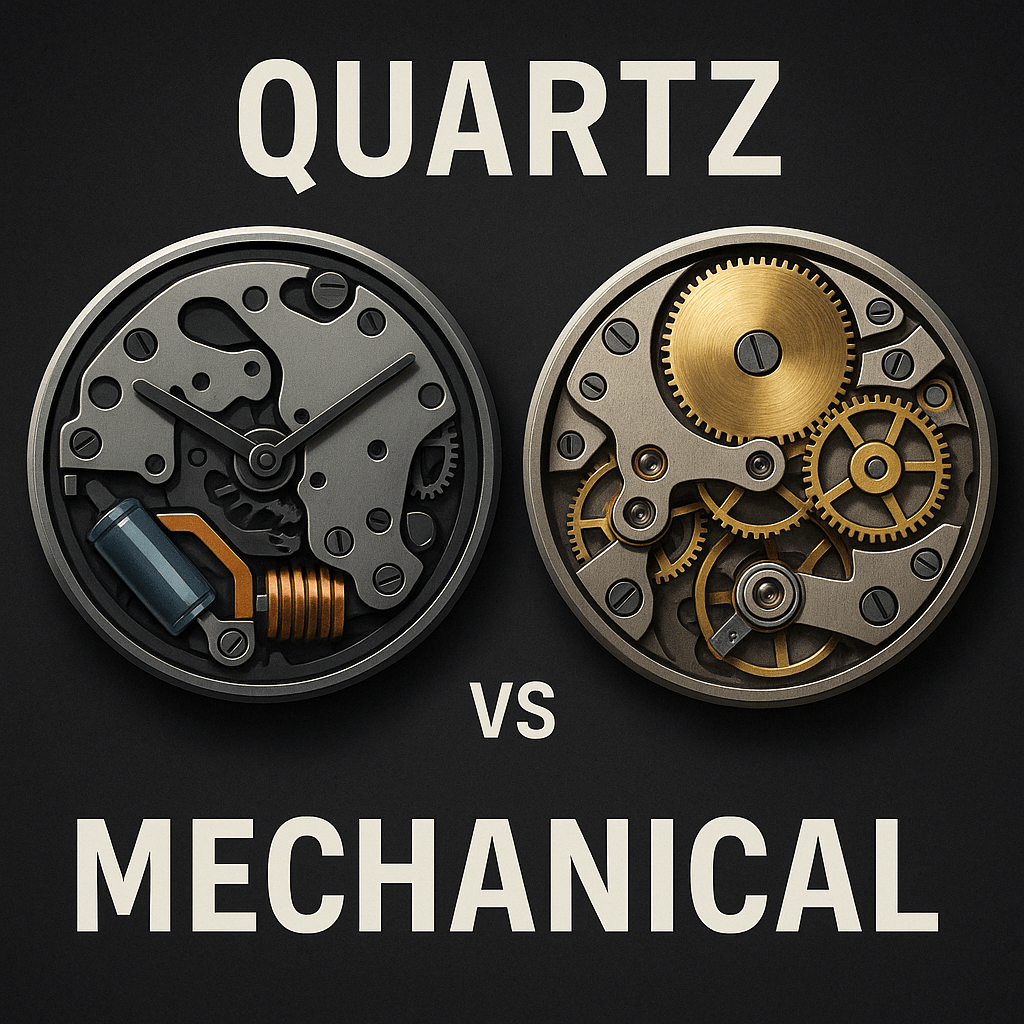
Quartz is the practical choice. It runs on a battery, uses a quartz crystal for regulation, and usually keeps better time than a mechanical watch. It is accurate, convenient, and low maintenance.
Mechanical is the traditional choice. It uses a mainspring, gears, and an escapement instead of a battery. A hand-wound mechanical watch needs to be wound manually.
Automatic is a type of mechanical watch. It still uses a mainspring and mechanical movement, but it includes a rotor that winds the watch as your wrist moves.
Quartz Watches
A quartz watch is powered by a battery and regulated by a quartz crystal. When electricity passes through the crystal, it vibrates at a stable frequency. That signal controls the timekeeping.
In everyday use, quartz is the most practical option for many people. It is accurate, affordable, low maintenance, and easy to live with. You can leave a quartz watch in a drawer, pick it up later, and it will usually still be running.
Quartz also makes sense for people who want a grab-and-go watch. If you travel, rotate between many watches, or simply do not want to reset the time often, quartz is hard to beat.
The tradeoff is emotional. Quartz watches often do not have the same mechanical charm, visible movement, or hands-on feeling that attracts people to automatic and mechanical watches.
Mechanical Watches
A mechanical watch is powered by a mainspring. Instead of using a battery, energy is stored by winding the spring. That energy is released through the gear train and regulated by the escapement.
When people talk about the romance of watches, they are often talking about mechanical watches. There is something satisfying about a tiny machine running on stored energy, gears, springs, and careful adjustment.
Mechanical watches are usually less accurate than quartz watches. They also need servicing over time. Oils dry, parts wear, seals age, and the movement eventually needs attention.
To understand what a gain or loss in seconds per day really means, including positional variation, magnetism, and regulation, read Watch Accuracy Explained.
For some people, that maintenance is part of the appeal. For others, it is unnecessary effort. That difference in attitude matters more than any spec sheet.
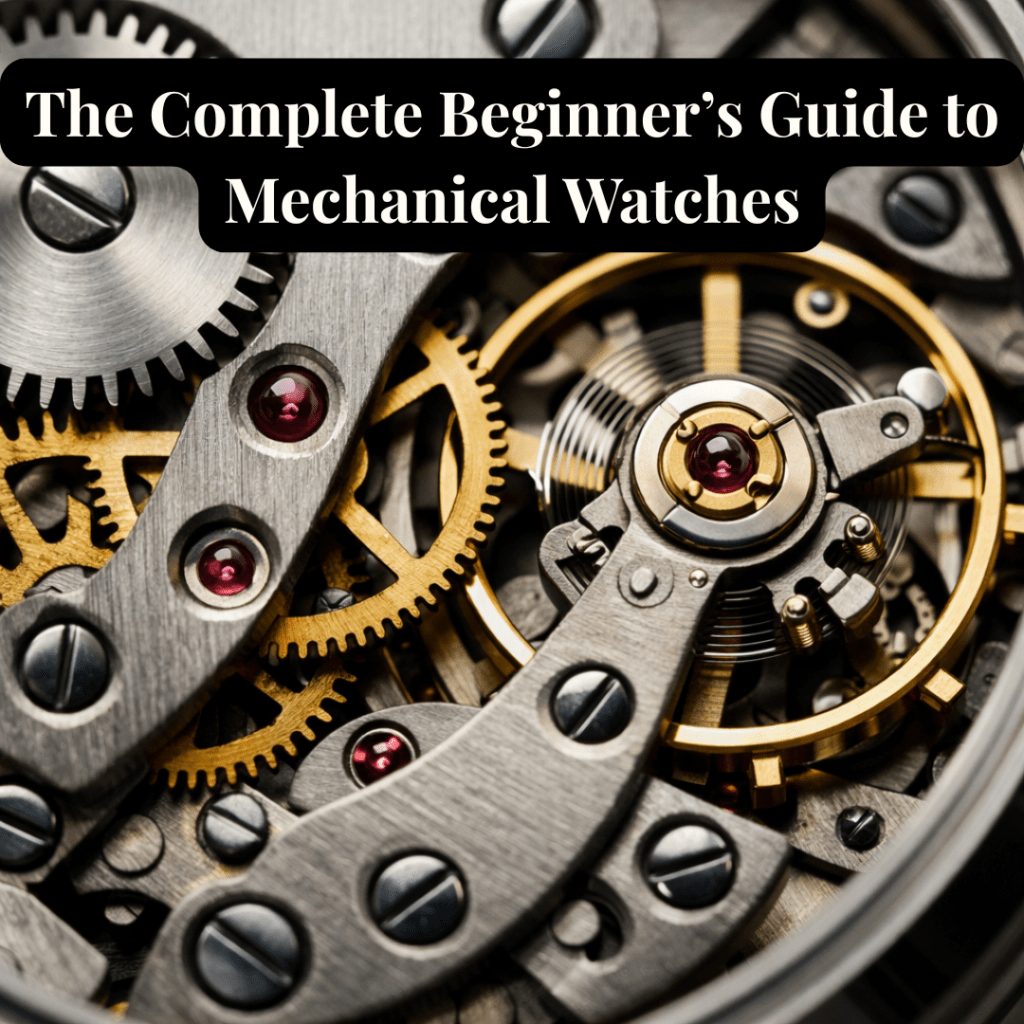
For a deeper beginner guide, read The Complete Beginner’s Guide to Mechanical Watches.
Automatic Watches
An automatic watch is a mechanical watch with a self-winding system. Inside the watch, a rotor moves as your wrist moves. That motion winds the mainspring, helping keep the watch running without manually winding it every day.
Automatic watches are popular because they combine mechanical character with daily convenience. You still get a real mechanical movement, but the watch can stay wound through normal wear.
The tradeoff is that automatic watches still need movement. If you leave one sitting long enough, it will stop. You will need to reset the time and possibly the date before wearing it again.
Automatic movements are also thicker than some quartz movements and can make a watch feel more substantial. That can be good or bad depending on the case design, wrist size, and what you expect from the watch.
For a quick explanation, read What Is Automatic Winding?.
Is Automatic the Same as Mechanical?
Yes, but with one important clarification. Every automatic watch is mechanical, but not every mechanical watch is automatic.
A hand-wound mechanical watch needs manual winding. An automatic watch winds itself through wrist movement. Both use a mainspring, gear train, escapement, and mechanical regulation. Neither depends on a battery for normal timekeeping.
This distinction matters because many beginners use “mechanical” to mean hand-wound and “automatic” as a separate category. In watch terms, automatic is one branch of mechanical watchmaking.
Accuracy vs Real-Life Use
Quartz watches are usually far more accurate than mechanical watches. If the goal is simply to keep time with the least attention, quartz wins.
Mechanical and automatic watches are less accurate, but accuracy is not the only reason people wear them. Many enthusiasts accept a few seconds of variation per day because they enjoy the movement, the craft, and the feeling of wearing a small mechanical object.
This is one of the first lessons in watch collecting: the technically superior choice is not always the emotionally satisfying choice.
Maintenance and Servicing
Quartz watches are generally easier and cheaper to maintain. Most of the time, they need a battery change and basic care. Some quartz watches can run for years before the battery needs attention.
Mechanical and automatic watches need more attention. They may require servicing after years of use, especially if the movement becomes inaccurate, dry, or unreliable. Water resistance also needs to be treated carefully, especially after opening the case.
If you are interested in custom builds or Seiko mods, this matters even more. Opening a watch, changing parts, or modifying a case can affect reliability and water resistance. That is why tools, testing, and careful assembly matter.
Cost and Value
Quartz watches often give the most function for the money. A modest quartz watch can be accurate, durable, and reliable without needing much attention.
Mechanical and automatic watches usually cost more to make and maintain. The value is not only in accuracy. It is in the movement, craft, design, serviceability, and the experience of wearing something mechanical.
That is why two watches at the same price can appeal to very different buyers. One person may choose quartz because it is practical. Another may choose automatic because the movement makes the watch feel alive.
Which Type Is Best for Beginners?
Choose quartz if you want maximum accuracy, low maintenance, and practicality. It is the easiest way to enjoy watches without worrying about power reserve, servicing, or daily wear habits.
Choose hand-wound mechanical if you enjoy ritual. Winding the watch becomes part of the ownership experience. It can feel slower, more deliberate, and more connected.
Choose automatic if you want mechanical character with more daily convenience. For many beginners, an affordable automatic watch is the best entry point because it gives you the mechanical experience without becoming too demanding.
For practical buying guidance, read Automatic Watches Under $500 and How to Start a Watch Collection Without Wasting Money.
What Collectors Usually Prefer
Many enthusiasts eventually become drawn to mechanical and automatic watches because they offer more than timekeeping. They offer movement architecture, finishing, sound, winding feel, service history, and a sense of continuity with traditional watchmaking.
That does not make quartz inferior. High-quality quartz watches can be excellent. Some collectors love them because they are honest, precise, thin, and practical. The mistake is thinking quartz is only for beginners or that mechanical is automatically better.
The better view is simpler: quartz is great at being practical, mechanical is great at being tactile, and automatic is great at making mechanical ownership easier for daily wear.
How This Connects to Modding and Custom Watches
Most Seiko mods and many custom builds use automatic mechanical movements such as the NH35 because they are reliable, accessible, and easy to build around. That makes automatic watches a natural bridge between beginner collecting and hands-on custom work.
For the practical difference between the NH35 date movement, NH36 day-date movement, and NH34 GMT movement, read our NH35 vs NH36 vs NH34 comparison.
For Rexx Timepieces, movement choice is part of the design conversation. A custom watch is not only about the dial or case. The movement affects case fit, hand height, date position, serviceability, and the long-term reliability of the finished watch.
If you want to explore that path, continue with What Is Watch Modding? and How to Build a Seiko Mod. For a workshop-led custom mechanical watch, visit Rexx custom watches.
Where Meshberg Fits
Meshberg Watches sits in the quiet independent automatic-watch layer of the ecosystem. The point is not just that a watch is automatic. The point is how the movement, case size, dial, proportions, and strap come together into a restrained small-batch object.
That is an important lesson for buyers. Automatic movements are common, but the finished watch still depends on proportion and execution. A good automatic watch should feel coherent, not merely mechanical.
Explore the Meshberg 37 Automatic for a quieter independent example of automatic watchmaking.
Quick Comparison
- Quartz: battery powered, very accurate, low maintenance, practical, often affordable.
- Hand-wound mechanical: mainspring powered, manually wound, traditional, tactile, less convenient.
- Automatic: mechanical movement with rotor winding, convenient for daily wear, still needs servicing and movement.
Watch the Difference Explained
The video below is from Gentleman’s Gazette and gives a useful visual explanation of mechanical, automatic, and quartz movements.
Final Thoughts
Quartz, mechanical, and automatic watches each make sense for different people. Quartz is practical and accurate. Hand-wound mechanical is traditional and hands-on. Automatic sits in the middle, offering mechanical character with more daily convenience.
The right choice depends on what you value most: accuracy, craft, convenience, maintenance, or connection to the object on your wrist.
If you want the most practical watch, choose quartz. If you want the most direct mechanical ritual, choose hand-wound. If you want mechanical charm in a watch you can wear every day, automatic is usually the easiest place to start.