A watch can spend 59 minutes looking almost still, then deliver its main attraction in a fraction of a second. That is the appeal of a jumping-hour display: the hour changes as a distinct event. Whether that makes a better watch depends on what happens during the rest of the hour.
Two winners at the 2026 Grand Prix d’Horlogerie de Genève make the question worth revisiting. Otsuka Lotec’s No.8 received the Petite Aiguille prize; the Baltic x SpaceOne Seconde Majeure won the Challenge prize. They offer very different ways to separate hours, minutes and seconds. Their recognition is a reason to look closely, not proof that either will be easier to read on your wrist.
This is a design analysis based on manufacturer documentation and official press photography, checked on November 13, 2026. It is not a hands-on review.
The hour jump is only half the design
“Jumping hour” describes how one indication changes. It does not tell you whether the minutes use a hand, a rotating disc or a pointer that returns to the beginning of a scale. It also says little about how quickly you will understand the complete display.
Imagine checking a watch while talking to someone. You need the hour and minute to become one answer, without a lengthy tour of the dial. A conventional pair of hands offers a familiar relationship between two positions. Split those indications apart and the designer has a new job: make their relationship clear through placement, contrast, labels and scale.
That can be rewarding. Reading the hour directly as a number may suit you better than estimating the position of an hour hand. But a clean hour aperture cannot rescue a minute display that takes effort to decode. The useful question is not simply whether the jump looks impressive. It is whether the whole arrangement makes sense when nothing is jumping.
Otsuka Lotec No.8: the change of hour becomes a performance
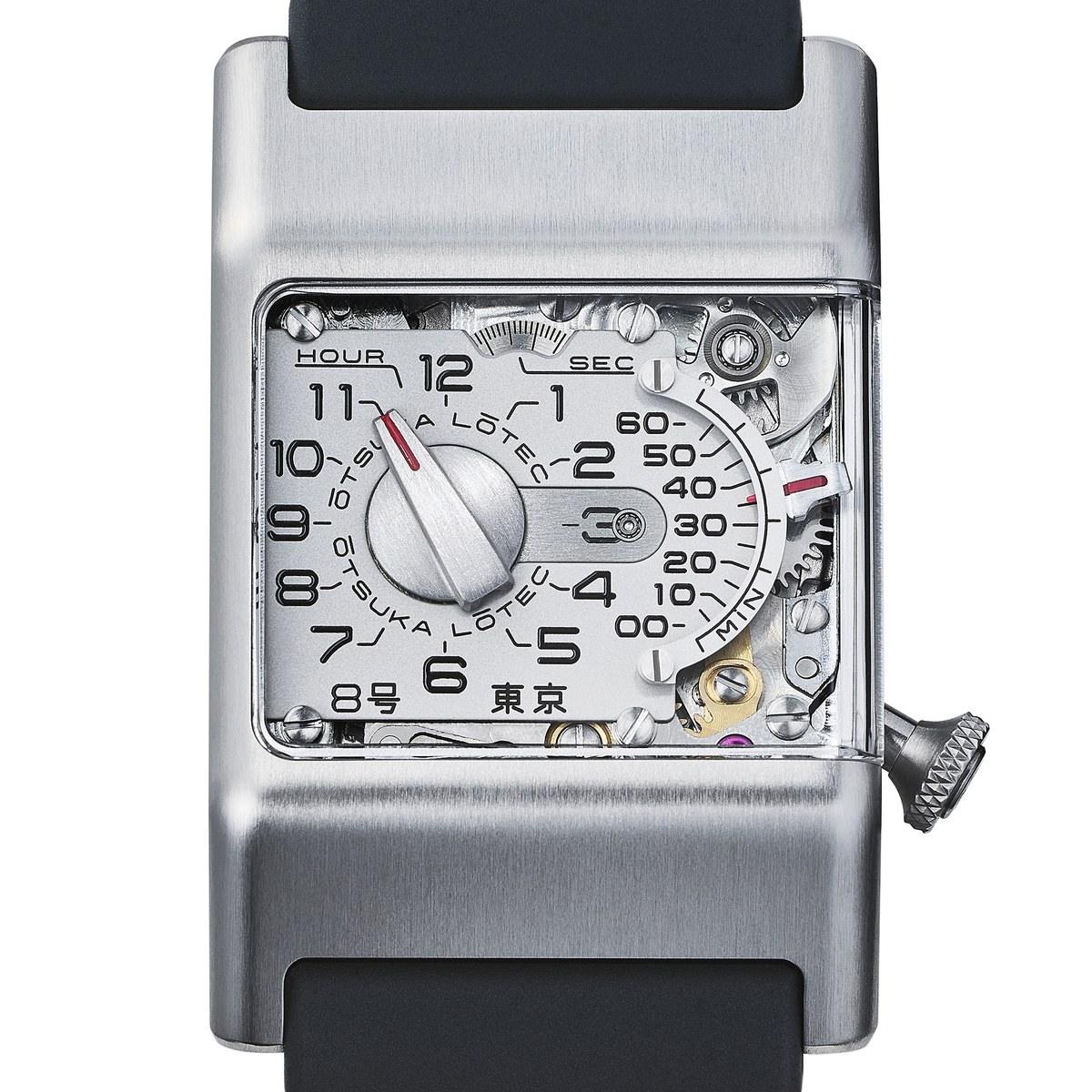
The No.8’s manufacturer documentation describes an hour channel that jumps, a minute fader that returns from 60 to zero through a flywheel-linked mechanism, and a separate seconds disc. The fader travels between two dial layers, visible through the side of the crystal. This is a coordinated display with depth, rather than a conventional dial with a different typeface.
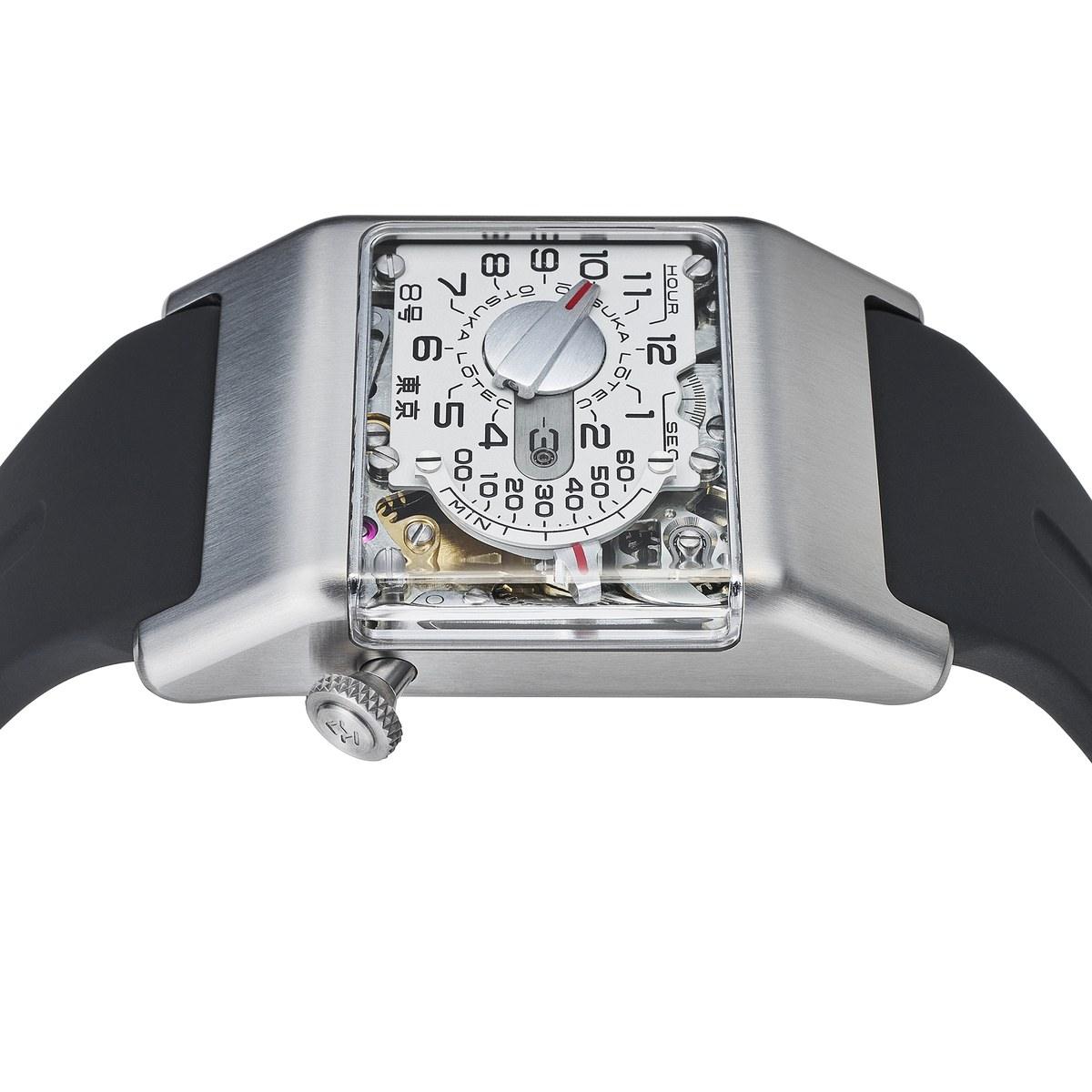
The important distinction is between watching a mechanism and using it. A slow, visible return can be part of the pleasure of ownership. It also invites a practical question: what does the display show during that transition? Before buying an unusual display, ask to see an uninterrupted change of hour, at normal speed, as well as an ordinary minute between transitions. A dramatic close-up answers only one of those questions.
There is an operating detail worth taking seriously, too: Otsuka Lotec instructs owners to set the time only in the forward direction. Familiarity with another mechanical watch is not a substitute for the instructions for this one.
Seconde Majeure: familiar shape, unfamiliar reading order
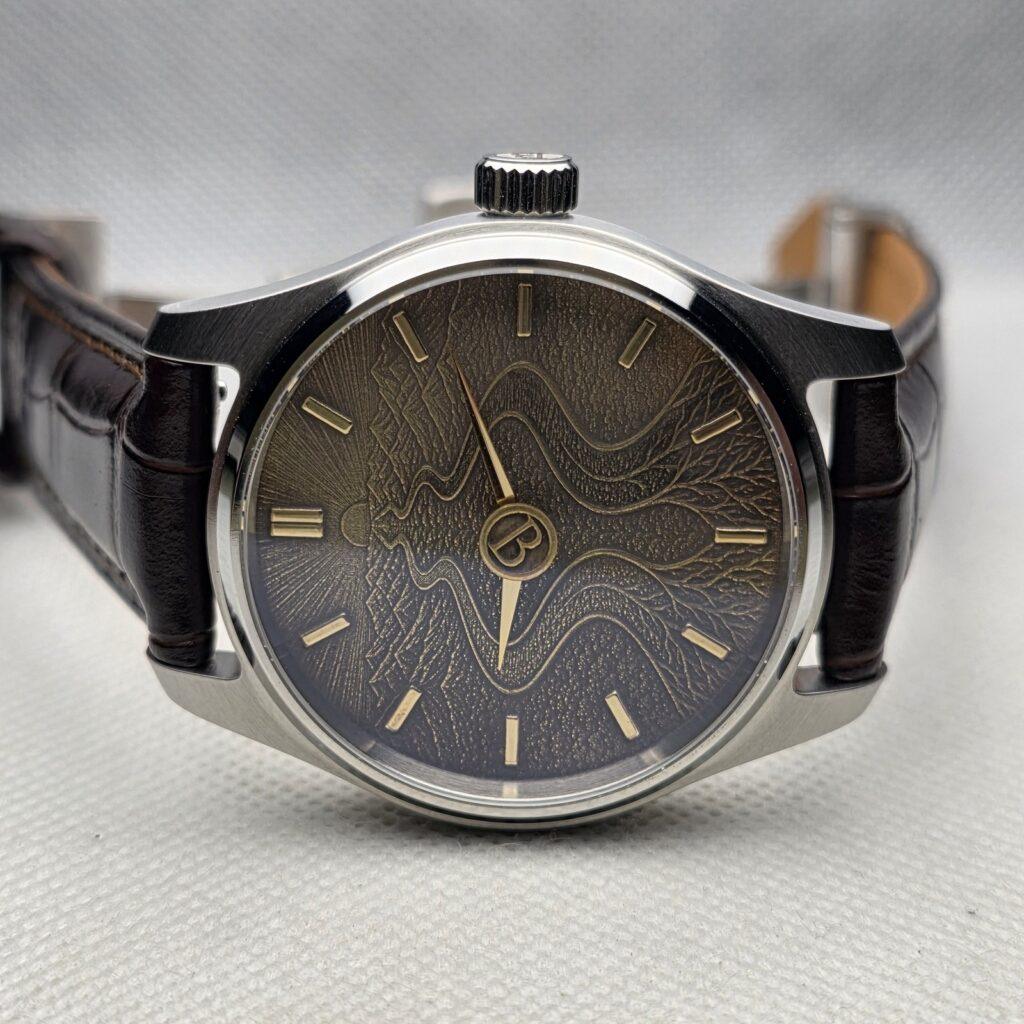
The Baltic x SpaceOne Seconde Majeure separates the hour display at twelve from the minute reading at six, using sapphire discs and a large seconds hand. Its round case may look more familiar, but the hierarchy is different: the conspicuous moving hand is not the one that supplies the minutes.
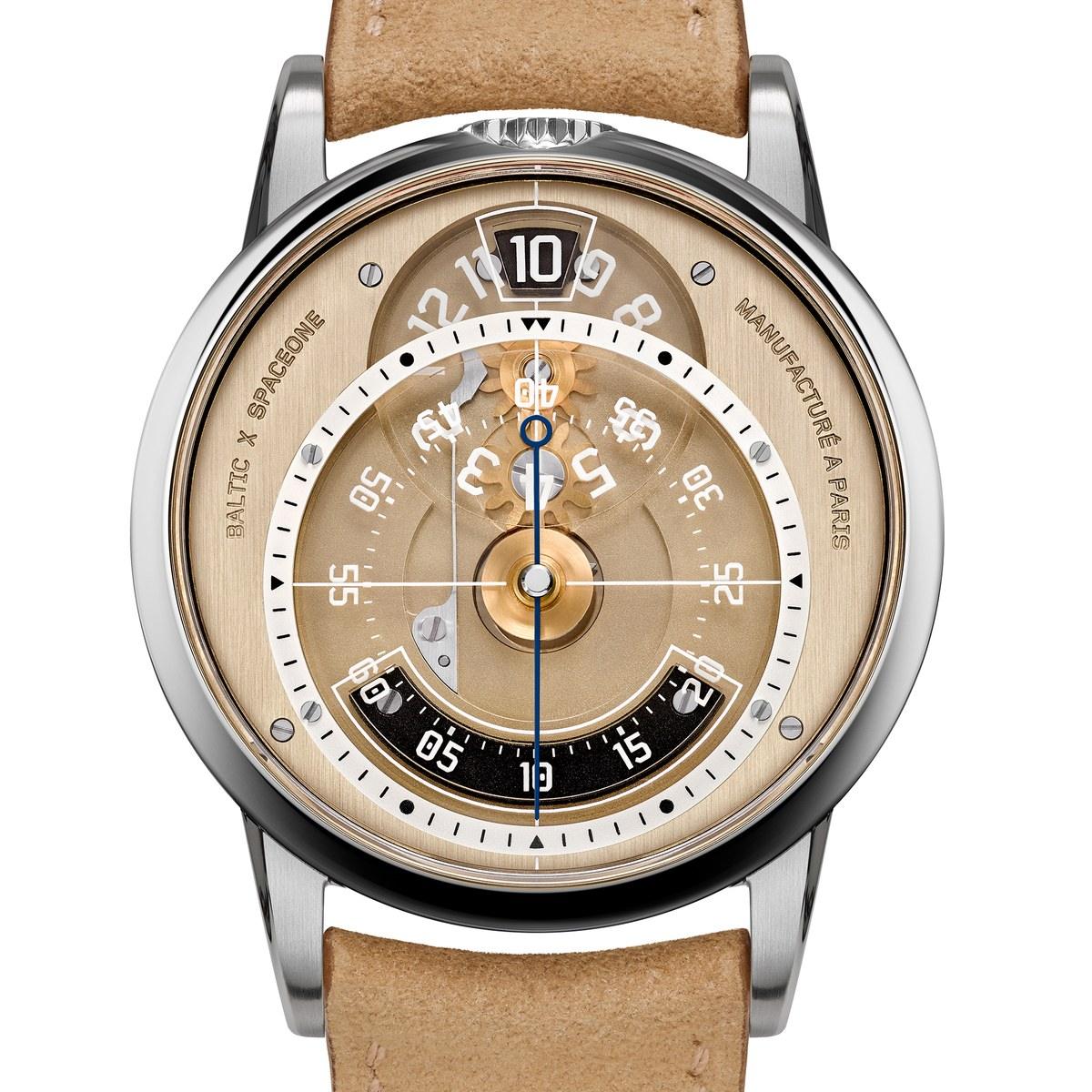
The collaboration attributes the jumping-hour module to Théo Auffret and identifies a Soprod P024 automatic base. Its explanation shows a control wheel, star wheel and jumper spring working together to advance and locate the hour indication. The visible mechanism contributes to the composition, rather than sitting anonymously behind it.
Our reading of the design is that this separation gives the watch a strong identity while asking the owner to learn a new sequence. That is not inherently a flaw. It becomes a problem only if the layout continues to interrupt the way you use a watch after the novelty wears off. A photograph cannot settle that for you.
A familiar base movement does not describe the finished watch
These designs also challenge an easy shortcut: judging the whole watch by the name of its base calibre. The No.8 combines a MIYOTA 90S5 with Otsuka Lotec’s own module. MIYOTA lists approximately 42 hours of running time for the 90S5; Otsuka Lotec specifies approximately 32 hours for the finished No.8.
Those figures should not be treated as contradictory specifications for the same product. Nor do they establish a controlled measurement of the energy consumed by the module. They demonstrate why the specification you need is the one for the finished watch. Copying the base movement’s number into a retailer listing would give the buyer a different expectation.
Service deserves the same care. Ask who handles the display module, where the watch goes for repair, and how proprietary components are supported. The availability of a familiar base movement does not answer those questions. Our guide to who really makes a watch separates these responsibilities in more detail.
How to judge an unusual display before committing
Start with the ordinary glance. Look at several different times, not just the carefully arranged position in a campaign photograph. Find the minute indication without tracing every visible wheel. Then consider the situations in which you actually check a watch: seated at a desk, outdoors, or under indoor lighting. Reflections and viewing angle matter, but a product image alone cannot establish how this particular watch will behave in those conditions.
Next, watch the transition and read the setting instructions. These are separate checks. Enjoying an hourly animation does not tell you how to correct the time after the watch has stopped. Finally, check the practical ownership details independently of the display: fit, stated running time, warranty and service route.
There is also a fair counterargument to all this scrutiny: a mechanical watch need not be the quickest possible time-reading instrument. Enjoyment is a legitimate reason to choose one. If you like pausing to follow a pointer or waiting for the hour to change, that is part of its value to you. The distinction is between choosing that experience knowingly and discovering an inconvenience after purchase.
The display has to earn its complexity
The most interesting question raised by these watches is how much of the pleasure comes from reading the time, and how much comes from watching it happen. Neither answer needs an apology. But an award, an unusual mechanism and a compelling photograph cannot make that choice on the wearer’s behalf.
Look for a design you enjoy between the dramatic moments, supported by clear operating instructions and an understandable service route. The jump can get your attention. The rest of the watch has to keep it.
Featured photograph: Otsuka Lotec No.8, © Masanori Yoshie, via the GPHG 2026 laureates press archive. Sources linked throughout are the GPHG results, the two manufacturers’ product documentation and MIYOTA’s calibre specification. Manufacturer specifications are attributed claims, not independent testing by The Watcher HQ.