Microbrand Watches: How Independent Brands Are Reshaping Watch Culture
Microbrand watches have changed modern collecting because they made the watch world less dependent on legacy names, large retail networks, and familiar catalog formulas. A small team with a clear idea can now develop a watch, work with specialist suppliers, speak directly with collectors, and build an audience without pretending to be a century-old manufacture.
That freedom has produced some excellent watches. It has also produced plenty of forgettable specification sheets, delayed preorders, derivative designs, and brands that disappear after one release. The word microbrand describes scale and business structure more reliably than it describes quality.
The useful question is therefore not whether microbrand watches are good. It is whether a particular brand controls enough of the design, execution, communication, and after-sales experience to justify the buyer’s trust.
This guide explains what the term means, why these brands matter, how they changed modern watch culture, and what collectors should inspect before ordering.
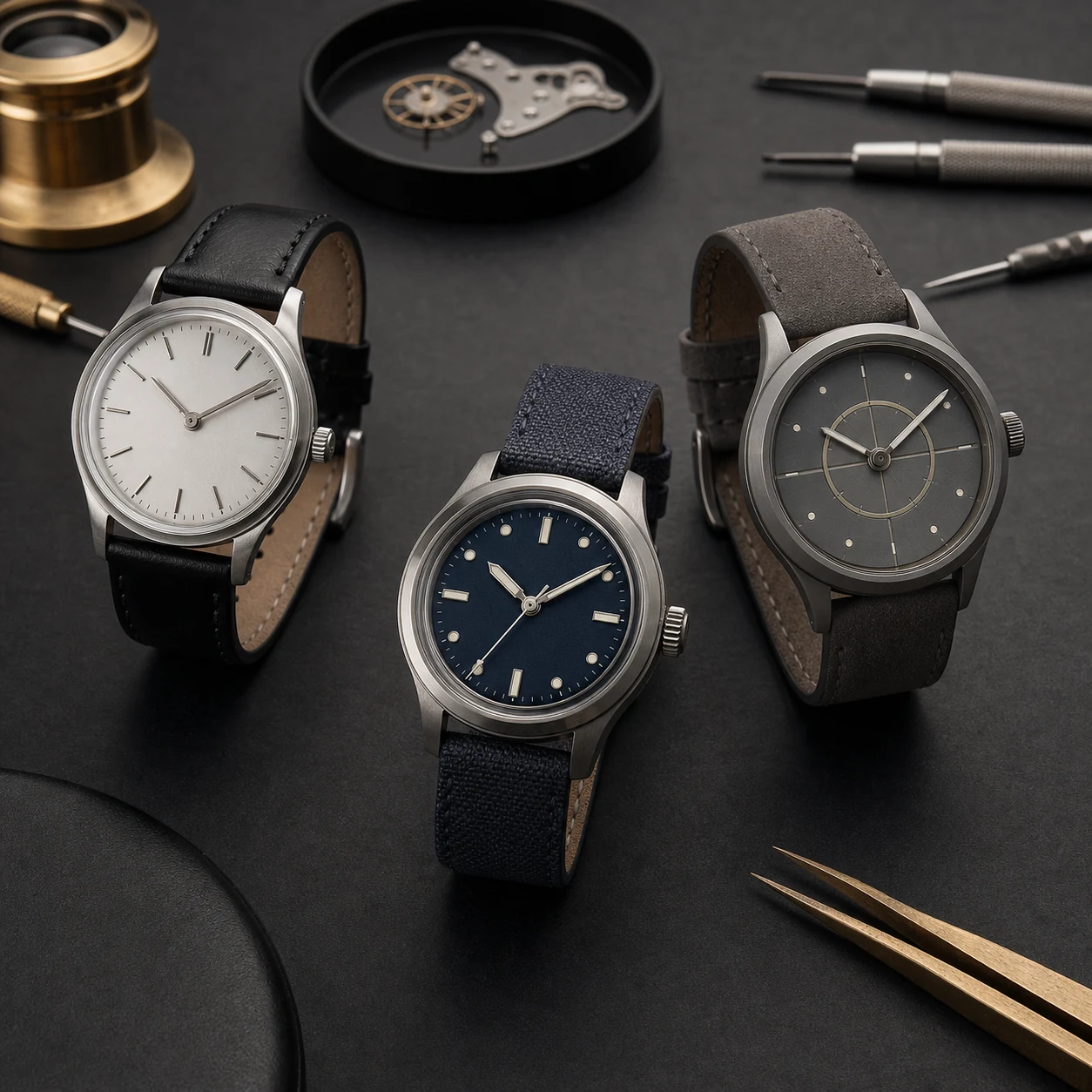
What Is a Microbrand Watch?
There is no official certification or universally accepted size limit for a microbrand. In practical use, the term usually describes a small, independently owned watch company that produces in limited quantities, sells mainly through direct channels, and relies on external specialists for at least some components or manufacturing.
A microbrand may design its own case, dial, hands, and bracelet while buying a movement from an established supplier. Another may begin with an existing case platform and invest most of its identity in the dial, finishing, color, and customer experience. Both can be legitimate, but they represent different levels of original development.
Outsourcing alone does not make a watch less authentic. Almost every watch is the result of a supply chain. What matters is whether the brand makes coherent decisions, communicates them honestly, and remains accountable for the finished object.
Microbrand Does Not Mean the Same as Independent Watchmaker
Ownership is only one layer. Our guide to who really makes a watch separates design, movement source, component manufacturing, assembly, finishing, testing, warranty, and service so those claims can be evaluated independently.
Independent describes ownership: the company is not controlled by a large watch group. Microbrand usually describes scale, age, route to market, and production model. The categories overlap, but they are not interchangeable.
A small direct-to-consumer brand using a Miyota or Sellita movement may be a microbrand. A highly established independent manufacture producing complicated movements in-house may be independent without being meaningfully “micro.” A growing brand can also outgrow the label while remaining privately owned.
Movement choice still affects the finished object. Our Miyota 9015 vs NH35 comparison shows how two common Japanese automatic movements change case thickness, seconds motion, parts support, and the economics of a small-brand watch.
The boundaries are blurry enough that industry reporting often discusses microbrands and larger independents together. That is useful for understanding the broader shift, but collectors should still separate an accessible small-batch watch company from high-horology independent watchmaking. They involve different prices, capabilities, risks, and expectations.
Why Microbrands Became Important
Microbrands widened the range of watch design available to ordinary collectors. Instead of choosing only between mainstream affordable watches, vintage risk, and expensive luxury brands, buyers gained access to compact field watches, unusual case shapes, experimental dial colors, niche tool-watch ideas, and proportions that would be difficult to justify across a huge global catalog.
They also changed where watch culture happens. Founders can explain a design directly, show prototypes, answer questions, and receive feedback before the next production run. Collectors can compare lug-to-lug length, bracelet taper, clasp design, lume, crystal shape, and dial spacing with a level of detail that was once difficult to find outside specialist forums.
The ecosystem is no longer confined to online launches. The official Windup Watch Fair page advertised more than 90 presenting brands for its 2026 San Francisco event. That scale does not prove that every exhibitor is a microbrand or every watch is good, but it shows how substantial the independent-watch audience has become.
Business data remains imperfect because the category has no clean boundary. A 2025 Independent Watchmaking Report summary published by WatchPro covered 81 independent brands; three quarters produced fewer than 1,000 watches per year. The report included companies beyond the strict microbrand category, but it confirms that very small production is a meaningful part of the modern independent landscape. The same caution applies to broader industry headlines: our guide to reading Swiss watch export data explains why export value is not the same as retail demand or unit sales.
Good Microbrands Are Not Built by Specs Alone
Many microbrand watches compete through specifications: sapphire crystal, automatic movement, ceramic bezel, screw-down crown, bright lume, solid bracelet, and an impressive water-resistance rating. Those features can matter, but they are only the admission ticket.
A watch can have the right movement and still feel generic. It can promise serious water resistance and still wear poorly. It can use sapphire and still have a crowded, flat, or derivative dial. The difference between a memorable watch and a watch people scroll past is usually judgment.
Judgment appears in the relationship between case diameter, effective lug span, thickness, dial opening, hand length, typography, crown size, bracelet taper, clasp, finishing, and negative space. A simpler watch can feel excellent when those choices support each other. A specification-heavy watch can feel unresolved when the components look assembled rather than designed.
Using an Outsourced Movement Is Normal
A microbrand does not need an in-house calibre to be credible. Established movement suppliers give small brands access to tested mechanical platforms, available technical documentation, and movements that independent watchmakers may already understand.
For example, the official Miyota 9015 documentation lists the movement’s dimensions, functions, running time, frequency, and technical files. Sellita likewise supplies established Swiss mechanical movement families used across independent and mainstream brands.
The movement name should not end the evaluation. Ask how it fits the design, whether the date position is handled well, whether the case is unnecessarily thick, who regulates and inspects it, what accuracy the brand actually promises, and how future service will be supported. A common movement used intelligently is often more reassuring than a vague claim of exclusivity.
How to Evaluate a Microbrand Watch Before Buying
A good product page should help you judge the physical watch rather than merely sell an atmosphere. Look for the following:
- Original identity: a coherent case, dial, hand, and strap direction rather than a famous silhouette with a new logo.
- Complete dimensions: diameter, lug-to-lug length, thickness, lug width, and ideally weight or bracelet sizing information.
- Real photography: production or prototype photos from multiple angles, including the side profile and wrist, not only flawless renders.
- Movement transparency: the exact calibre, relevant functions, and realistic performance claims.
- Manufacturing honesty: a clear explanation of what the brand designs, sources, assembles, finishes, or checks.
- After-sales support: written warranty terms, a real contact route, return information, and a credible plan for defects or service.
- Delivery clarity: whether the watch is in stock, a preorder, a prototype, or dependent on a funding threshold.
- Total cost: shipping, taxes, import charges, bracelet options, and return costs, not only the headline price.
Real photographs matter because renders remove friction. They can hide crystal reflections, side thickness, lug behavior, brushing quality, hand length, and the emotional difference between a design file and a physical object. Our guide to watch renders versus real watches explains how to read that gap.
Proportion matters just as much as diameter. If you are comparing compact independent watches, use the practical checks in our 36mm versus 37mm watch-size guide.
The Main Risks: Preorders, Service, and Brand Continuity
Small production creates freedom, but it also creates risk. A microbrand may need deposits or preorders to finance manufacturing. Suppliers can miss deadlines. Color samples can change. Quality-control problems can appear only when a full batch arrives. A founder may be handling product development, marketing, customer service, and fulfillment at the same time.
Before paying, identify what exists now. Is the photographed watch a prototype or a final production example? Has the movement been secured? Is the stated delivery date an estimate? What happens if the project is delayed or cancelled? Is the payment protected, and are the refund terms written clearly?
Service deserves equal attention. Common movements can help, but a watch is more than its calibre. Crowns, crystals, bezels, bracelets, dials, hands, and case-specific seals may be harder to replace. Ask whether the brand keeps spare parts and whether it expects repairs to be handled locally or returned to its own workshop.
Resale can also be unpredictable. Some scarce models gain a strong following; many do not. Buy a microbrand watch because the design and ownership proposition make sense, not because small production automatically creates investment value.
How Microbrands Changed Dial Culture
Smaller production runs give dial work more room to breathe. Brands can take risks with color, texture, typography, applied markers, printing, engraving, and unusual surface treatments without needing every idea to satisfy a mass-market catalog.
A dial is not merely decoration. It controls the emotional temperature of the watch and affects legibility, perceived size, depth, and character. A brushed surface behaves differently from lacquer. A deeply textured dial may give a compact case more presence. Applied markers can add structure, while too many techniques can make the design feel indecisive.
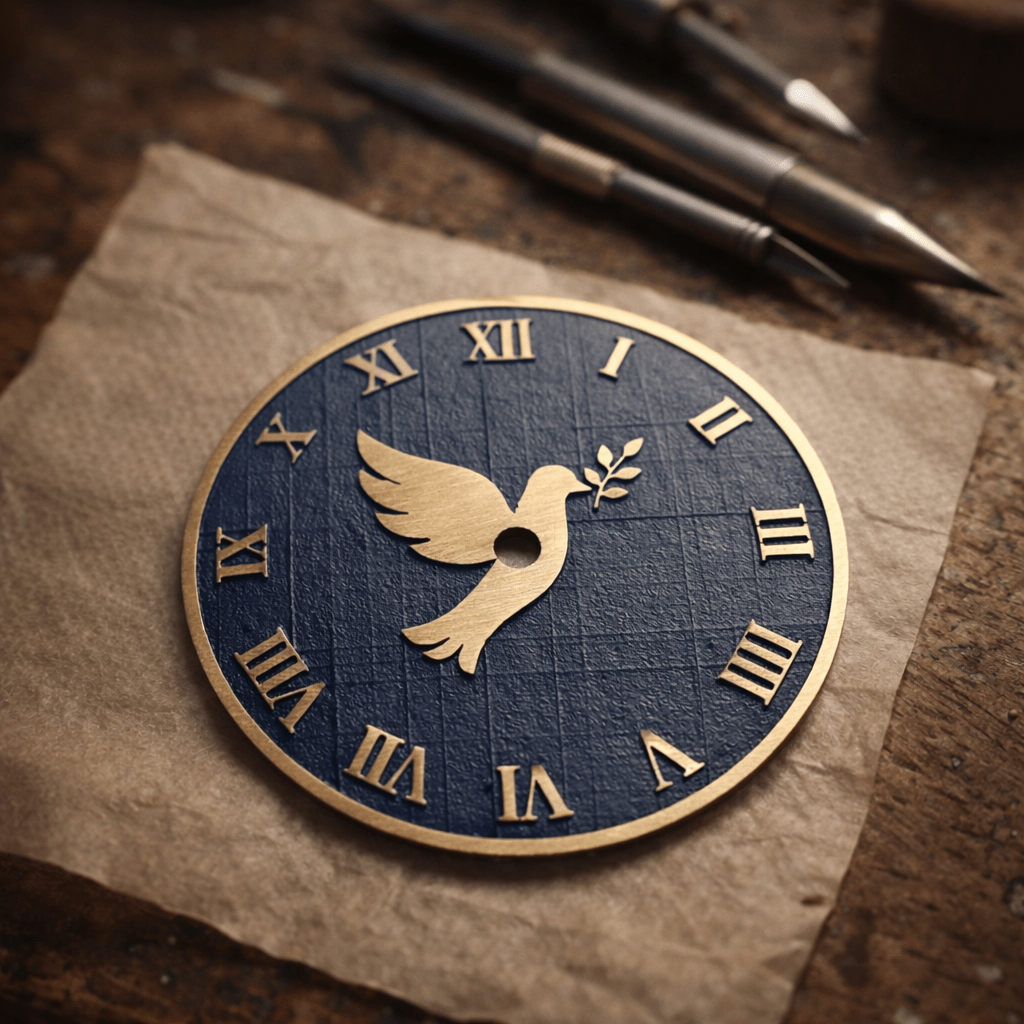
This is one reason art dials and independent dial makers have become more visible. For the practical side, our guide to how custom watch dials are made follows the decisions from layout and material through engraving, finishing, and assembly.
Meshberg as a Small-Batch Example
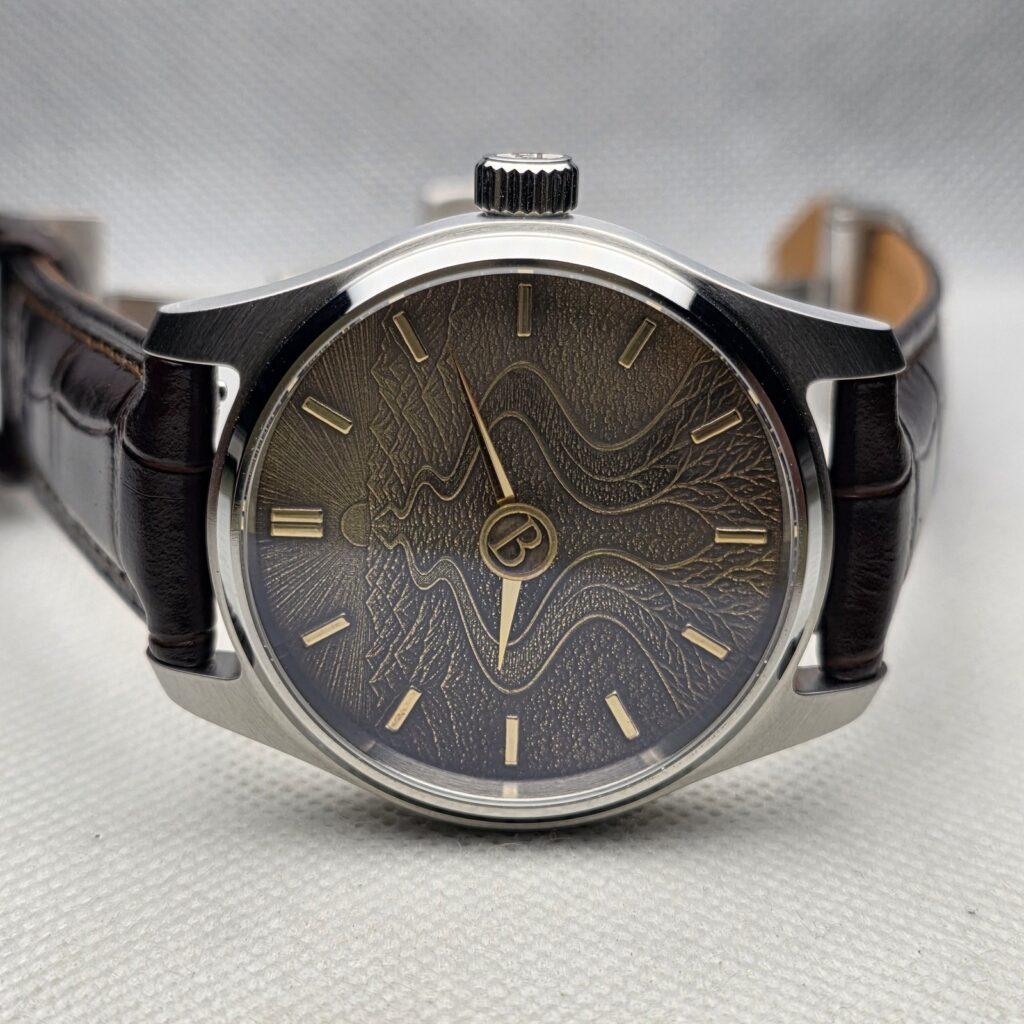
Meshberg Watches is part of this ecosystem, so it should be presented transparently rather than disguised as a detached recommendation. It represents the quieter, small-batch side: restrained proportions, mechanical watches, and experimental dial work informed by a real workshop.
The Meshberg 37 Automatic uses a compact 37mm case and a Miyota 9015 movement as a consistent mechanical foundation while dial character changes across the collection. The newer Meshberg Strata project takes a different route: a 36.5mm case, Sellita SW200-1 movement, and a laser-made, hand-finished, chemically darkened dial.
Neither example proves that every microbrand should work this way. They demonstrate the standard that matters: the design story should be visible in the physical choices, and the claims should match what the workshop can actually show.
Why Workshop Evidence Matters
Rexx Timepieces is the more open workshop side of the same ecosystem. Its role is different from Meshberg: custom mechanical watches, Seiko mods, dial development, laser engraving, finishing, assembly, and direct build decisions.
That connection matters here because small brands often ask buyers to trust a story before they can handle the watch. Real workshop evidence helps separate a genuine process from generic lifestyle copy. The Rexx Timepieces YouTube channel shows builds, dial work, engraving, and experiments in motion. Rexx StudioWorks carries the craft layer through handmade dials, engraved objects, and other small-batch workshop pieces.
The point is not that every founder must own every machine. The point is that a brand should be able to explain where its value comes from and show evidence appropriate to the claims it makes.
The Microbrand Conversation Is Now Mainstream
The video below from Teddy Baldassarre is useful as a snapshot of how far the category has moved into mainstream enthusiast discussion. Microbrand watches are no longer framed only as cheap alternatives. They are judged on design, value, personality, execution, and the credibility of the people behind them.
The Risk of Generic Independence
The weak side of microbrand culture is easy to recognize. A company can order a familiar case, borrow a popular dial layout, add a logo, list strong specifications, and call the result independent. Technically, it may qualify as a microbrand. Culturally, it may contribute very little.
Collectors are increasingly alert to short hands, unresolved dial spacing, bulky cases, afterthought bracelets, copied visual language, and stories that have no relationship to the object. Independence creates the opportunity for judgment; it does not replace judgment.
A brand does not need to invent every component to be original. It needs to transform sourced components through a coherent point of view and accept responsibility for the complete watch.
The Future of Microbrand Watches
The next stage will not be won by specifications alone. Strong brands will become clearer about where parts come from, what they control, how they inspect watches, and how they support owners after the launch excitement fades.
Some microbrands will remain intentionally small. Others will move into retail, develop proprietary components, or grow beyond the label. Some will disappear because the first design never became a durable identity. That is healthy. Independent watch culture should not mean every small brand deserves attention automatically; it should mean collectors have more room to find watches that match their taste, wrist, budget, and values.
The most convincing microbrand watches make their limitations part of their honesty. They do not need invented heritage or vague luxury language. They need a reason to exist, a well-resolved object, and a relationship with buyers that survives delivery day.
Final Thoughts
Microbrand watches reshaped collecting by giving smaller teams a real place in the conversation. They made the market more experimental, widened access to unusual design, and brought founders closer to enthusiasts.
But the label is only a starting point. Judge the watch, the evidence, and the ownership proposition. Look beyond the movement name and feature list. Check the dimensions, real photographs, design coherence, delivery status, warranty, spare-parts plan, and whether the brand’s story is visible in the physical object.
The best microbrands are not simply affordable alternatives to luxury watches. They are independent expressions of what a watch can be when a small team has a clear idea and enough discipline to carry it through.