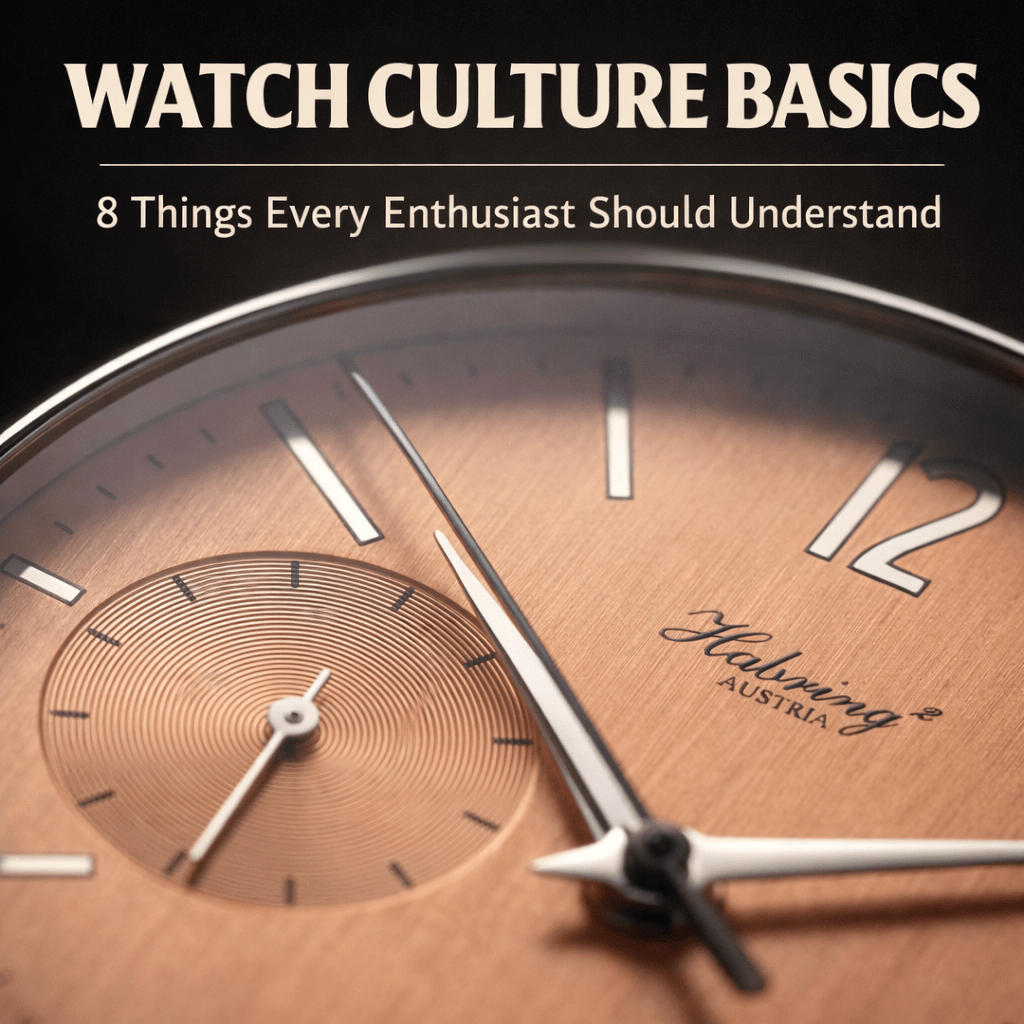
Watch Culture Basics: 8 Things Every Watch Enthusiast Should Understand
Watch culture basics can feel surprisingly difficult to learn. The hobby has its own language, strong opinions, historical references, and endless arguments about movements, case size, finishing, originality, brands, and value.
The useful part is not memorizing every reference number or copying somebody else’s taste. It is learning how to look at a watch with context: what it was designed to do, how well its parts work together, what compromises were made, and whether the result makes sense on a real wrist.
These eight watch culture basics are a practical foundation. They will not tell you which watches you must like. They will help you understand why you like them, discuss them more clearly, and avoid some of the hobby’s most persistent shortcuts.
1. Movement Type Is a Tool, Not a Moral Hierarchy
Quartz, hand-wound mechanical, and automatic movements solve different problems. Quartz is usually more accurate, more resistant to everyday disturbance, less expensive to maintain, and ready to wear after sitting in a drawer. A hand-wound movement creates a direct daily ritual. An automatic movement adds a winding rotor so normal wrist motion can maintain its power reserve.
None of those facts creates a universal ranking. A thoughtfully designed quartz watch can be more coherent than a badly proportioned mechanical watch. A dependable automatic calibre can be a better choice than a more decorative movement with weak support. The movement should suit the watch’s purpose, dimensions, price, and expected ownership experience.
Ask practical questions. Is the movement easy to service? Does it provide the functions the dial promises? Is the case unnecessarily thick because of it? Does the brand explain what is inside? Our guide to automatic, quartz, and mechanical watches covers the operating differences in detail.
Enthusiasm becomes more useful when movement knowledge explains a watch instead of becoming a test of whether its owner belongs in the hobby.
2. Watch Size Is Geometry, Not One Number
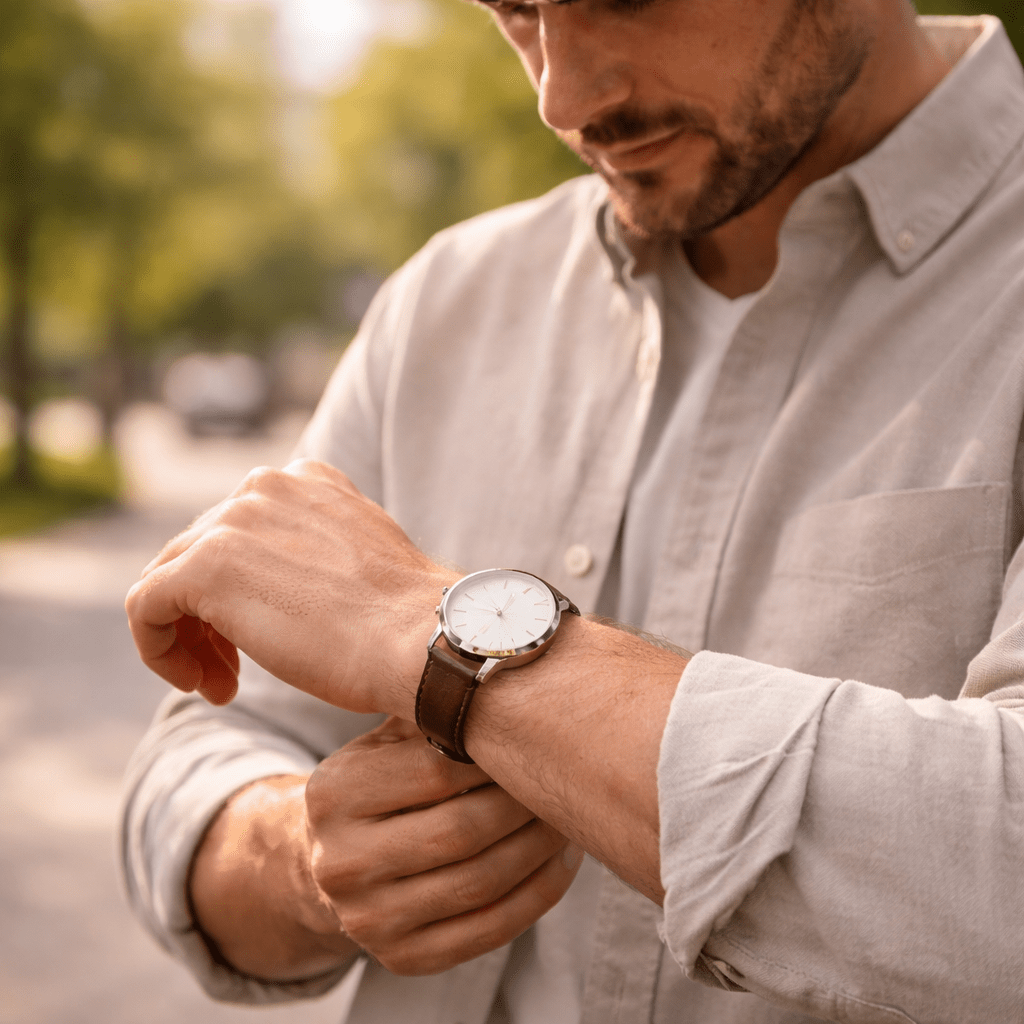
Case diameter is easy to publish, so it receives too much attention. Fit also depends on lug-to-lug length, thickness, caseback shape, bezel width, dial opening, crown position, bracelet end links, strap angle, and mass. Two watches with the same stated diameter can occupy the wrist very differently.
A broad dial opening makes a watch read larger. A thick bezel can make the same diameter feel compact. Long straight lugs may overhang a wrist even when the case sounds small on paper. Female end links and a flexible strap can help a watch settle closer to the wrist, while fixed male end links extend its effective span.
This is why smaller watches have returned without making larger watches obsolete. A 36mm or 37mm case can feel restrained, substantial, delicate, or sporty depending on everything around that number. The 36mm versus 37mm watch guide shows the geometry in practice, including the Meshberg 37 and the 36.5mm Meshberg Strata workshop project.
When possible, try the watch on. If that is not possible, compare lug-to-lug, thickness, weight, and photographs on a wrist similar to yours. Diameter starts the conversation; it does not finish it.
3. The Dial and Hands Create the Watch’s Identity
The dial is where typography, spacing, texture, markers, color, and information meet. The hands have to work with that surface, not merely sit above it. Their length, shape, finish, contrast, and height affect both character and legibility.
Small errors become visible because a watch dial is an ordered system. A logo placed slightly too low can disturb the balance. Short minute hands weaken the connection to the track. Applied markers can feel rich when they are aligned and proportioned, but cheap when they are crowded or inconsistent. A dramatic texture can disappear under reflections or compete with the time display.
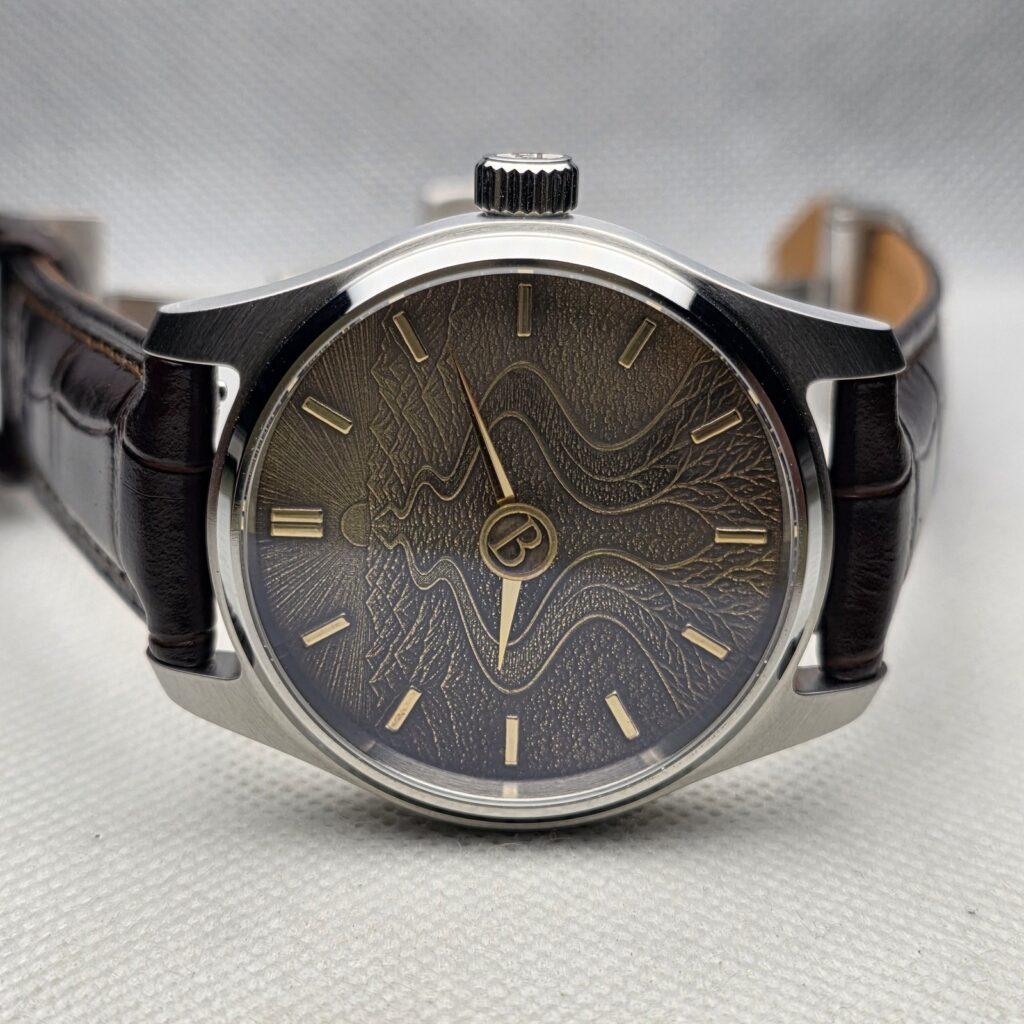
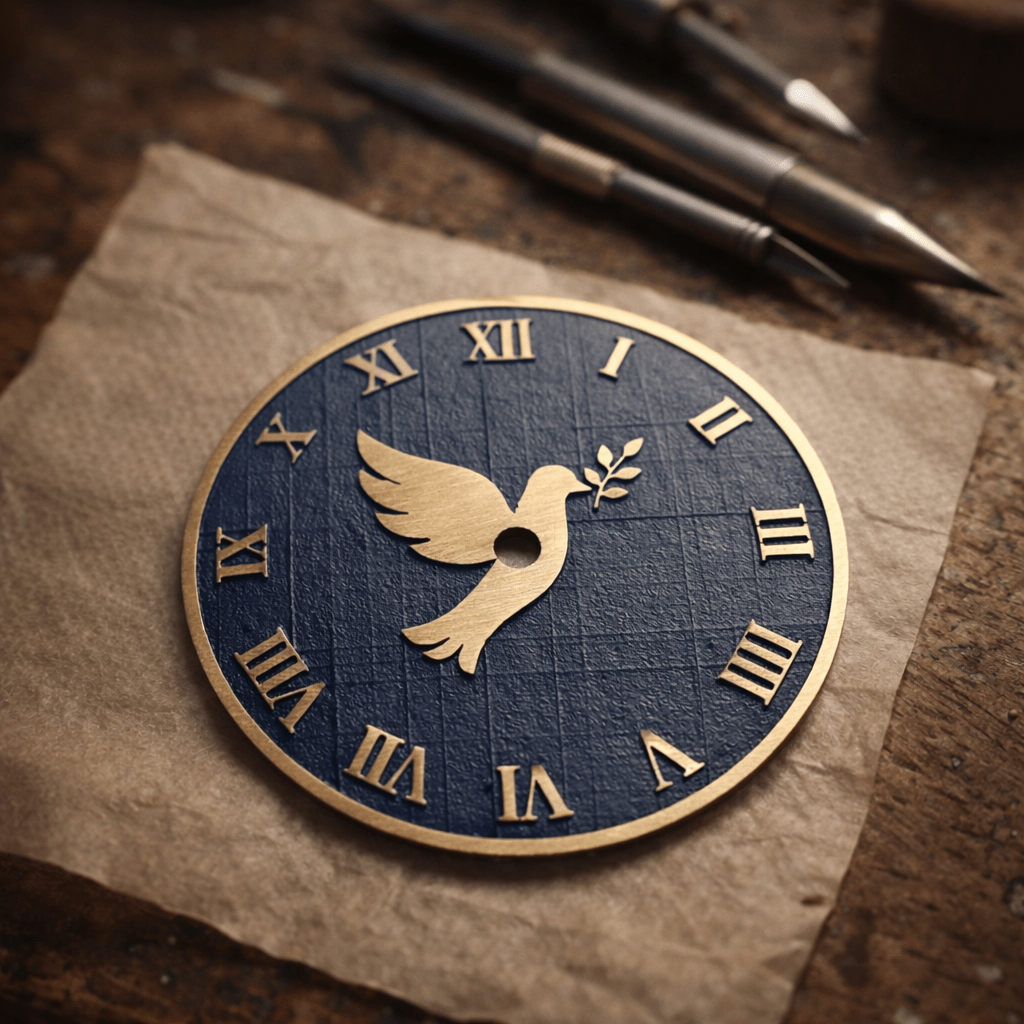
Material matters too. Brass, copper, enamel, stone, lacquer, and coated or chemically darkened metals behave differently under tools and light. The guide to watch dial materials and texture explains why surface treatment is more than decoration, while how custom watch dials are made shows the workshop decisions behind a finished face.
A good dial does not need to be busy or handmade. It needs hierarchy. You should know where to look first, read the time without fighting the design, and continue discovering detail at closer distances.
4. Finishing Means Coherence, Not Maximum Shine
Finishing is often reduced to polished surfaces, but polish is only one language. Brushing, bead blasting, engraving, anglage, graining, coating, and controlled transitions can all contribute. What matters is whether the finish supports the form and whether the boundaries between surfaces are deliberate.
A polished bezel can sharpen the edge of a brushed case. Brushed lugs can make a daily watch easier to live with. A matte dial may improve readability, while a radial finish adds movement in changing light. Expensive finishing often reveals itself in clean transitions, difficult internal angles, consistent direction, and attention to parts that are not immediately visible.
More decoration is not automatically better. A watch can combine glossy dial text, polished hands, a reflective crystal, polished markers, and a mirror-finished case until every element competes. Restraint is also finishing.
Judge the complete object. Look at the case beside the bracelet, the hands against the dial, the crown against the case flank, and the watch in ordinary daylight. The goal is not to count techniques. It is to see whether they speak the same design language.
5. Brand History Is Context, Not Borrowed Taste
Heritage can explain why a watch looks the way it does. Military contracts, diving equipment, railway timing, aviation, racing, dress conventions, and regional craft traditions all shaped watch design. Knowing that history can make a watch more interesting.
But history is not a substitute for present quality, and a famous name does not decide your taste for you. Brands change owners, factories, suppliers, movements, price positions, and design direction. A strong archive can coexist with an ordinary current product. A young brand can make an excellent watch without inventing a century of mythology. Market statistics need the same context: Swiss watch exports are not retail sales, and the distinction matters when interpreting industry headlines.
Separate four questions: What is historically important? What is technically well executed? What offers fair value? What do you actually want to wear? Sometimes one watch answers all four. Often it does not.
The same discipline applies when access and prices become the story. Application-only watches can create genuine community or manufactured scarcity, while watch auction records describe exceptional transactions rather than the value of every example. Neither should replace judgment about the actual watch.
This also makes room for personal meaning. The ritual explored in why wearing a watch still matters does not require a famous logo. An inherited quartz watch, a carefully chosen microbrand, and a handmade custom build can each matter for different reasons.
6. Authenticity Requires More Than Recognizing a Logo
Watch culture uses words such as homage, replica, counterfeit, redial, restoration, mod, and custom, but they do not describe the same thing.
- A counterfeit or replica sold as genuine copies protected identity and attempts to mislead.
- An homage watch openly uses design language associated with another watch while carrying its own identity.
- A restoration repairs or replaces parts to preserve an existing watch, sometimes affecting originality and collector value.
- A redial refinishes or replaces the dial; it may be honest work, but it should be disclosed.
- A mod or custom build deliberately changes components or creates a new combination, again with clear disclosure.
The ethical center is provenance and honesty. What is the object? Which parts are original? Which were replaced or made later? Is the seller representing it accurately? A transparent custom watch is not pretending to be factory-original, and an honest homage is not the same as a counterfeit. Our guide to homage watches versus replicas explains that boundary.
Disclosure protects buyers and makes the hobby more interesting. A watch does not become less worthy because it was restored, modified, or built in a small workshop. It becomes easier to judge when its story is accurate.
7. Microbrands Changed Access, Not the Standard of Judgment
Microbrands opened the market to unusual dimensions, colors, materials, complications, and direct relationships with founders. Small production runs can serve tastes that large companies cannot justify at scale. Crowdfunding and direct-to-consumer sales also made it possible to launch a watch without a traditional retail network.
That freedom creates risk as well as opportunity. A persuasive render is not a finished watch. Buyers still need to examine case geometry, movement choice, water-resistance claims, manufacturing partners, quality control, warranty terms, communication, delivery history, and service plans.
The right question is not whether a microbrand is “real.” It is whether the people behind it make clear claims, understand the product, support customers, and deliver a coherent watch. The same scrutiny should apply to established brands, even if their distribution and service networks are larger.
Read how microbrands are reshaping watch culture for the wider picture. Meshberg Watches represents the quiet small-batch layer of this ecosystem, including the Meshberg 37 Automatic and experimental dial work. Its value should still be judged through the finished watch, not through the word “independent” alone.
8. Custom Watches Turn Taste Into Engineering
Custom watches expose the decisions hidden inside ordinary product pages. Choosing a dial color quickly leads to questions about material, contrast, marker thickness, hand length, date position, movement layout, case opening, stem height, crystal clearance, and future service.
This is why custom work is not simply selecting attractive parts. The components must agree. A thick marker can collide with a hand. A dial made for one movement may place the date window incorrectly on another. A beautiful case can wear badly. A dark finish can make polished hands disappear.
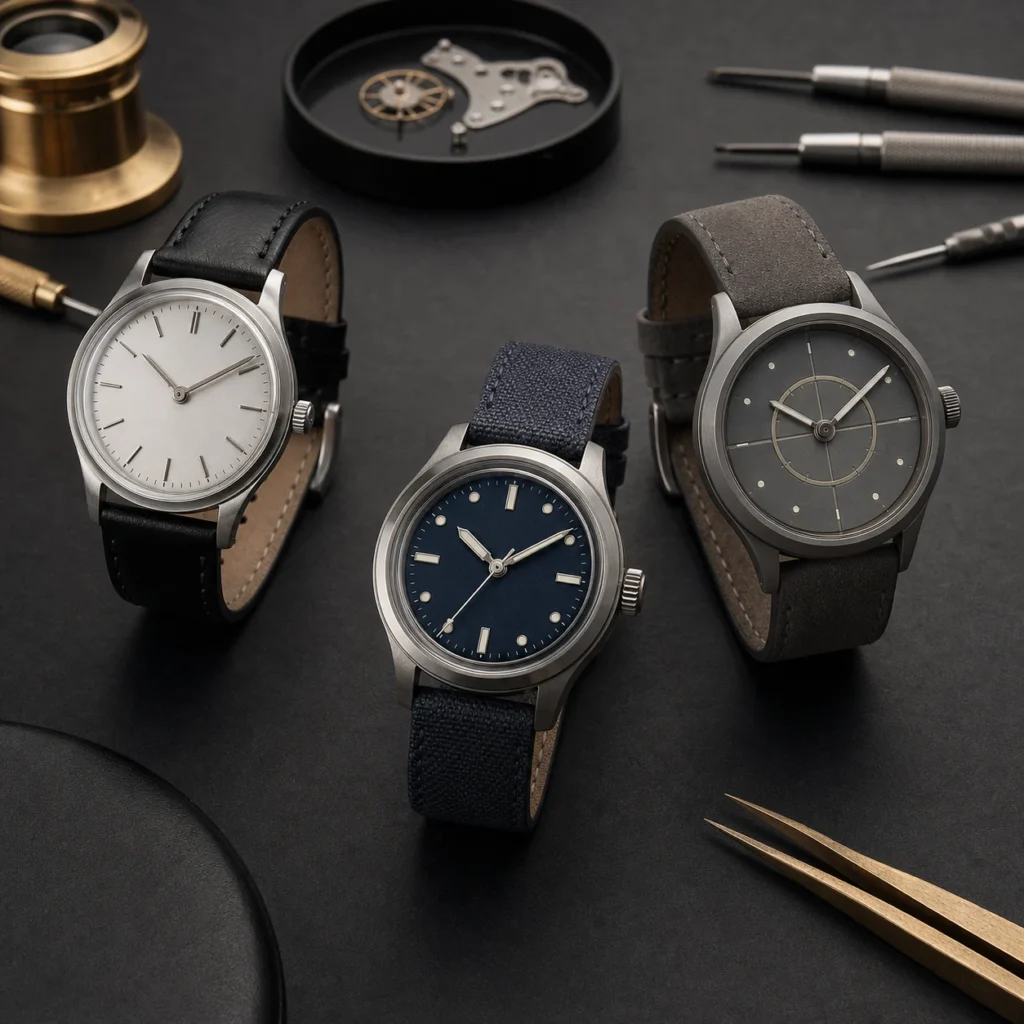
Rexx Timepieces shows the open workshop side of that process through custom watch builds, while Rexx StudioWorks carries handmade dials, engraved objects, coins, and small-batch workshop pieces. The Rexx Timepieces YouTube channel provides real build, dial-making, laser, and assembly evidence.
You do not need to commission a watch to learn from custom work. It teaches a useful habit: whenever a design choice looks exciting, ask what it requires physically. That habit improves how you judge every watch.
Watch Culture Basics in Practice: Keep Your Own Taste
The healthiest version of the hobby is curious rather than defensive. You can disagree about design without insulting the owner. You can explain a technical limitation without turning knowledge into gatekeeping. You can admire an expensive watch without assuming price proves quality, and enjoy an affordable watch without pretending every compromise is irrelevant.
Handle other people’s watches only when invited. Ask before winding, setting, opening a clasp, or placing a watch on a hard surface. Do not pressure somebody to reveal what they paid. When discussing vintage, custom, restored, or modified pieces, ask for provenance before making accusations.
Most importantly, spend time with watches. Notice what you continue wearing after the novelty fades. Record the dimensions that fit you, the dial colors that remain readable, the bracelets you adjust comfortably, and the complications you actually use. Taste becomes more reliable when it is built from experience rather than consensus.
Frequently Asked Questions
Do I need a mechanical watch to be a watch enthusiast?
No. Watch enthusiasm can include quartz, mechanical, digital, connected, vintage, custom, or experimental watches. Knowledge and curiosity matter more than movement type.
What should a beginner learn first?
Start with movement type, fit, water resistance, crystal material, dial legibility, and service expectations. Then handle different watches and learn which proportions and designs work for you.
Are expensive watches always better finished?
No. Higher prices can pay for difficult hand finishing, movement development, precious materials, small production, distribution, and brand value, but price does not guarantee coherent design or better fit.
Is a custom or modified watch less authentic?
Not when it is represented honestly. A custom build is authentic to what it is. Problems begin when aftermarket, restored, or modified parts are hidden and the watch is sold as factory-original.
The Watcher HQ Verdict
The most important watch culture basic is context. A movement should suit its watch. A case should suit a wrist. Finishing should support the design. Heritage should be accurate. Custom work should respect engineering. Sellers should disclose what they are offering, and collectors should remain open enough to keep learning.
You do not need permission to enjoy a watch. But learning to see why it works – and where it does not – makes the hobby deeper, more honest, and more rewarding.