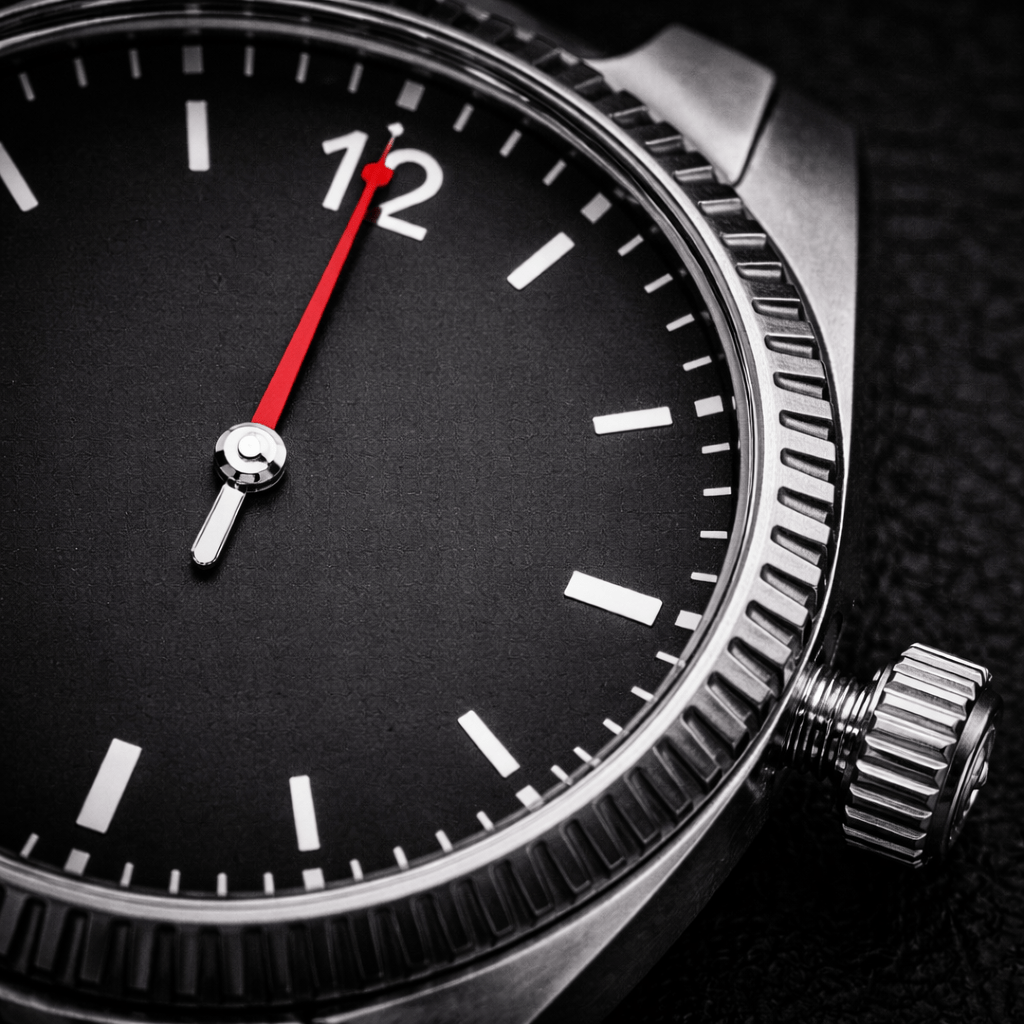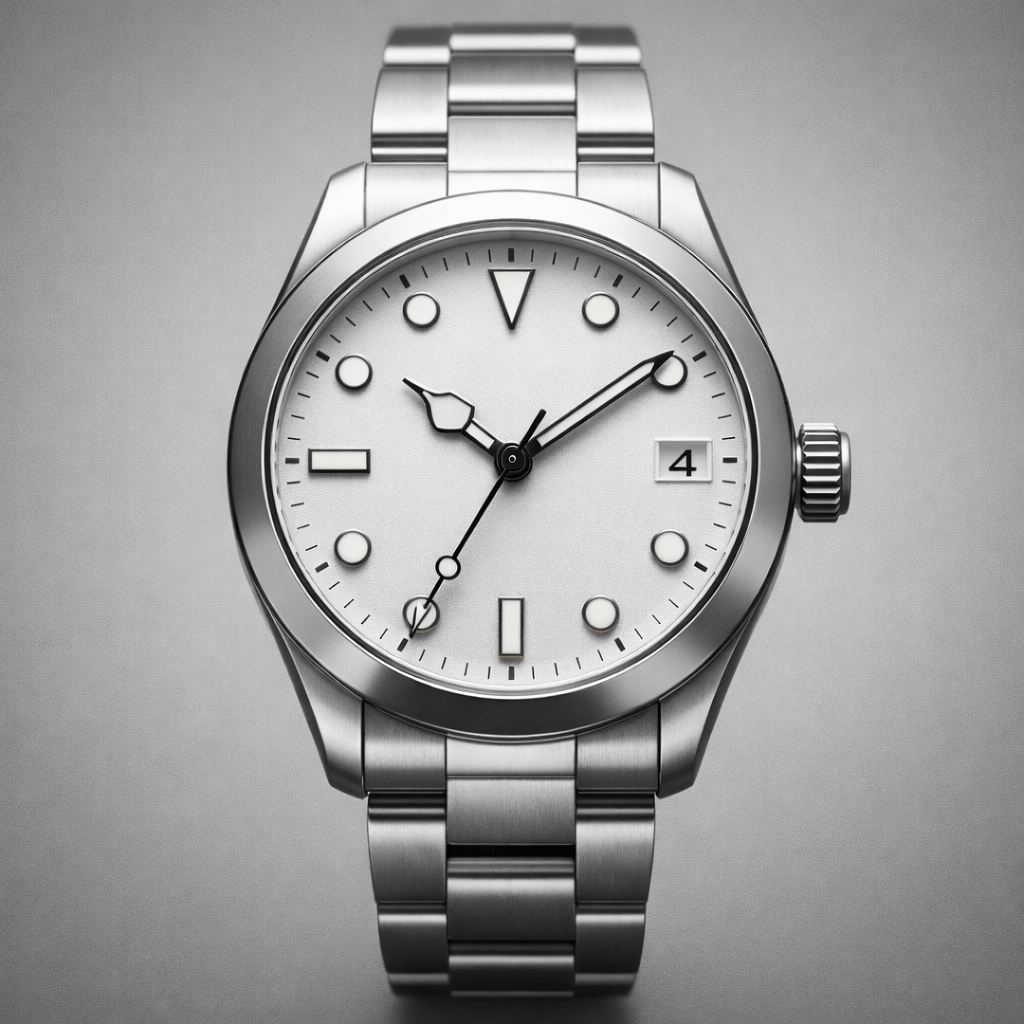
Do not quick-set a watch’s date just because the hands are close to midnight.
In many calendar movements, the date mechanism begins engaging hours before the date actually flips. Using the crown’s quick-set function during that period can force the calendar correction against parts that are already moving the date.
The result may be a date that changes incorrectly, fails to change the next day, or—in some calibres—damaged calendar components.
The practical habit: before quick-setting the date, move the hands to a clearly safe daytime position such as 6:30. Set the date to the day before your target, then advance the hands forward through midnight so you confirm AM/PM and arrive at the correct date.
Do not memorize one universal danger window. Seiko instructions commonly warn against date adjustment around 9 p.m. to 1 a.m., while some day-date models use a longer window. Other movements differ.
For a concrete example, TMI’s Version 02 NH3-series operation sheet, which includes the NH34A, warns against date setting between 9 p.m. and 4 a.m. Use the instructions for your exact movement and watch. That date-setting warning should not be silently expanded into a separate universal rule for adjusting a GMT hand.
Watcher Insight: the time shown by the hands—not the real time outside—controls whether the calendar mechanism is engaged.