A honeycomb pattern can fill a watch dial without leaving room for conventional hour markers. Rexx’s Honeycomb watch dial follows that idea through to a complete watch: raised brass lines, a small bee, a dark background and a gold-tone case on burgundy leather.
Meidan made the project for Rosh Hashanah, taking the idea of a sweet new year into the dial artwork. The bee supplies the small recognisable detail; the hexagonal network does most of the visual work.
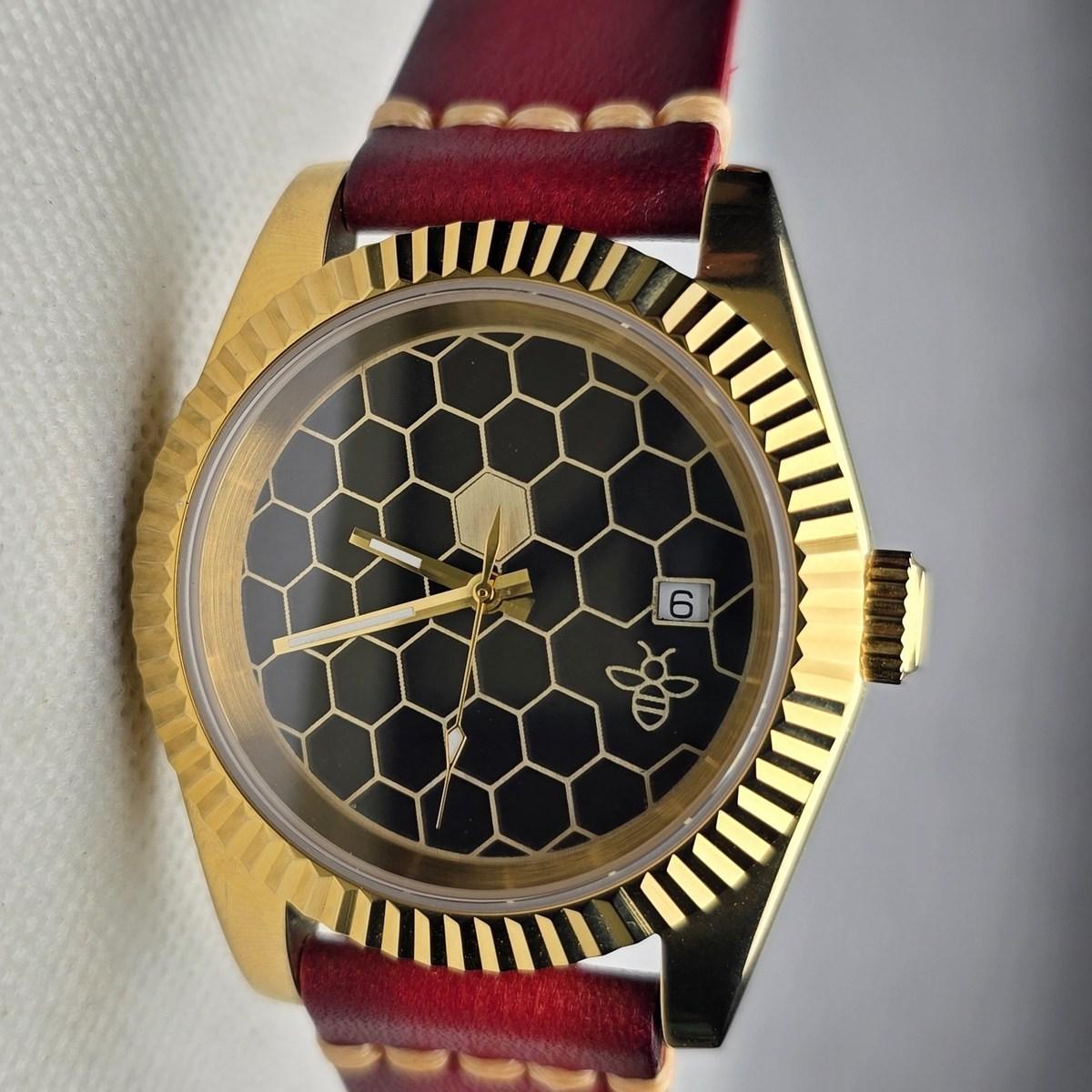
The Outline Is Part of the Brass
The honeycomb lines and bee are raised from the dial itself. Meidan used a fiber laser to remove the surrounding metal, then finished the surface by hand to bring the brass details out. The work belongs to the reverse-etching approach described in our guide to how custom watch dials are made.
This matters to the design because the bright outline connects the whole face. Every cell shares a boundary with the next, while the bee remains a distinct shape within the same field. The artwork is built into the relief of the metal.
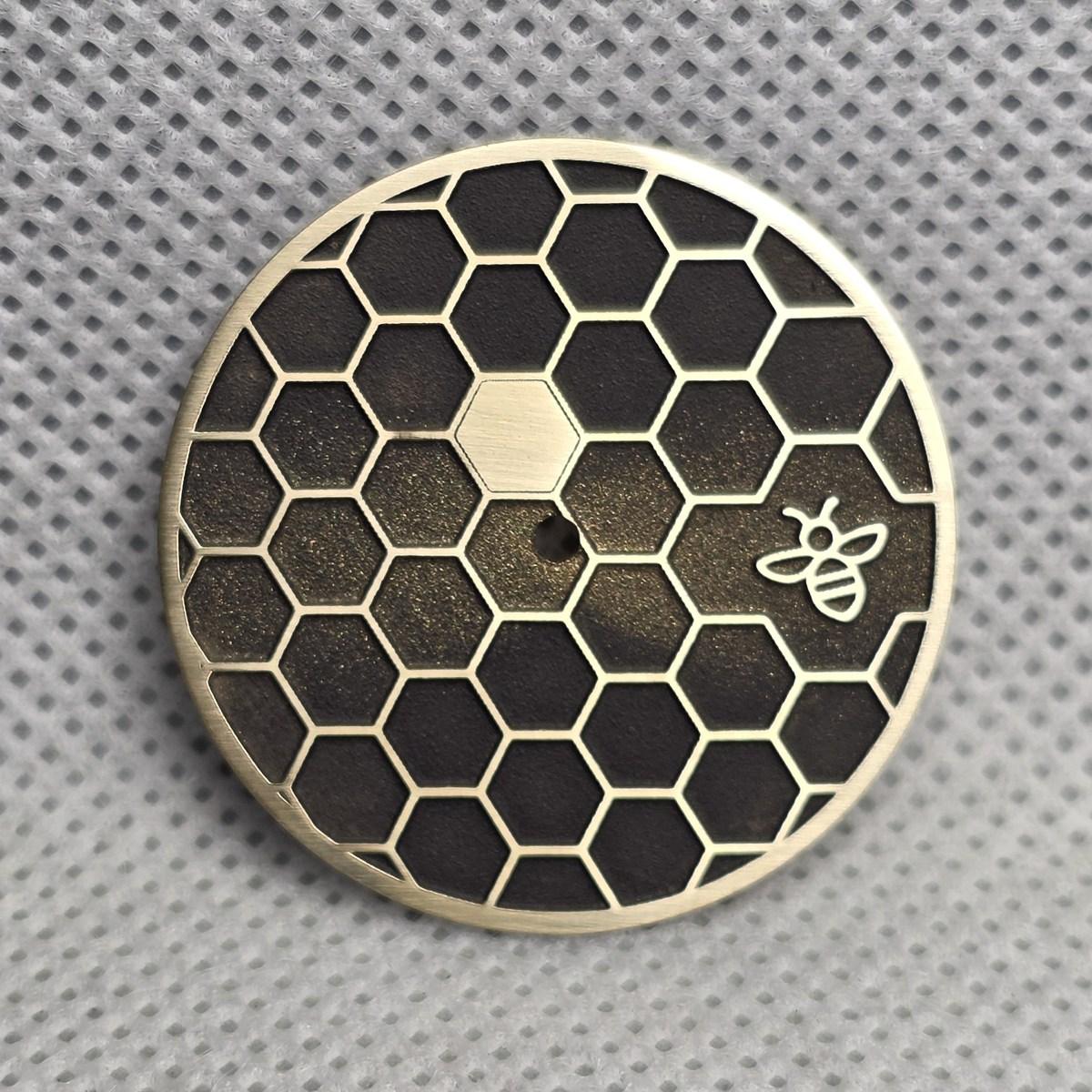
Two Finishes, One Pattern
The project has two variations: a clean dark background and a version with a sparkly splash effect in the cells. Both retain the raised brass outlines and the bee. These are finish variations, rather than a before-and-after correction.
The clean treatment gives the connected lines a quiet, continuous background. The sparkly treatment adds smaller points of interest inside the cells. Neither needs a different underlying motif to change the character of the face. It is a useful example of separating the geometry of a dial from its surface finish.
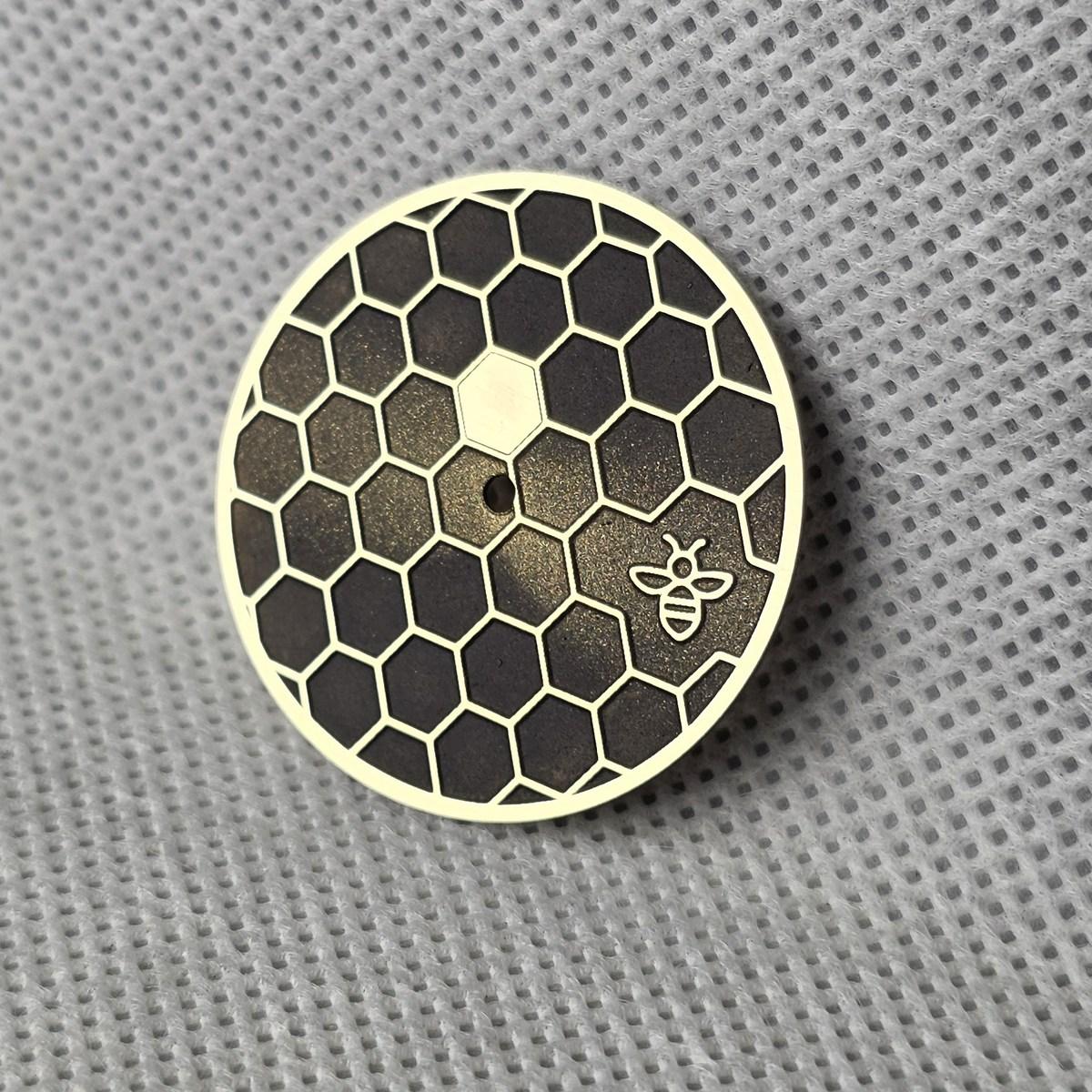
What Changes When It Becomes a Watch?
A loose dial photograph makes the engraving easy to inspect. The finished watch adds the hand shapes, reflections from the crystal, the case and the strap. Those parts decide how strongly the pattern reads as a whole.
Meidan paired this dial with a gold-tone case and burgundy leather strap. There are no conventional hour markers, so the honeycomb runs across the face. The open pattern is a central design choice: someone comparing it with a marked dial should consider how they prefer to read the time at a glance, as well as how the watch looks in a photograph.
Watch the Dial and the Assembly
The two films show different stages. The first follows dial making; the second shows the complete watch build.
A Useful Starting Point for Your Own Dial
Choose what stays constant before choosing the finish. In this project it is the honeycomb geometry and the bee. Then consider the background, exposed metal, hand contrast and case as separate decisions. A change to one can alter the balance of the rest.
Before ordering physical parts, use our parts compatibility guide. A convincing layout still needs the correct dial dimensions, mounting method and installed clearance for the intended watch.
For a different approach to surface finish, see the Chameleon dial and its change of colour under the light.
Take the Idea Further
Explore a visual layout in the free Rexx Dial Studio designer on Reddit, or share an idea and ask for feedback in RexxDialStudio. Physical dimensions, mounting and hand clearance still need checking before a design becomes a watch part.
For the next workshop story and practical build notes, join The Watcher Insider.
The photographs, projects and films are by Meidan of Rexx Timepieces. The Watcher HQ and Rexx Timepieces share ownership. This article documents work from our own workshop; it is not an independent review of a supplied product.