How Wearing a Watch Changes You: 9 Real Effects
How wearing a watch changes you is less dramatic than the usual lifestyle claims suggest. A watch does not make someone disciplined, punctual, stylish, or interesting by itself. What it can do is change a series of small repeated actions: how you check the time, how often you reach for your phone, how you notice proportion, what you value in an object, and which watches you actually keep wearing.
Those effects are modest, but they compound because the object is on your wrist every day. The useful question is not whether a watch transforms your personality. It is whether living with one changes your habits and attention enough to matter. For many wearers, it does.
Does Wearing a Watch Really Change Your Personality?
There is one important distinction to make first: association is not causation. A 2015 study of watch wearing and personality found that regular watch wearers scored higher on conscientiousness and emotional stability, and that watch wearers in a separate punctuality test arrived earlier. That is interesting, but it does not prove that fastening a watch to your wrist creates those traits.
The more sensible interpretation is two-way. People who already value structure may be more likely to wear a watch. At the same time, a visible time display can support the habits they care about. The watch becomes a cue, not a personality transplant.
A watch does not create discipline. It gives discipline a place to show up.
1. You Can Check Time Without Entering Your Phone
The most immediate benefit of wearing a watch is not accuracy. Your phone is already accurate. The benefit is access without escalation.
A wrist check ends after one piece of information. A phone check can begin with the time and continue into messages, news, email, work, or social feeds. The watch does not eliminate digital distraction, but it removes one common reason to pick up the device.
Research on smartphones did not test wristwatches directly, so this should not be turned into a false scientific claim. What it does show is why the distinction matters. In the study “Brain Drain: The Mere Presence of One’s Own Smartphone Reduces Available Cognitive Capacity”, participants performed better on measures of available cognitive capacity when their phones were in another room rather than on the desk or in a pocket or bag. A traditional watch offers a practical way to know the time while leaving the phone alone.
This is not anti-technology. It is simply a cleaner interface for a tiny recurring task.
2. Time Becomes Physical Instead of Merely Numerical
A digital display gives you a number. An analog dial gives you a position. At 3:45, the minute hand has crossed most of the dial and the hour hand is approaching four. The remaining quarter-hour is visible as space.
That spatial view does not make analog watches objectively superior, but it can make time feel more continuous. The hands move through a surface instead of replacing one number with another. Even a quartz watch provides that visual relationship; a mechanical watch adds the awareness that stored energy, gearing, and an escapement are producing it.
If that mechanism is new to you, our beginner’s guide to mechanical watches explains the movement without romantic fog. The comparison between automatic, quartz, and mechanical watches also shows why different technologies create different ownership experiences.
3. Punctuality Becomes Easier to Monitor, Not Guaranteed
A watch cannot make you punctual if you ignore it. What it can do is keep time available without requiring a device, an app, or a notification. That matters during meetings, travel, workshop work, meals, and conversations where checking a phone may be disruptive or socially awkward.
The practical effect is a lower-friction feedback loop: glance, compare, adjust. If you need to leave in twelve minutes, the dial remains on your wrist while you finish what you are doing. The watch is useful because it is passive. It does not demand attention; it waits for it.
This is also why the watch-wearing study should be read carefully. Watch wearers arrived earlier in the researchers’ punctuality sample, but the result tells us more about the relationship between watches and time-conscious people than it does about instant behavioral change.
4. A Small Daily Ritual Appears
Putting on a watch can become one of the quiet transitions that begins a day. You choose the watch, fasten the strap or bracelet, check the time, and sometimes wind or set it. At night, you place it somewhere deliberate rather than dropping it like a disposable object.
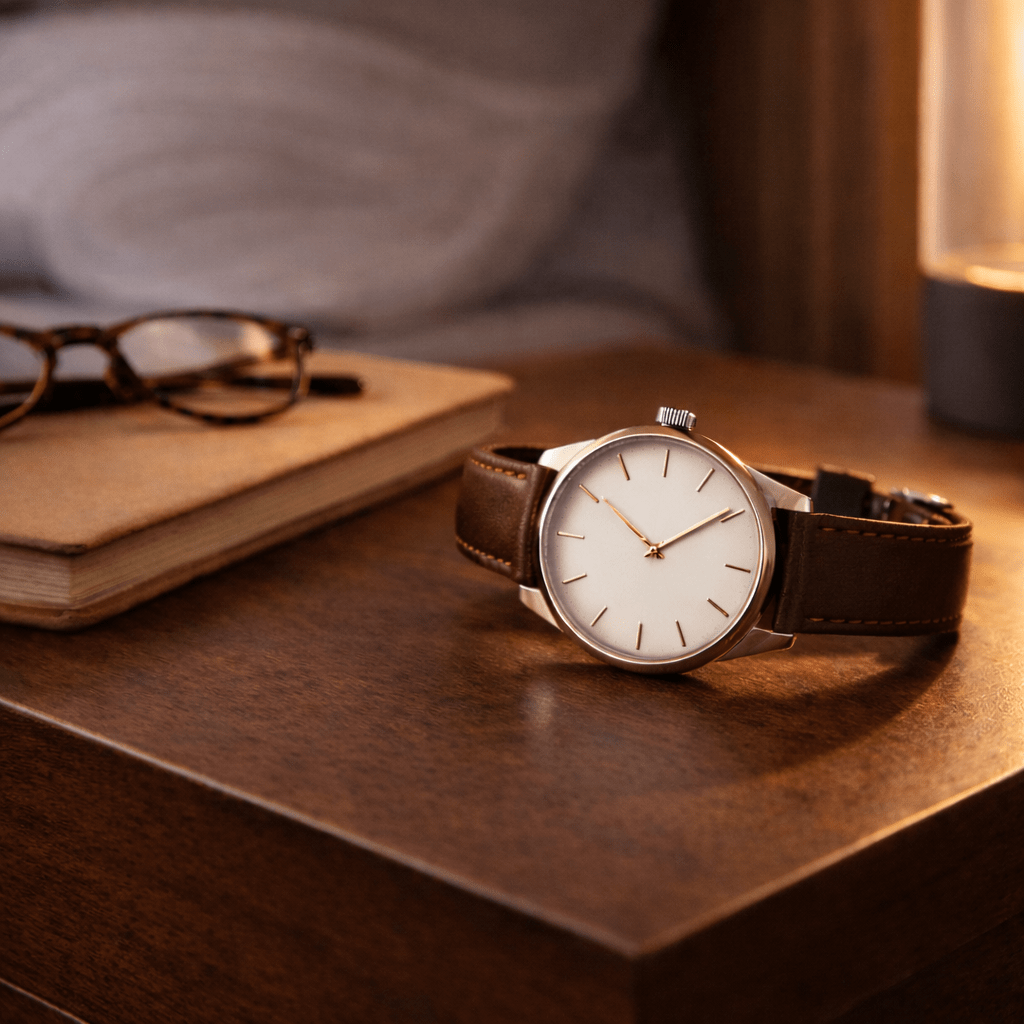
The ritual is stronger with watches that ask something from the owner. A hand-wound watch needs winding. An automatic watch may need resetting after time off the wrist. A leather strap changes with wear. A bronze case develops patina. None of that is automatically better than convenience, but it creates participation.
For the more reflective side of this idea, read The Ritual of Wearing a Watch. That article looks at why the repeated act matters culturally. Here, the point is practical: repeated care makes the object easier to remember and harder to treat as anonymous.
5. Your Sense of Personal Style Gets More Precise
A watch occupies little space, yet it can change the balance of an outfit. Case diameter, dial color, bracelet finish, strap texture, and thickness all alter how it feels on the wrist. Over time, wearing different watches teaches you which choices actually fit your life.
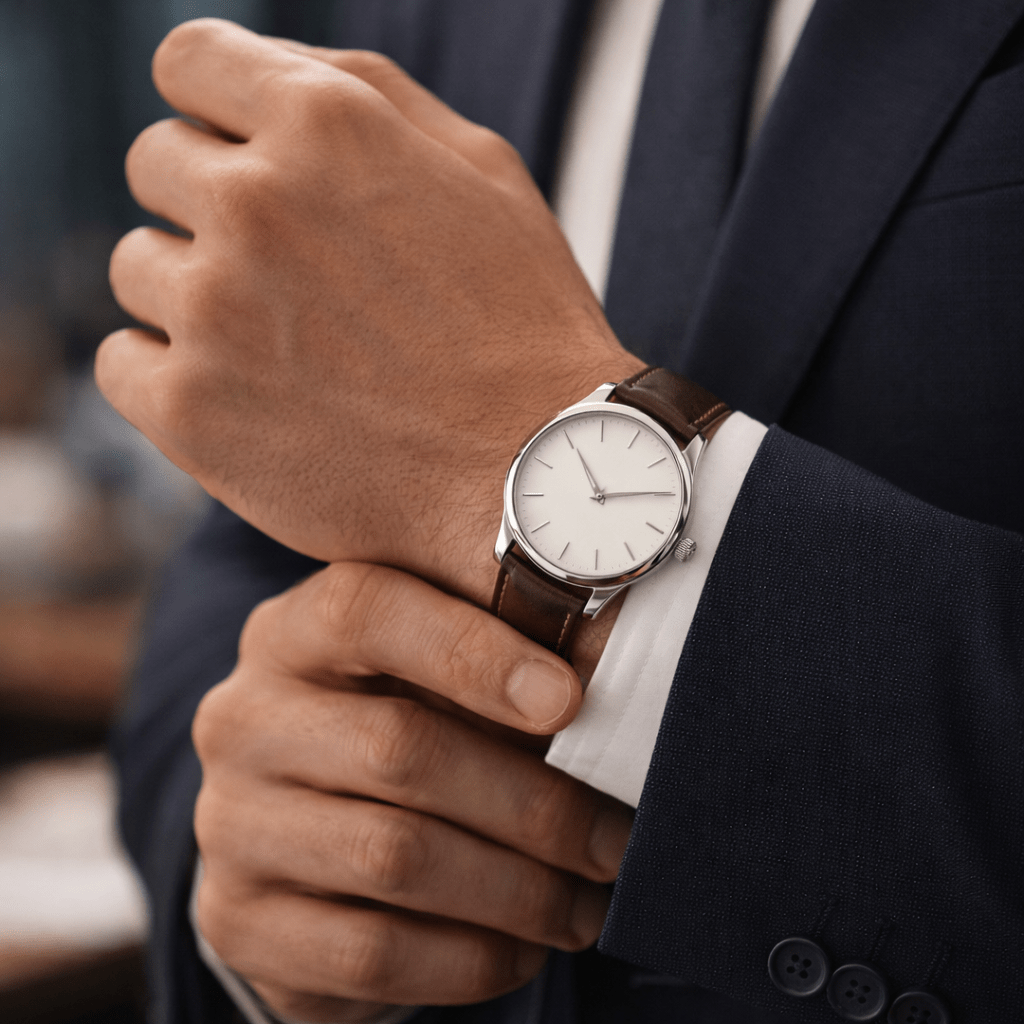
You may discover that a restrained 36–38mm watch works better than the larger piece you admired online. You may prefer brushed cases to polished ones, warm dials to black, or leather to bracelets. That is useful knowledge because it comes from wear rather than trend.
Our 36mm vs 37mm watch guide explains why diameter alone is not enough; lug-to-lug, thickness, dial opening, and strap geometry all affect presence. The same lesson applies to style more broadly: the watch that suits you is not necessarily the watch that dominates a photograph.
6. You Start Seeing Design Details You Once Missed
Regular wear trains the eye because you keep viewing the object from real angles and in changing light. You notice whether the hands reach their tracks. You see how quickly polished surfaces collect marks, whether the date window disturbs the dial, and whether the bracelet tapers enough to stay comfortable.
This is where watch enthusiasm becomes more useful and less dependent on brand recognition. A famous logo cannot correct poor proportions. A modest watch can feel excellent when the case, dial, hands, crystal, and strap agree with one another.
Real wear also teaches skepticism. Renders and studio images can hide thickness, reflections, and awkward lug shape. Our guide to watch renders versus real watches explains what product images often fail to show.
7. Collecting Shifts From Ownership to Wrist Time
A watch collection looks different after you pay attention to what you actually wear. The watch that seemed essential in a review may stay in the box. Another that looked ordinary online may become the default because it is comfortable, legible, and easy to live with.
That changes the questions worth asking:
- Do I enjoy wearing this for a full day?
- Does it fit the situations I actually encounter?
- Am I buying a new experience or repeating a watch I already own?
- Would a strap change revive an existing watch?
- Do I like the object, or do I like its reputation?
The result is usually a more personal collection, not necessarily a larger one. Our guide to starting a watch collection without wasting money builds on the same principle: buy from experience, not pressure.
8. Wear Marks Turn the Watch Into a Record
A pristine watch shows how it left the factory or workshop. A worn watch shows how it entered someone’s life. Fine scratches on a clasp, a softened leather strap, faded bezel color, or a small case mark can become part of the object’s history.
That does not mean carelessness is noble, and it does not mean every scratch should be celebrated. It means use creates information. The watch that accompanies work, travel, family events, or a difficult year becomes harder to evaluate only by resale condition.
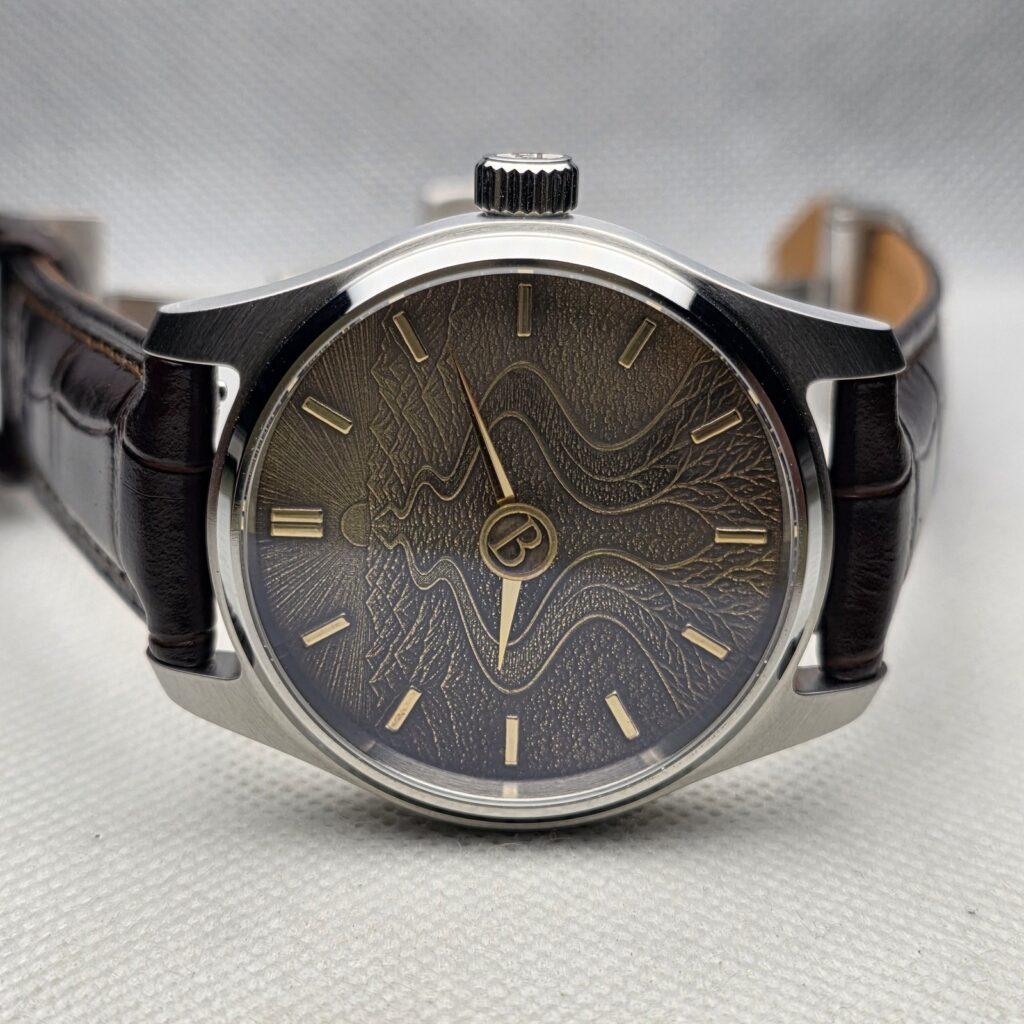
This is why milestone and custom watches can carry unusual weight. A date, symbol, dial texture, engraving, or private reference can connect the object to something specific. The custom milestone watch project shows how a restrained personal detail can tell a story without turning the dial into a billboard.
9. Craft Stops Being an Abstract Selling Point
Once you live with watches, “craftsmanship” becomes easier to test. It is not just a word in a product description. It appears in alignment, finishing, hand clearance, case fit, dial texture, regulation, and the decisions made before assembly.
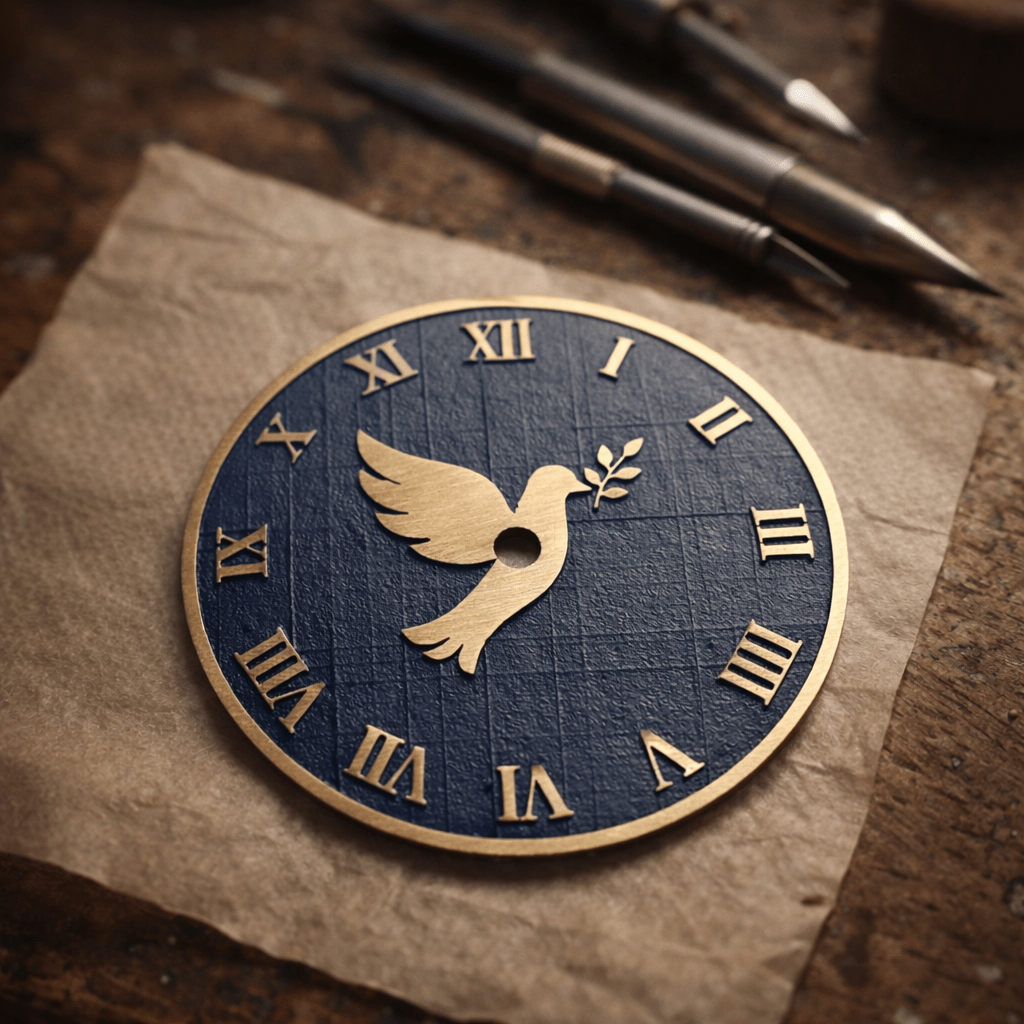
The workshop side of this ecosystem makes those choices visible. Rexx Timepieces handles custom mechanical watches, dial work, engraving, and complete builds. The Rexx Timepieces YouTube channel shows real making and experiments rather than only finished product shots. Rexx StudioWorks carries handmade dials, engraved objects, and small-batch workshop pieces.
For a quieter small-batch expression of the same material knowledge, the Meshberg workshop connects refined proportions and experimental dial work to the bench. These are different layers of the ecosystem, but the useful link is evidence: design decisions become more convincing when you can see how objects are made.
Traditional Watch, Smartwatch, or Phone?
The right tool depends on what you want from the wrist. A smartwatch can be excellent for health tracking, navigation, safety features, and filtered notifications. A traditional watch offers low-friction timekeeping, long service life, physical variety, and less digital input. A phone is the most capable device, but it requires you to enter the device to use it.
| Option | Best at | Main trade-off |
|---|---|---|
| Traditional watch | Fast time checks, physical character, long-term ownership | No connected features |
| Smartwatch | Health data, alerts, navigation, communication | Charging, software life, and possible notification load |
| Phone only | Maximum capability in one device | Every time check opens the door to more attention |
There is no moral victory in choosing one. Some people alternate between a mechanical watch and a smartwatch. Others wear both for specific activities. The useful choice is the one that supports your day without pretending every feature is equally important.
A Practical 30-Day Watch Test
If you want to know whether wearing a watch changes anything for you, test it instead of adopting someone else’s theory.
- Choose a comfortable watch. It does not need to be expensive or mechanical. It needs to fit well enough that discomfort does not decide the experiment.
- Wear it daily for 30 days. Use it as your first time reference whenever practical.
- Keep phone notifications unchanged. The goal is to observe whether fewer simple time checks become phone sessions.
- Note what you notice. Comfort, punctuality, style, scratches, legibility, and which features matter are more useful than vague feelings of “luxury.”
- Evaluate the watch after real use. If it stayed on the wrist, ask why. If it did not, ask whether the problem was size, weight, strap, readability, or simply lack of interest.
This test turns watch advice into personal evidence. It may confirm that a traditional watch belongs in your day. It may show that a smartwatch serves you better. Either result is more valuable than buying around an imagined identity.
Frequently Asked Questions
What are the real benefits of wearing a watch?
The clearest benefits are quick time access without opening a phone, easier time monitoring, a consistent daily object, and a practical way to develop preferences about comfort, proportion, style, and craft.
Does wearing a watch make you more punctual?
Not automatically. Research has found that watch wearers arrived earlier in a punctuality sample, but that does not prove the watch caused the behavior. A watch can make time easier to monitor; punctuality still depends on decisions and habits.
Can a traditional watch reduce phone use?
It can remove time checking as a reason to pick up the phone. It will not reduce phone use by itself, but the separation can help if time checks frequently turn into longer phone sessions.
Is a mechanical watch better than quartz for this?
No. Quartz is usually more accurate and needs less attention. Mechanical watches add interaction, movement, and serviceable machinery. The habit benefits come mainly from wearing a visible timekeeper, not from the movement type.
Why do people feel strange when they forget their watch?
Daily wear builds a physical routine. The wrist feels different, time is no longer available in the usual place, and a familiar object is absent. That feeling is habit and attachment, not proof that the watch has changed someone’s personality.
Final Thoughts
How wearing a watch changes you comes down to attention. The effects are not magical and they are not guaranteed. A watch can separate time from the phone, make the passing day more visible, support punctual habits, sharpen personal taste, and turn an ordinary object into a record of use.
The best change is not that you begin looking like a “watch person.” It is that you become more precise about what deserves space on your wrist and why.