
Art Dials: The Rise of Independent Dial Makers
Art dials are changing how collectors think about watches. For a long time, the dial was treated mostly as a brand surface: logo, markers, text, color, maybe a date window. Independent dial makers have pushed that idea much further. They treat the dial as a canvas, a technical part, and the emotional center of the watch.
That shift matters because the dial is the part of the watch people meet most often. It catches the light. It sets the mood. It decides whether the watch feels cold, warm, industrial, refined, strange, personal, or alive. When the dial becomes more expressive, the entire watch changes.
This is why art dials sit at the center of modern custom watch culture, microbrand experimentation, Seiko modding, and small-batch independent watchmaking.
What Is an Art Dial?
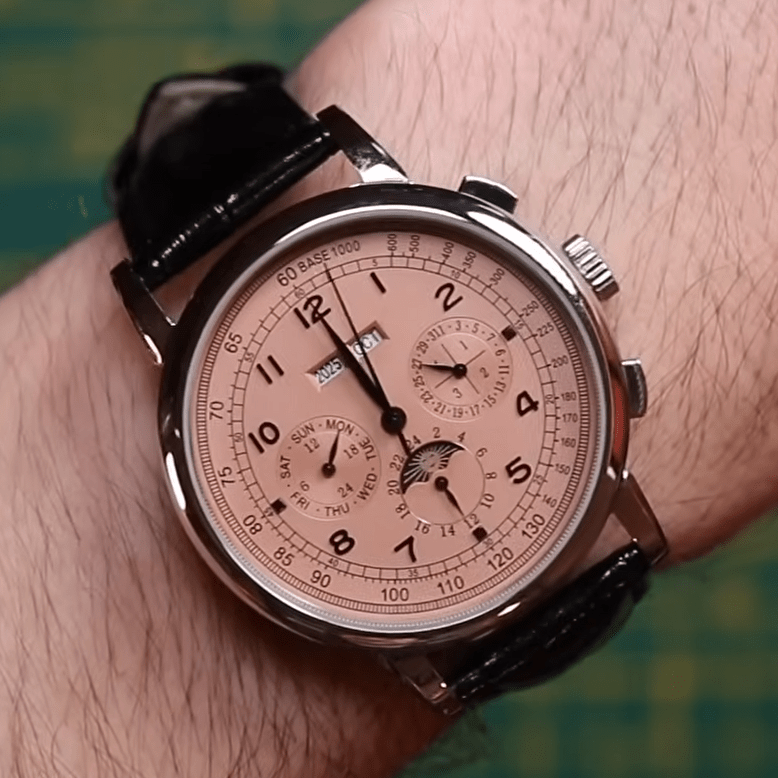
An art dial is a watch dial where the surface carries more than basic legibility. It might use engraving, painting, texture, patina, laser work, guilloche-style patterns, layered metal, lume experiments, hand-applied finishing, unusual materials, or a visual concept that makes the dial feel like the main object.
Not every unusual dial is automatically good. A strong art dial still has to work inside a watch. The hands need to be readable. The markers need to make sense. The dial thickness and feet need to fit the movement and case. The finish must survive handling, casing, and daily wear.
The best art dials balance expression with function. They feel handmade or experimental without forgetting that a watch is still a small machine worn on the wrist.
What Is an Independent Dial Maker?
An independent dial maker is a person, studio, or workshop creating dials outside the normal mass-production system. Some produce one-off pieces for collectors. Some make small runs for microbrands. Others create custom dials for Seiko mods, private commissions, or experimental watch projects.
The work can include laser engraving, pad printing, painting, brushing, airbrushing, applied indices, hand engraving, heat treatment, patina, lume filling, or dial restoration. The important difference is attitude: the dial is not treated as a generic part. It is treated as the identity of the watch.
That is why independent dial makers matter. They bring watches closer to craft, risk, and personal taste.
When the Dial Becomes the Watch
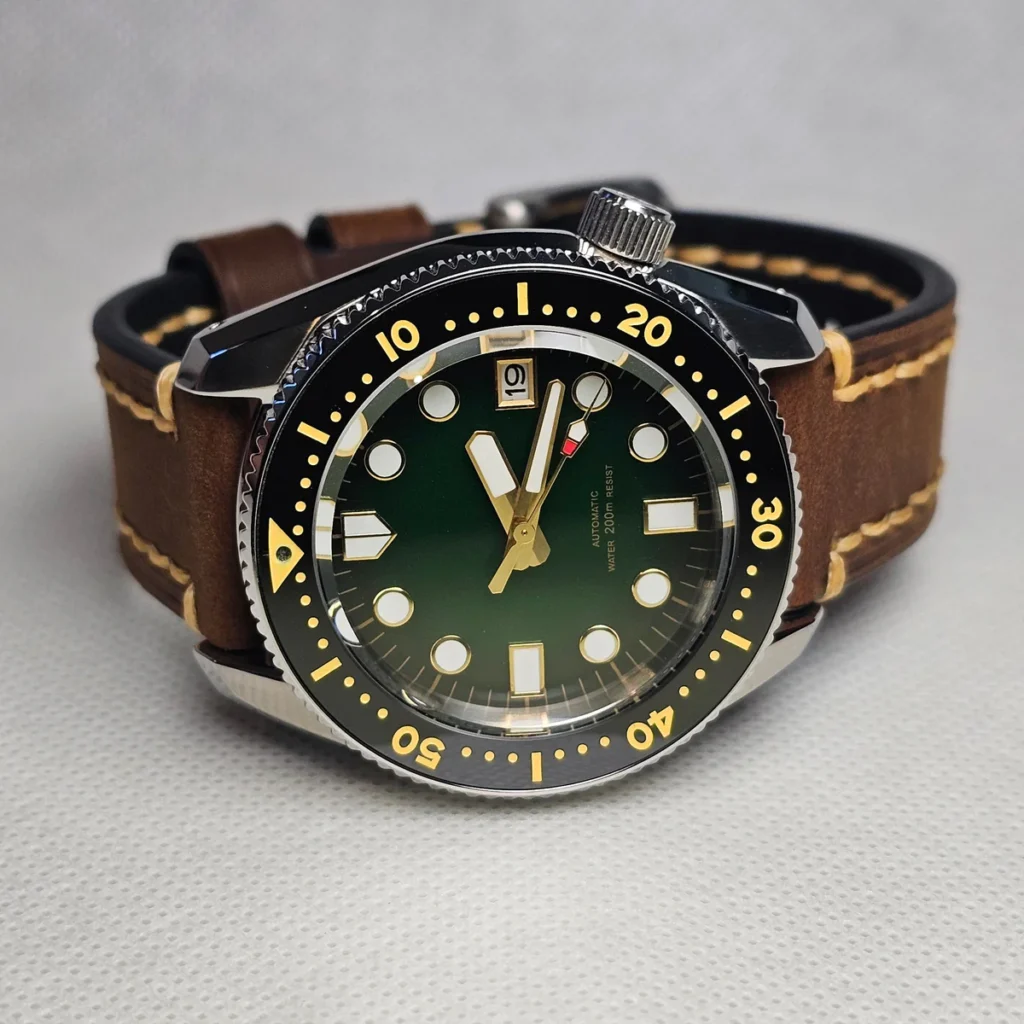
In many custom watches, the dial carries more identity than the case or movement. A familiar diver case can become completely different when the dial has real texture, story, or handwork behind it. A simple three-hand watch can become memorable if the dial has depth and restraint.
This is one reason Seiko mods became such a strong playground for dial experimentation. The platform is accessible, parts are available, and the dial can turn a familiar build into something personal. The case may start as a known shape, but the dial decides whether the watch feels ordinary or alive.
For the technical side of the process, read How Custom Watch Dials Are Made.
Factory Dials vs Independent Art Dials
Factory dials are usually designed for consistency. That is not a bad thing. Consistency matters when a brand needs hundreds or thousands of watches to meet the same standard. A clean factory dial can be beautiful because every marker, print line, and surface finish is controlled.
Independent art dials often chase a different goal. They may accept small variations, material behavior, hand-finished marks, unexpected texture, or visual irregularity. The goal is not always perfect sameness. The goal is character.
That character comes with risk. A dial can become too busy. It can lose readability. It can look impressive in a close-up photo but weak inside a complete watch. A good independent dial maker understands where expression has to stop so the watch still works.
The Techniques Behind Art Dials
Art dials can be made through many techniques, and each one changes the final mood of the watch.
- Engraving can add depth, pattern, illustration, or lettering directly into metal.
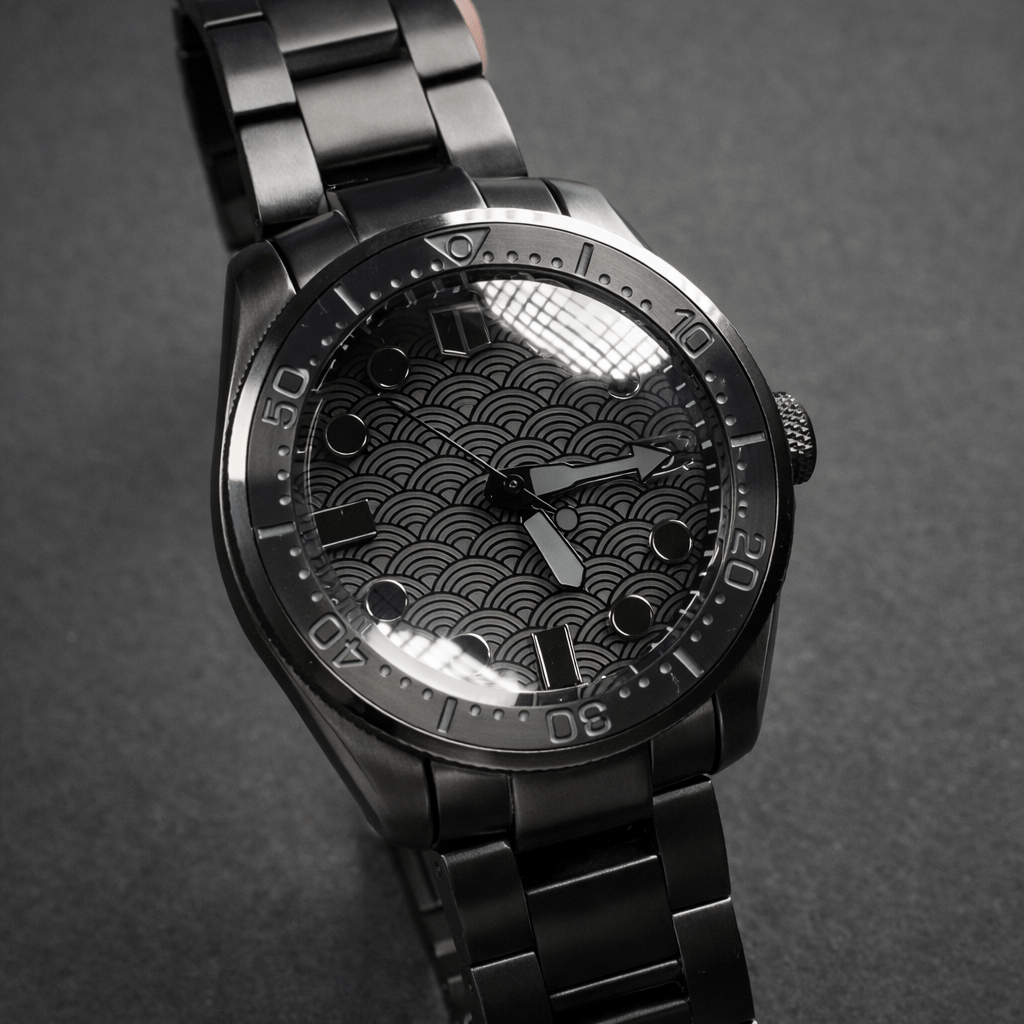
- Laser work can create precise textures, markings, relief, and repeatable small-batch patterns.
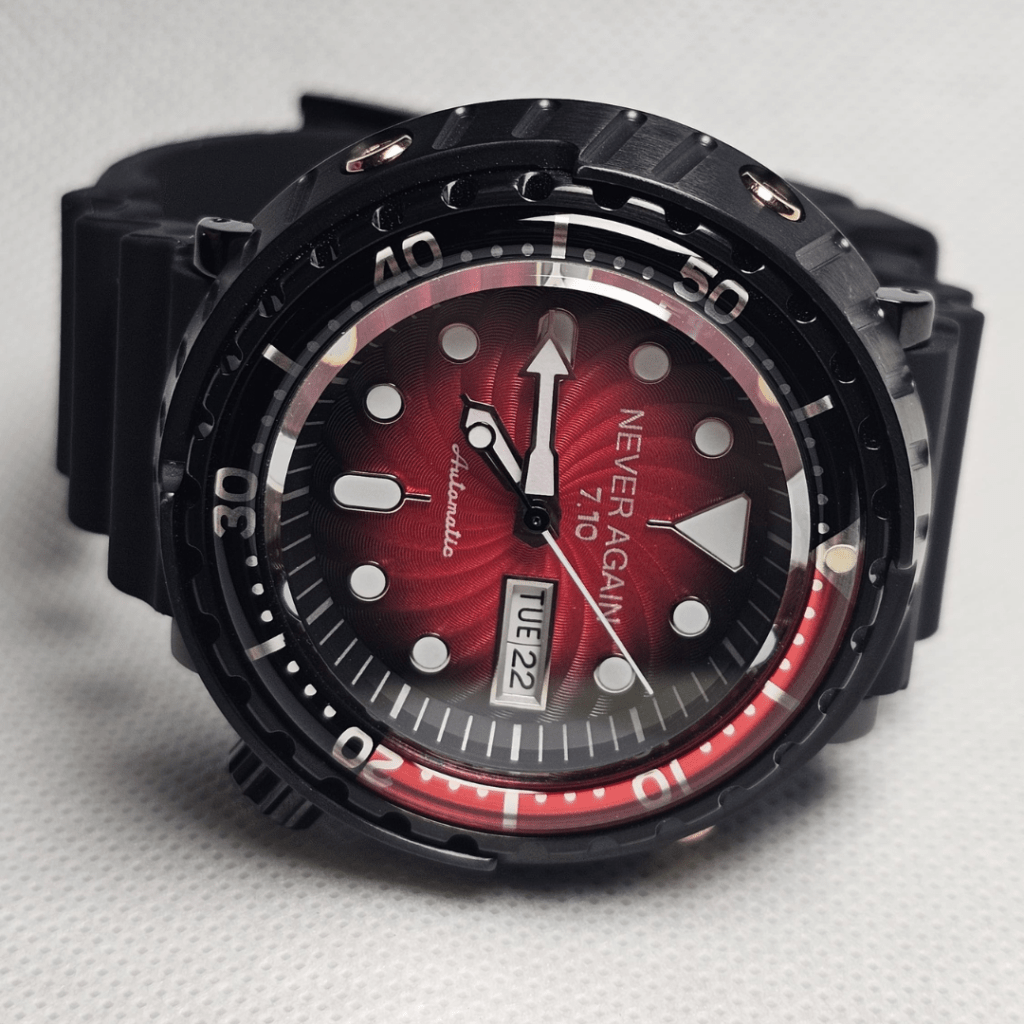
- Painting and airbrushing can create gradients, organic color, and surfaces that feel less industrial.
- Brushing and sanding can control how light moves across the dial.
- Lume work can turn the dial into a second design after dark.
- Patina and chemical finishing can create aged, unpredictable, or weathered surfaces.
- Applied markers can add dimensionality, but they require precision and clean placement.
The technique is only half the story. The harder part is knowing which technique belongs on which watch.
For a bench-level conversation, see Meidan’s aviation-dial process discussion. The Rexx maker explains reverse etching and answers questions about the blank, laser passes and cleaning, followed by airbrushed lacquer and sanding/polishing. The settings belong to this particular maker and project.
Miniature Narrative Engraving: The Dial Has to Survive Scale
A repeating texture can build character without asking the eye to follow a story. A complete scene is harder. Figures, flags, foreground, background, and surface texture all have to remain distinct after the composition is compressed to the size of a watch dial. The engraving may look impressive in a macro image, but the real test is whether its hierarchy survives at normal wrist distance and behind the hands and crystal.
The official Rexx Timepieces Short I Engraved an Entire Historical Scene Into a Watch Dial documents a miniature narrative dial made through precision laser engraving and careful hand finishing. A companion Rexx Timepieces community post adds that the figures, flags, and textures were developed to stay visible at miniature scale. Rexx does not identify the historical subject in the published material, so the useful evidence here is the process and scale rather than an invented backstory.
Our view is that detail is not the goal by itself. Successful miniature engraving needs deliberate line weight, tonal separation, protected space around the hand stack, and enough visual rest for the main forms to read quickly. Macro success is not automatically wrist success. The dial still has to function as part of a watch.
One Design, Two Finishes: What Changes on the Wrist?
Compare the same drawing in two finishes before judging the drawing itself. In the Rexx workshop example One Custom Watch Dial, Two Metal Finishes, Roman numerals, an inner 24-hour scale and a guilloché-style centre appear on two separate dials: one with a cool silver tone, the other with warmer rose-gold-toned metal. The layout stays consistent while the contrast and character change. These are two finish choices, not differently coloured raised elements on a single dial.
A second example, the colour-shifting dial, uses a sprayed chameleon layer over a black base. Its appearance changes with the lighting and viewing angle. This is why a fixed photograph cannot show the whole finish: compare moving footage, a front view and an angled view before choosing colours. This example documents painting, not UV printing or a traditional sunburst finish.
Disclosure: Rexx Timepieces and The Watcher HQ are part of the same watch ecosystem. These are our workshop examples, not independent product reviews. The Rexx project gallery pairs finished watches and standalone dials with their process videos. A dial-only commission remains a separate option from a complete watch; send the receiving watch or movement details before assuming compatibility.
Readability Still Matters
Art dials can fail when they forget the basic job of a dial. A watch does not need to be sterile, but it should still let the wearer read time without fighting the design.
Contrast matters. Hand length matters. Marker shape matters. The finish behind the hands matters. A heavily textured dial with low-contrast hands can look impressive in a macro shot but become frustrating in real use.
This is especially important in custom builds. If the case, crystal, hands, and dial were not designed together, the final watch can look like separate parts forced into one object. Strong dial work should make the watch feel more complete, not less.
Why Collectors Want Art Dials
Collectors are drawn to art dials because they make watches feel personal again. A standard model can be admired, but an art dial can feel discovered. It creates the sense that the watch has a point of view.
For a practical framework that puts personal meaning through the same test of legibility and restraint, read our custom milestone watch guide. It shows why one well-edited symbol often carries more authority than a dial full of literal references.
That does not mean every collector wants a loud dial. Some of the best art dials are quiet: a subtle texture, a restrained engraved pattern, a small shift in color, or a surface that only reveals itself under certain light. The goal is not noise. The goal is presence.
This connects directly to broader watch culture. As more collectors understand movements, case sizes, and spec sheets, they start looking for the emotional details that make one watch feel different from another.
Pricing: From Accessible Custom Parts to High Craft
Independent dials can range from accessible custom mod parts to expensive high-craft pieces. Price depends on material, labor, technique, failure rate, finishing time, and whether the dial is one-off or produced in a small run.
The important thing is to understand what you are paying for. You are not only paying for the visible surface. You are paying for design decisions, testing, rejected attempts, tooling, handling, cleaning, and the patience required to make a tiny object look intentional.
A cheap dial can still be good if the idea is clear and the execution is honest. An expensive dial can still fail if it is technically impressive but visually confused.
Inside the Process: Useful Video Examples
Dial making is easier to understand when you see the surface, tools, and process in motion. The videos below are included as process examples, with clear source credit.
Rexx Timepieces / Rexx StudioWorks: handmade radial guilloche-style dial work for the Non-Conformist 02 project.
Short is better: a custom dial workflow using laser and paint, useful for seeing how an idea becomes a physical dial.
Barger Watch: a laser-engraving dial-making example with setup, speed, and power context.
Rexx Timepieces and Workshop Dial Work
Rexx Timepieces belongs naturally in this conversation because the brand is close to the bench. Custom watches, Seiko mods, engraved parts, custom dials, and finishing decisions are not abstract marketing ideas there. They are workshop decisions that affect whether the finished watch works.
A custom dial can be the center of a full Rexx watch build, or it can be discussed as its own object when the buyer already has a compatible direction in mind. The important part is fit: movement, dial size, hand clearance, case dimensions, and the visual language of the final watch all need to agree.
For readers who want the build path, start with Rexx custom watches. For a dial-first direction, use the custom dial designer.
Rexx StudioWorks and Dials as Craft Objects
Rexx StudioWorks is the craft commerce layer of the ecosystem, where handmade dials, engraved objects, coins, and small-batch workshop products can stand on their own. That distinction matters. A dial does not only have to be a component inside a watch. Sometimes it is also a small crafted object that shows material, tool marks, pattern, and hand decision.
This is where independent dial making becomes more than customization. It becomes a way of preserving workshop work in a physical object. A dial can be collected, installed, studied, or used as the starting point for a future watch build.
Meshberg and the Quiet Side of Dial Character
Meshberg Watches represents a quieter version of the same idea. The Meshberg direction is not about making the loudest dial possible. It is about small-batch independent watchmaking, refined proportions, and dial character that supports the whole watch.
That is an important reminder: art dials do not have to be chaotic. A restrained dial can still be artistic if the texture, color, layout, and finishing are deliberate. In a compact independent watch, the strongest dial may be the one that adds depth without overpowering the case.
How Art Dials Connect to Microbrands
Microbrands and independent dial makers often push each other forward. A small brand can take more risks with color, texture, and proportions than a large conservative brand. A dial maker can give a small-batch watch a visual identity that feels human rather than mass-produced.
This is part of why microbrand culture has become more interesting. The best small brands are not only offering cheaper alternatives to famous watches. They are exploring surfaces, proportions, colors, and stories that larger brands might avoid.
Related reading: Microbrand Watches: How Independent Brands Are Reshaping Watch Culture.
What Makes an Art Dial Good?
A good art dial does more than look unusual. It supports the watch around it.
- It has a clear visual idea.
- It remains readable enough for the watch’s purpose.
- It works with the hands, case, crystal, and strap.
- It does not use texture as a substitute for design.
- It feels intentional under normal wrist lighting, not only in macro photos.
- It is physically compatible with the movement and case.
That last point is easy to forget. A dial can be visually beautiful and still fail if it cannot be installed cleanly or if the hand clearance is wrong.
Final Thoughts
Art dials matter because they make watches feel personal again. They turn the dial from a standard printed surface into a place for craft, experiment, identity, and material intelligence.
For collectors, art dials open a different way of seeing watches. For builders, they create a deeper reason to make. For independent brands, they offer a way to stand apart without shouting. And for The Watcher HQ ecosystem, they connect education, workshop proof, custom watchmaking, small-batch design, and physical craft into one story.
If you want to keep learning, continue with How Custom Watch Dials Are Made, How Custom Watches Reflect Personal Style, and Watch Culture Basics.
Pingback: Who Really Makes a Watch? A Transparency Guide