How to Start a Watch Collection Without Wasting Money
Starting a watch collection is easy. Starting one without wasting money is harder. The watch world is full of hype, limited editions, influencer lists, luxury signals, homage debates, microbrands, vintage risk, modding projects, and endless “must-have” recommendations.
The best way to begin is not to buy as many watches as possible. It is to understand what you actually wear, what you enjoy, and what kind of watches make sense for your life.
This guide is a practical starting point for new collectors who want to build taste before building a drawer full of watches they never use.
Start With Use, Not Hype
Before buying anything, ask where the watch will actually fit into your life. Do you need an everyday watch, a dress watch, a weekend watch, a travel watch, a rugged tool watch, or something personal and unusual?
Many beginners buy based on excitement and then discover that the watch does not fit their wrist, wardrobe, routine, or taste. The result is a collection that looks interesting online but does not get worn.
Start with use. Then choose style. A watch that fits your real life will teach you more than a watch that only looked exciting in a review.
Do Not Try to Build a Collection Overnight
The fastest way to waste money is to buy too many watches too quickly. Early taste changes fast. The watch you think is perfect today may feel too large, too loud, too dressy, too generic, or too uncomfortable three months from now.
Give each watch time. Wear it in normal situations. Notice what works and what does not. That experience teaches more than another browser tab full of recommendations.
A good beginner rule is simple: buy one watch, live with it, then let the next purchase solve something specific. Do not buy five watches because they are all discounted.
Learn the Basic Movement Types
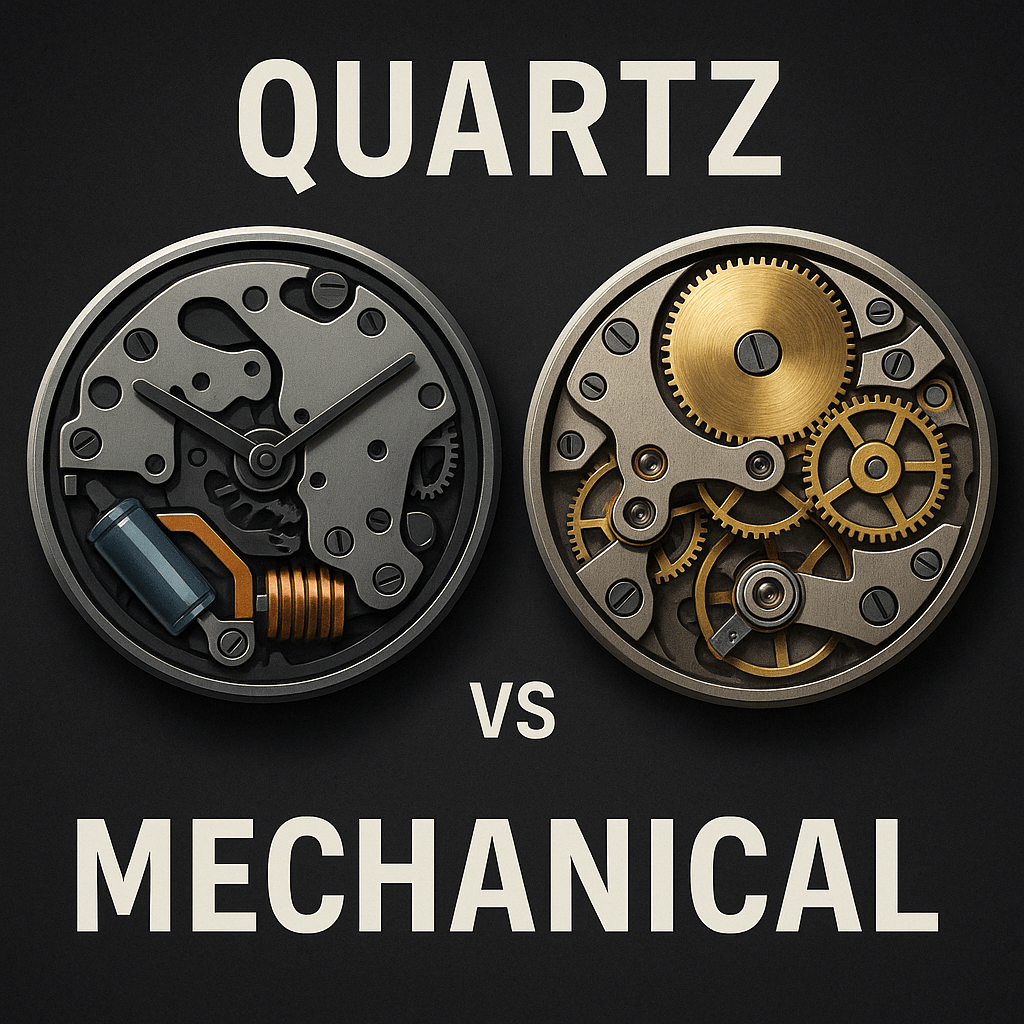
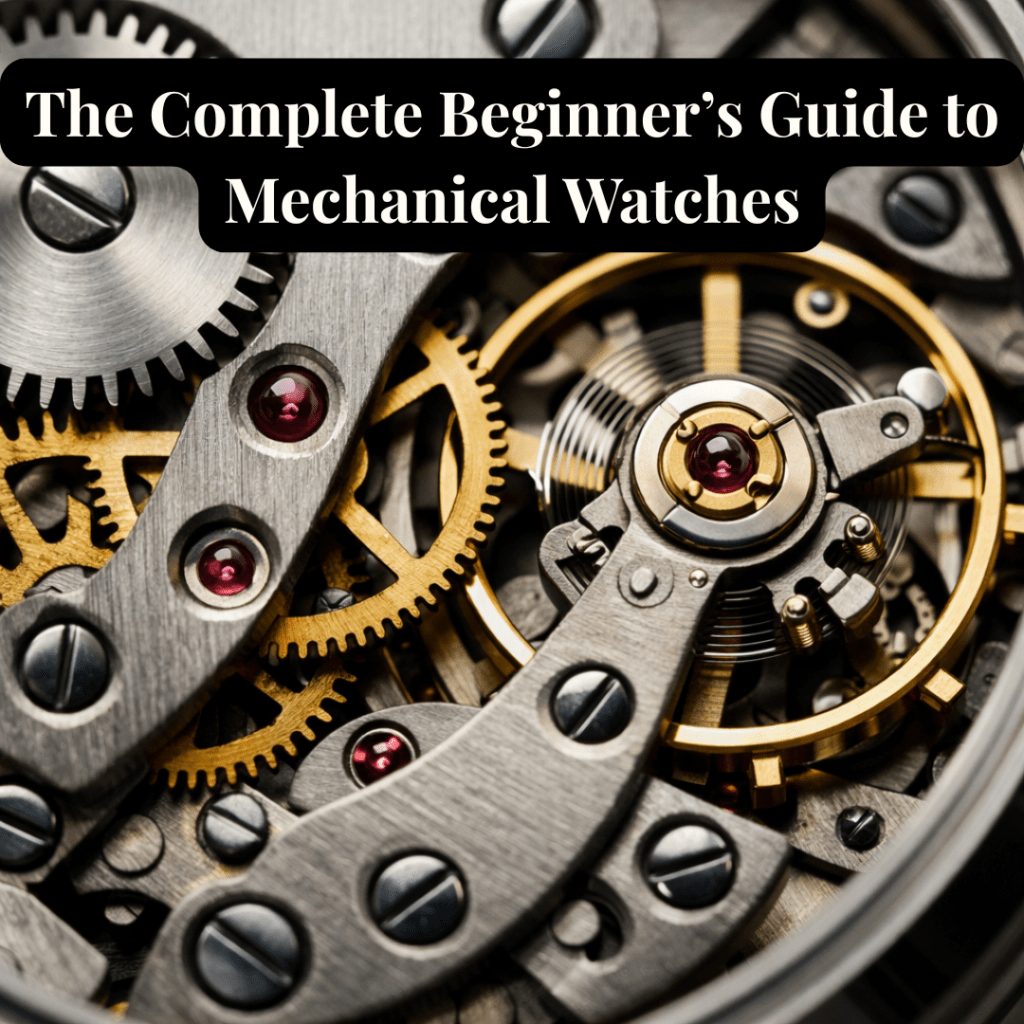
Understanding quartz, mechanical, and automatic watches will save you confusion early. Quartz watches are accurate and low maintenance. Mechanical watches are more traditional and hands-on. Automatic watches are mechanical watches that wind through wrist movement.
None of these is automatically better. They fit different priorities. A quartz watch may be the smartest daily beater. An automatic watch may be the best emotional entry point. A hand-wound mechanical watch may appeal because of the ritual.
Read this before buying your first few watches: Automatic vs Quartz vs Mechanical Watches.
Set a First-Watch Budget You Can Survive
Your first serious watch should not create pressure. If you are nervous about scratching it, wearing it, or admitting you chose wrong, the watch is probably too expensive for this stage of collecting.
Begin with a budget that lets you learn. Affordable watches can teach size, movement type, strap preference, finishing, comfort, and daily wear habits without turning every mistake into a painful lesson.
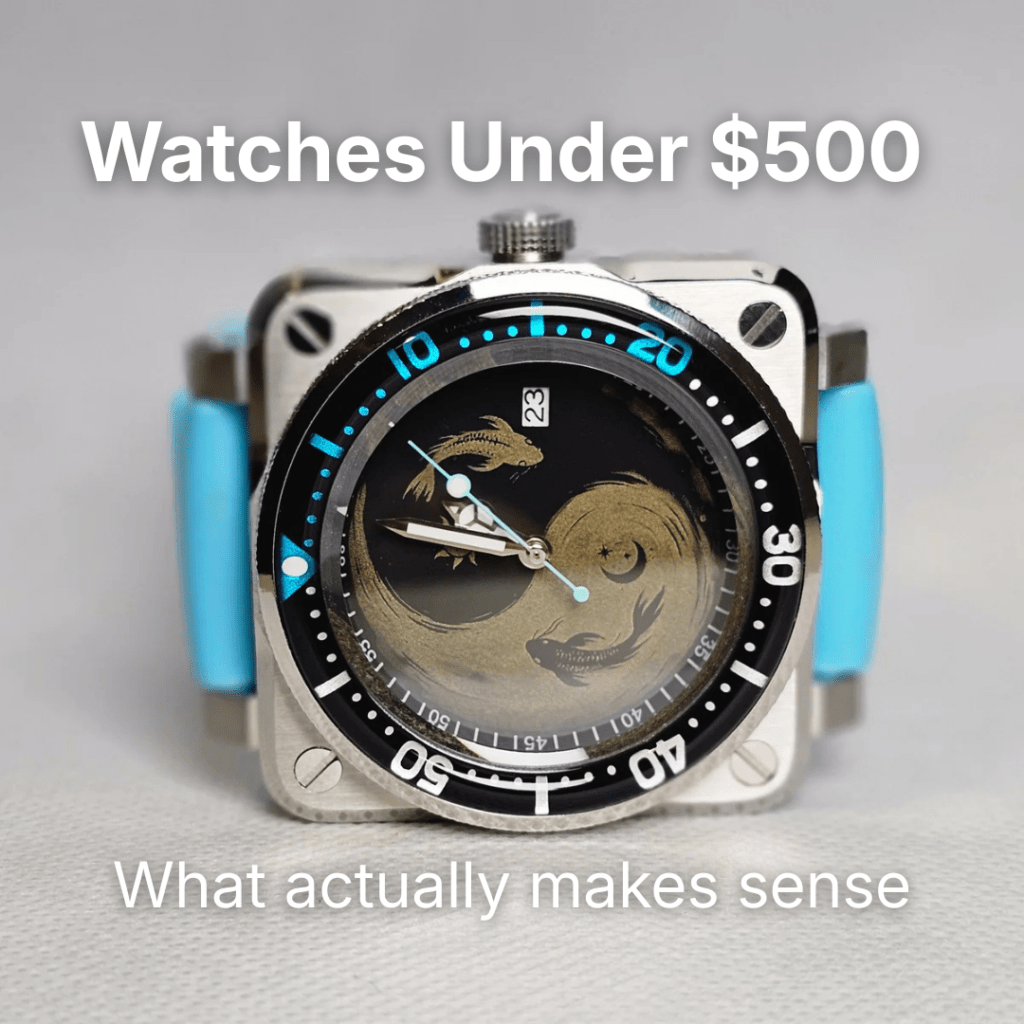
For many beginners, the under-$500 range is enough to discover what kind of watch actually gets wrist time. For a stronger step up, the under-$1000 range can introduce better finishing, more interesting microbrands, and stronger long-term value.
Before deciding whether that budget should go toward a factory-new watch or a pre-owned one, use our new vs pre-owned watch buying checklist to compare warranty, condition, service history, returns, and total ownership cost.
Useful next reads: Automatic Watches Under $500 and Best Watches Under $1000.
Pay Attention to Size and Proportion
Case diameter is only one part of fit. Lug-to-lug length, case thickness, bezel size, dial opening, bracelet taper, caseback shape, and strap choice all affect how a watch wears.
Many beginners buy watches that are too large because bigger looks impressive in photos. On the wrist, a better-proportioned smaller watch often feels more refined and easier to wear.
This is why watches like the Meshberg 37 Automatic matter inside the wider conversation. They remind collectors that presence does not have to come from size alone. Proportion can be more powerful than diameter.
Build Around Roles, Not Random Deals
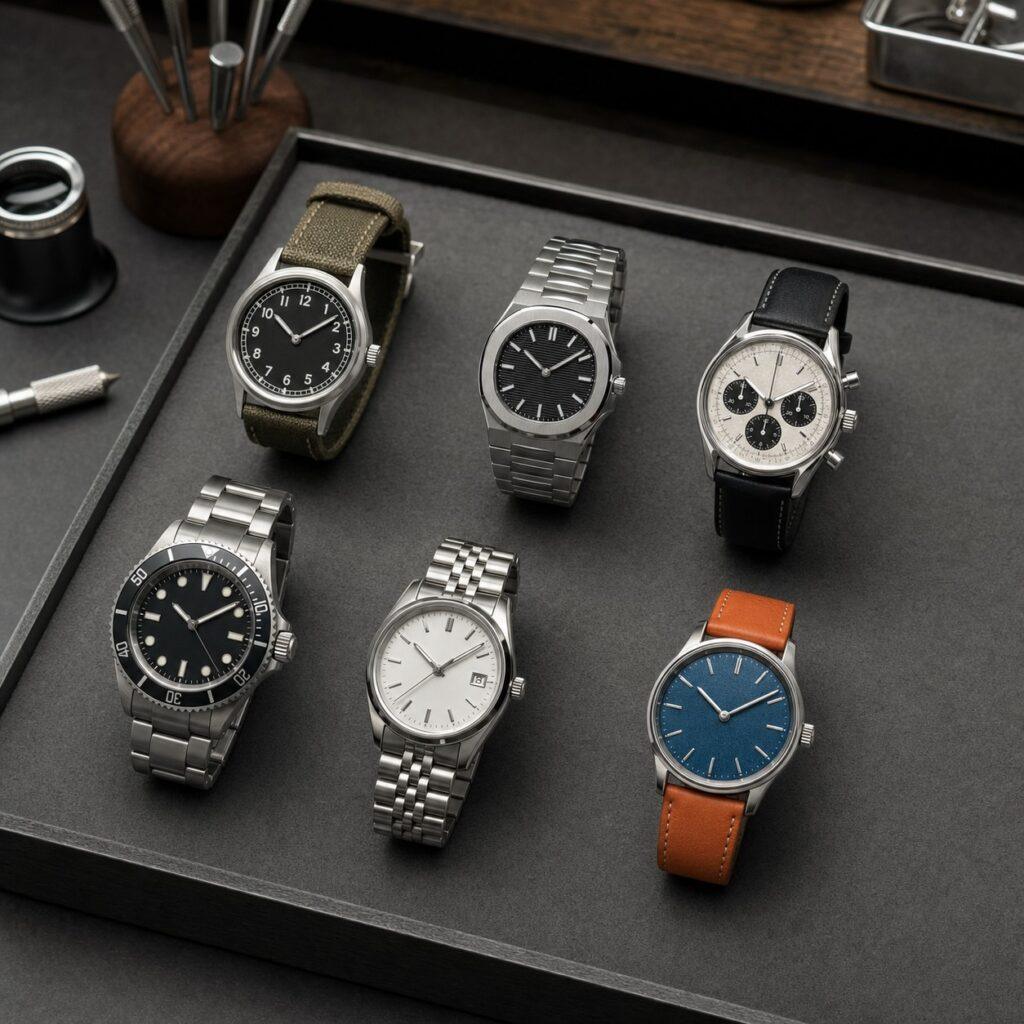
A useful beginner collection usually covers different roles rather than repeating the same purchase in different colors.
- Everyday watch: something comfortable, readable, and easy to wear often.
- Sport or tool watch: something more rugged for casual use, travel, or active days.
- Dress or smart-casual watch: something thinner, cleaner, or quieter.
- Personal watch: something unusual, custom, sentimental, or creatively specific.
You do not need all of these immediately. The point is to avoid buying five watches that all do the same job.
Learn What You Actually Wear
One of the simplest ways to become a better collector is to notice your own behavior. Which watches do you reach for? Which watches stay in the box? Which ones feel right on a normal day? Which ones only looked good in photos?
Keep notes if you need to. Track size, strap, movement, color, comfort, and how often the watch gets worn. Your wrist will tell you the truth if you pay attention.
This habit prevents a lot of wasted money because it separates fantasy collecting from real collecting. The best watch on paper is not always the watch you want to wear on Tuesday morning.
Do Not Ignore Affordable Watches
Affordable watches can teach you a lot. They let you test size, style, movement type, strap comfort, and daily wear without risking too much money. Some affordable watches are genuinely good. Others teach you what you do not like. Both lessons are useful.
The danger is buying affordable watches endlessly because each one feels low-risk. Ten cheap watches you barely wear can cost more than one better watch you would actually enjoy.
Affordable collecting works best when every watch teaches a clear lesson.
Be Careful With Homage Watches
Homage watches can be useful, especially when they are honest about what they are. They let you try familiar design language at a lower price. They can help you learn whether you like a diver, field watch, pilot watch, integrated bracelet, or vintage-inspired case shape.
But homage watches can also become a shortcut that prevents you from developing your own taste. If every purchase is a cheaper version of something famous, the collection may never become yours.
The key distinction is honesty. Inspired is not the same as fake. Transparent homage is not the same as replica. Start here: Homage vs Replica Watches.
Use Microbrands to Discover Taste
Microbrands can be excellent for new collectors because they often offer interesting design, strong specs, and more personality than large mainstream catalogs at the same price.
The best microbrands are not just cheaper alternatives. They have a point of view. They experiment with proportions, dial texture, case materials, colors, and small-batch identity.
That makes them useful when you are trying to understand what kind of watch feels like you. For more context, read Microbrand Watches: How Independent Brands Are Reshaping Watch Culture.
Understand the Difference Between Buying and Collecting
Buying is the act of acquiring another watch. Collecting is slower. It involves taste, memory, comparison, mistakes, restraint, and a reason for each piece to exist.
A strong collection does not need to be large. It needs to make sense. Three watches with clear roles can feel better than fifteen watches bought because they were available.
Ask one question before each purchase: what does this watch add that I do not already have?
Treat Scarcity and Auction Headlines as Evidence, Not Instructions
Limited access can make a watch feel important before you have judged the watch itself. Some application-only watches use access to build a real owner community; others use scarcity as pressure. Ask what the application changes for the owner, how allocation works, and whether the watch would still interest you without the gate.
Auction results need the same restraint. A record price may reflect rarity, provenance, condition, two determined bidders, or a historically important reference. It does not automatically reprice the ordinary watches in your collection. Read our guide to watch auction records and the wider market before treating a headline result as a buying signal.
Be Honest About Maintenance
Mechanical and automatic watches can need servicing over time. Vintage watches can need even more attention. Water resistance can degrade. Straps wear out. Bracelets stretch. Batteries need replacing. Crystals scratch. Bezels loosen. Crowns and gaskets matter.
That does not mean you should avoid mechanical watches. It means you should understand ownership before buying only for romance.
A collection that fits your maintenance tolerance will be easier to enjoy. If you want low stress, quartz deserves respect. If you enjoy mechanical ownership, automatic and hand-wound watches can be deeply satisfying.
Consider Custom Watches Once You Know Your Taste
Custom watches make more sense after you understand what you like. If you already know your preferred size, dial style, hand shape, case type, strap direction, and movement preference, a custom build can become much more personal.
That is where Rexx Timepieces fits naturally. Custom builds, dial design, Seiko mods, engraving, and workshop process are strongest when the owner has some direction and the builder can turn that direction into a coherent watch.
For the custom path, read Should You Build Your Own Watch?. When you are ready for a workshop conversation, start with Rexx custom watches or the Rexx custom dial designer.
A Simple First Collection Framework
If you want a clean starting framework, think in three watches instead of ten.
- One daily watch: comfortable, readable, and versatile.
- One character watch: something with color, texture, history, or unusual design.
- One personal watch: custom, sentimental, independent, or tied to your own story.
This framework keeps the collection focused. It also leaves room for your taste to develop before you spend heavily.
Common Beginner Mistakes
- Buying too many watches too quickly.
- Choosing by case diameter alone.
- Ignoring lug-to-lug length and thickness.
- Buying only because something is discounted.
- Confusing homage with replica.
- Buying a mechanical watch without understanding servicing.
- Chasing hype before learning personal taste.
- Keeping watches you never wear just because they looked good online.
Final Thoughts
The best watch collection is not the biggest one. It is the one that reflects your taste, your life, and your curiosity. Start slowly, learn the basics, wear what you buy, and let your taste develop before chasing every recommendation.
If you build the collection carefully, each watch teaches you something. That is much better than owning too many watches and not knowing why any of them are there.
Start with one good choice. Wear it. Learn from it. Then let the next watch earn its place.