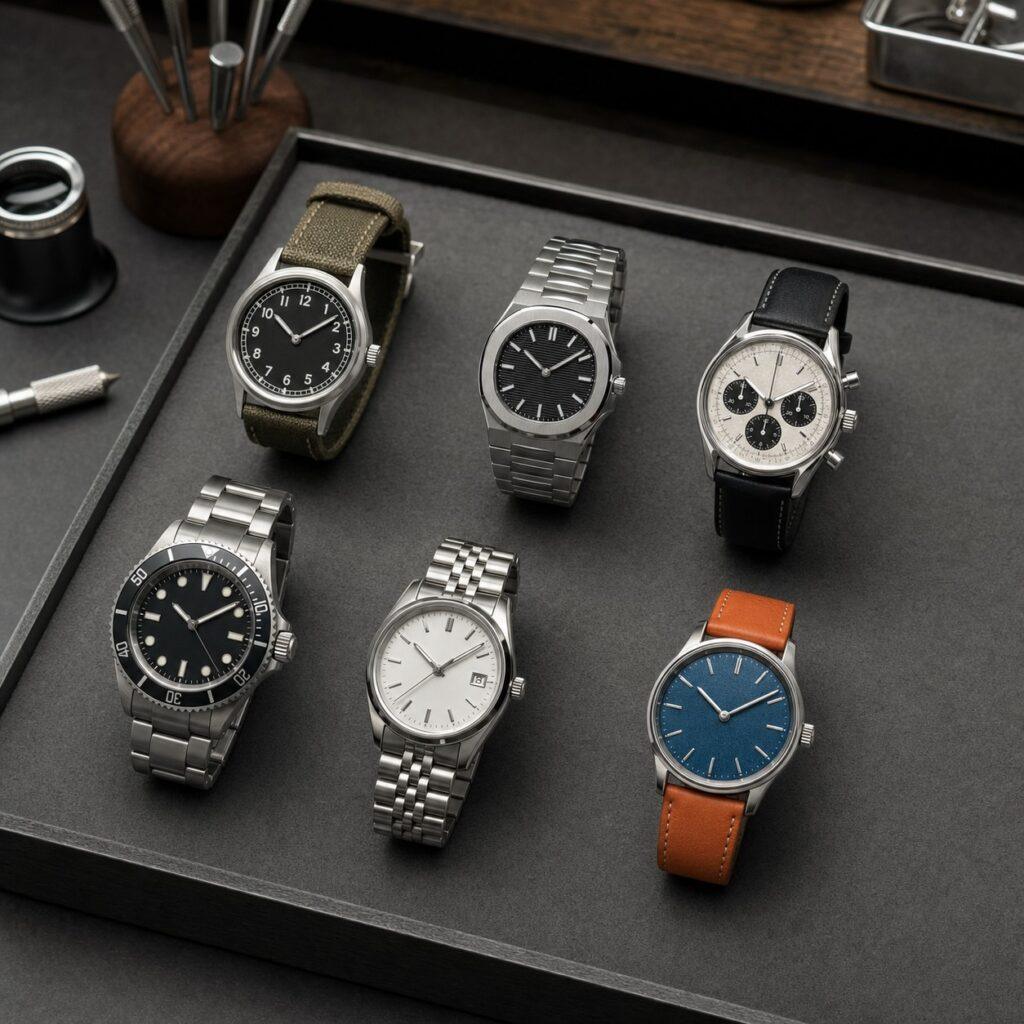
Watch Case Materials Explained: Steel, Titanium, Gold and More
Watch case materials change far more than color. They affect weight, comfort, corrosion resistance, scratch behavior, impact tolerance, finishing, repair options, price, and the way a watch ages on the wrist.
Two watches can share the same diameter and still feel completely different because one is steel and the other is titanium. A bronze case is expected to change. A ceramic case can stay visually clean for years, yet it should not be treated like impact-proof metal. Gold adds density and warmth, while a black coating is only as convincing as the case and preparation beneath it.
This guide compares the practical tradeoffs. The goal is not to crown one material as best. It is to help you choose the case that fits the watch, the way you wear it, and the amount of visible aging you actually enjoy.
The short answer
Steel is the safest all-round choice. Titanium reduces weight. Bronze is chosen because it changes. Ceramic resists scratches but is not unbreakable. Gold adds weight, warmth, and cost. Coatings and composites must be judged by the exact process, not by a broad label.
Watch Case Materials: Quick Comparison
| Material | Wrist feel | Surface behavior | Main tradeoff | Best fit |
|---|---|---|---|---|
| 316L steel | Solid and familiar | Scratches normally; can often be refinished | Heavier than titanium | Daily, sport, dress, and custom watches |
| Titanium | Noticeably light and warm | Depends strongly on grade and surface treatment | Harder to machine and refinish well | Large watches, travel, sport, all-day comfort |
| Gold | Dense, warm, and substantial | Marks and dents more readily than steel | Cost and visible wear | Dress watches and compact statement pieces |
| Bronze | Warm and tool-like | Develops patina by design | Uneven aging and possible skin transfer | Maritime and character-led watches |
| Ceramic | Smooth, light, and temperature-neutral | Highly scratch-resistant | Can chip or fracture under a severe impact | Modern watches where surface preservation matters |
| Coated steel | Steel weight with a different visual identity | Durability depends on coating and preparation | Edge wear can expose the base metal | Black and color-led tool or custom builds |
| Carbon composite | Very light | Pattern and behavior depend on construction | Limited conventional repair and refinishing | Technical watches built around the material |
1. Stainless Steel Is Still the Best All-Rounder
Stainless steel remains the default modern watch-case material because it balances strength, corrosion resistance, cost, machining, and finish. It can be brushed, polished, bead-blasted, or given sharp transitions between finishes. When it picks up ordinary wear, a skilled refinisher can often restore the surface later without replacing the case.
That does not mean every steel case is equal. Case geometry, machining, edge definition, brushing direction, polishing quality, and bracelet construction matter more to the final experience than the word steel on a specification sheet.
316L vs 904L Steel
316L is widely used because it offers a practical balance for watches exposed to sweat, fresh water, and normal daily conditions. 904L contains a different alloying balance and is designed for stronger corrosion performance in more aggressive environments. Rolex calls its 904L watchmaking alloy Oystersteel and emphasizes corrosion resistance and polishing behavior.
That distinction is real, but it is often exaggerated in watch marketing. A well-finished 316L case can feel more precise and more comfortable than a poorly executed 904L case. For most owners, fit, finishing, seals, and maintenance will matter more than choosing a watch solely by alloy number.
Technical context: Outokumpu stainless-steel corrosion data and Rolex Oystersteel material notes.
2. Titanium Is Not One Single Experience
Titanium is lighter than steel, highly corrosion-resistant, and often feels warmer against the skin. Those qualities make it especially useful for large dive watches, travel watches, and bracelets that would feel tiring in steel.
The missing detail in many buying guides is the grade. Commercially pure grade 2 titanium is common in watch cases and has a muted grey appearance. Grade 5 is an alloy that offers higher strength and can support brighter, more defined finishing, but it is harder and more expensive to machine. Surface-hardened systems add another variable. Citizen, for example, applies its proprietary Duratect treatment to Super Titanium rather than treating untreated titanium and hardened titanium as the same material.
This matters because the statement “titanium scratches easily” is incomplete. Untreated surfaces, polished grade 5, blasted grade 2, and hardened proprietary titanium will not age in the same way. Always check the grade and treatment, not only the headline material.
Manufacturer references: Citizen Super Titanium technology and Rolex grade 5 RLX titanium.
3. Gold Is an Alloy, Not a Soft Block of Pure Gold
Pure 24-carat gold is too malleable for a practical watch case. Watchmakers normally use an alloy. In 18-carat gold, 75 percent of the alloy is gold; other metals provide color and improve the working properties. Yellow, white, and pink gold therefore differ in more than appearance.
Gold is denser and generally softer in use than stainless steel. A compact gold watch can feel surprisingly substantial, and polished surfaces will collect marks. That is not automatically a defect. On the right dress watch, the weight and slow accumulation of wear are part of the appeal.
Buy gold when you genuinely want warmth, density, and precious-metal presence. Do not buy it expecting the surface behavior of a steel tool watch.
Material example: Rolex Everose 18 ct gold composition.
4. Bronze Is Supposed to Change
Bronze is a copper-based alloy chosen for its warm color and evolving surface. Air, moisture, seawater, skin contact, and friction gradually create patina. Panerai describes this directly in its bronze watch material guidance: the surface changes through oxidation and becomes individual to the watch.
That is both the attraction and the warning. Bronze can darken unevenly, develop spots, and leave temporary color on skin depending on the alloy, environment, and wearer. Many bronze watches use a different material for the caseback to reduce direct contact, but that should be checked model by model.
A bronze case works best when the dial, strap, and overall design accept visible aging. It is a poor choice for someone who wants the watch to remain uniform and factory-fresh.
Manufacturer reference: Panerai on bronze and natural patina.
5. Ceramic Resists Scratches, Not Physics
Technical ceramic can be extremely hard, light, corrosion-resistant, and difficult to scratch in normal use. It can preserve a clean black, white, or colored surface without relying on a thin decorative coating. That makes it attractive for bezels and complete cases.
Hardness is not the same as toughness. Steel can dent or scratch and remain structurally intact. Ceramic is less forgiving under the wrong concentrated impact and can chip or fracture. The exact behavior depends on composition and case construction, so “ceramic” is not a promise that every ceramic watch will react identically.
It is also not normally refinished like steel. If a full ceramic component is badly damaged, replacement may be the realistic service path.
Manufacturer reference: IWC on engineering ceramic watch cases.
6. PVD and DLC Describe Surface Systems
A black watch listed as “PVD” or “DLC” usually begins with a metal case underneath. Physical vapor deposition is a family of deposition processes; DLC refers to a diamond-like carbon surface layer. They are related terms, not interchangeable quality grades.
Durability depends on the substrate, preparation, coating composition, thickness, geometry, and application quality. A strong coating can handle daily wear well, but no dark surface should be sold as magic armor. Deep damage or edge wear can expose the lighter metal below, and local touch-up rarely disappears the way a light steel refinish can.
For a custom watch, a coated case should support the whole design. It works when the dial, hands, bezel, and strap share the same direction. It does not rescue a confused parts combination.
7. Carbon, Sapphire, and Hybrid Cases Need Exact Names
Carbon composite is not one standardized watch material. Fiber length, orientation, resin, compression, and machining all influence the result. Panerai’s Carbotech, for example, uses compressed carbon-fiber sheets with a polymer matrix. Other brands use forged carbon, carbon-fiber-reinforced polymer, or proprietary hybrids with different patterns and properties.
These cases can be exceptionally light and visually distinctive. Their limitation is conventional service: a damaged composite surface cannot simply be polished like steel. The material makes most sense when the watch was engineered around it rather than dressed in it for novelty.
Transparent sapphire cases are another category. Sapphire is extremely scratch-resistant and visually dramatic, but costly to machine and not a substitute for the impact behavior of metal. As with ceramic, hardness should not be confused with indestructibility.
Construction example: Panerai material notes on Carbotech.
8. Weight Changes Fit More Than the Diameter Suggests
Case material changes wrist presence even when the dimensions stay the same. A 42mm titanium watch may feel easier to wear than a smaller steel watch with a dense bracelet. A compact gold watch can feel heavier than expected. A carbon case can almost disappear on the wrist, while bronze creates a warmer and more deliberate presence.
Weight distribution matters too. A light case on a heavy bracelet, a tall case on a soft strap, or a dense watch with short lugs can each produce a different result. Material must be judged together with thickness, lug-to-lug distance, caseback shape, and strap or bracelet construction.
That is why the same measurement can produce different wearing experiences. Our 36mm vs 37mm watch guide explains the same principle through compact watches and dial opening.
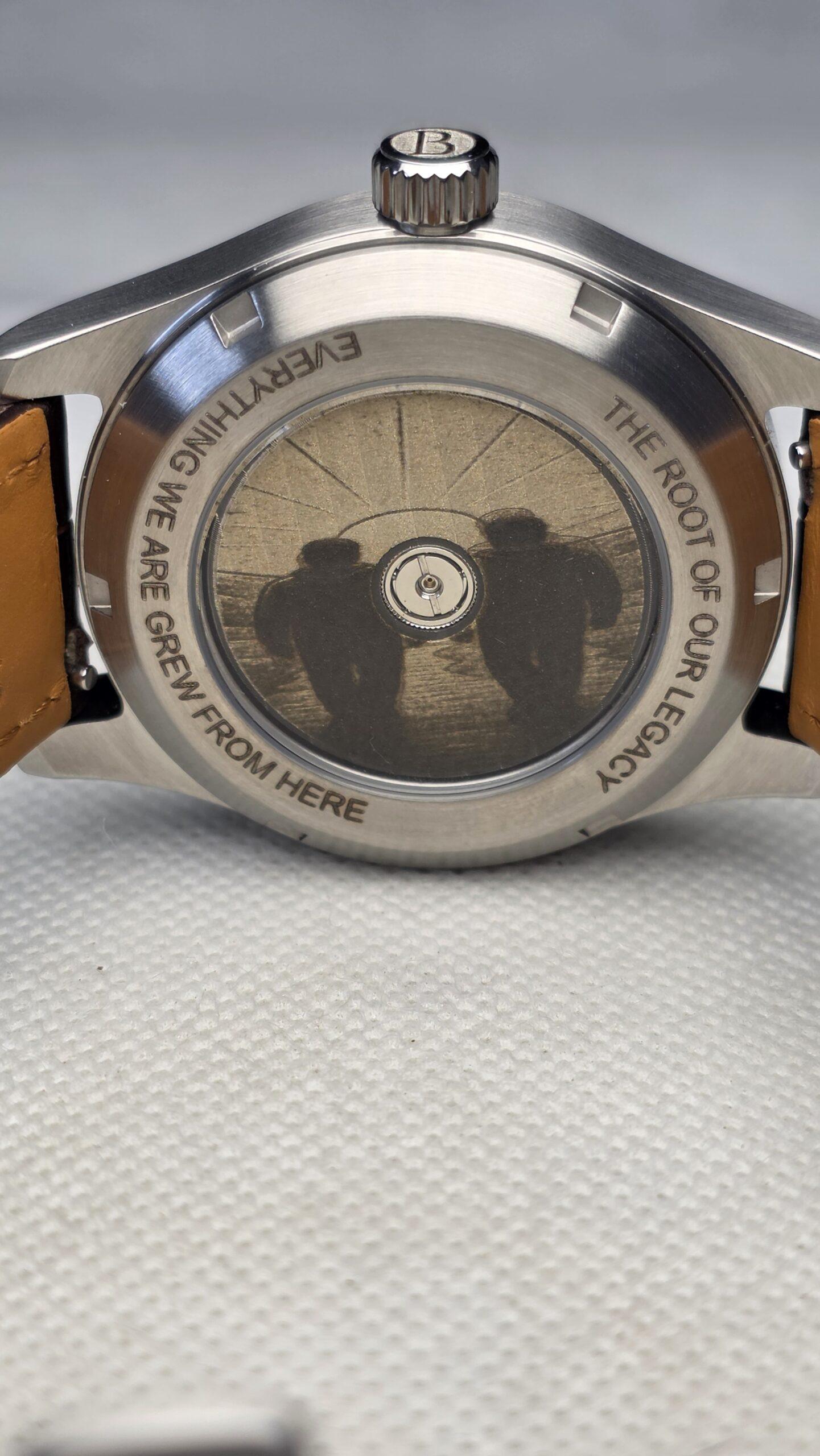
9. Material Changes What Can Be Refinished
Steel is usually the most forgiving workshop material. Scratches can often be reduced and brushed or polished surfaces restored, although careless refinishing can soften edges and alter case geometry. Gold can also be refinished, but every intervention removes material and deserves restraint.
Titanium requires the correct abrasive process and an understanding of its original finish. Surface-hardened titanium adds another layer of difficulty. Coated cases cannot normally be spot-polished without changing the coating. Ceramic, sapphire, and carbon composites generally move the service decision toward component replacement rather than traditional refinishing.
This is the practical question most specification sheets omit: what happens after five years of real wear? A case material should be judged not only by how it looks new, but by how it ages and how the manufacturer supports it.
Case Material Matters Differently in a Dive Watch
Corrosion resistance matters around salt water, but material alone does not make a dive watch reliable. Seals, crown construction, crystal retention, caseback design, pressure testing, bezel function, and maintenance still decide whether the complete watch is fit for the intended use.
Titanium can reduce the weight of a large diver. Steel offers familiar toughness and serviceability. Bronze supplies maritime character, but patina is not proof of water resistance. Ceramic can preserve the bezel or case surface, but it does not replace proper engineering.
Before buying for actual water use, apply the checks in our guide to dive watch specifications that actually matter. For the way case size and weight are moving together in current sports-watch design, see why midsize dive watches are returning.
Case Material and Dial Design Should Agree
The case is the frame around the dial. A blue dial in steel reads differently from the same blue in bronze. A textured dark dial inside titanium can feel technical and restrained. The same surface in polished gold becomes warmer and more formal.
This relationship matters in custom watchmaking because good components can still produce a confused watch. The case, dial, hands, bezel, movement, and strap have to resolve into one object. The material should support the dial rather than compete with it. The same design test appears in our guide to watch dial materials and texture, where legibility and process matter more than decoration alone.
For Rexx Timepieces custom watch builds, the practical starting point is not “which material sounds premium?” It is how the watch should wear, how much aging the owner accepts, and which surface lets the dial remain the focus.
Meshberg takes the quieter route. The Meshberg 37 Automatic uses compact steel proportions to support experimental dial work rather than letting an exotic case material dominate the watch. That is a useful reminder: premium does not automatically mean heavier, rarer, or louder.
Which Watch Case Material Should You Choose?
- Choose stainless steel for the broadest balance of durability, finish, price, and future service.
- Choose titanium when low weight and all-day comfort matter, then check the exact grade and surface treatment.
- Choose gold for warmth, density, and precious-metal character, accepting visible wear and higher cost.
- Choose bronze because you want patina and change, not despite them.
- Choose ceramic for a clean, highly scratch-resistant surface while respecting its impact limitations.
- Choose coated steel when the color suits the whole design and you accept that deep wear may expose the base.
- Choose carbon or another composite only after checking the exact construction and service path.
Final Thoughts
There is no universally best case material. Steel remains the strongest default because it is versatile, understandable, and serviceable. Titanium solves weight. Bronze creates visible history. Ceramic protects the surface from ordinary scratches. Gold changes the emotional and physical presence of a watch. Coatings and composites open useful design directions when their limitations are stated honestly.
The better buying question is not “which material is most advanced?” It is “which material will still make sense after years of the way I actually wear a watch?”