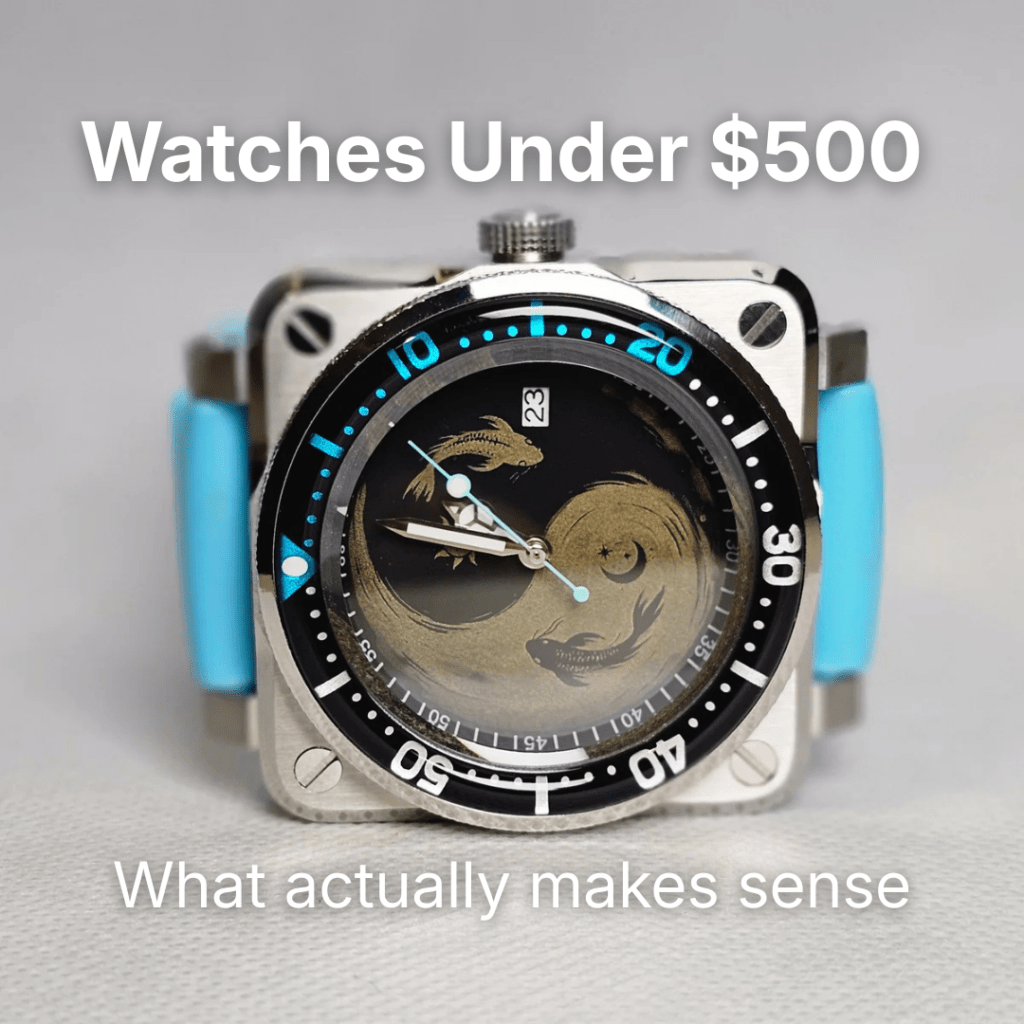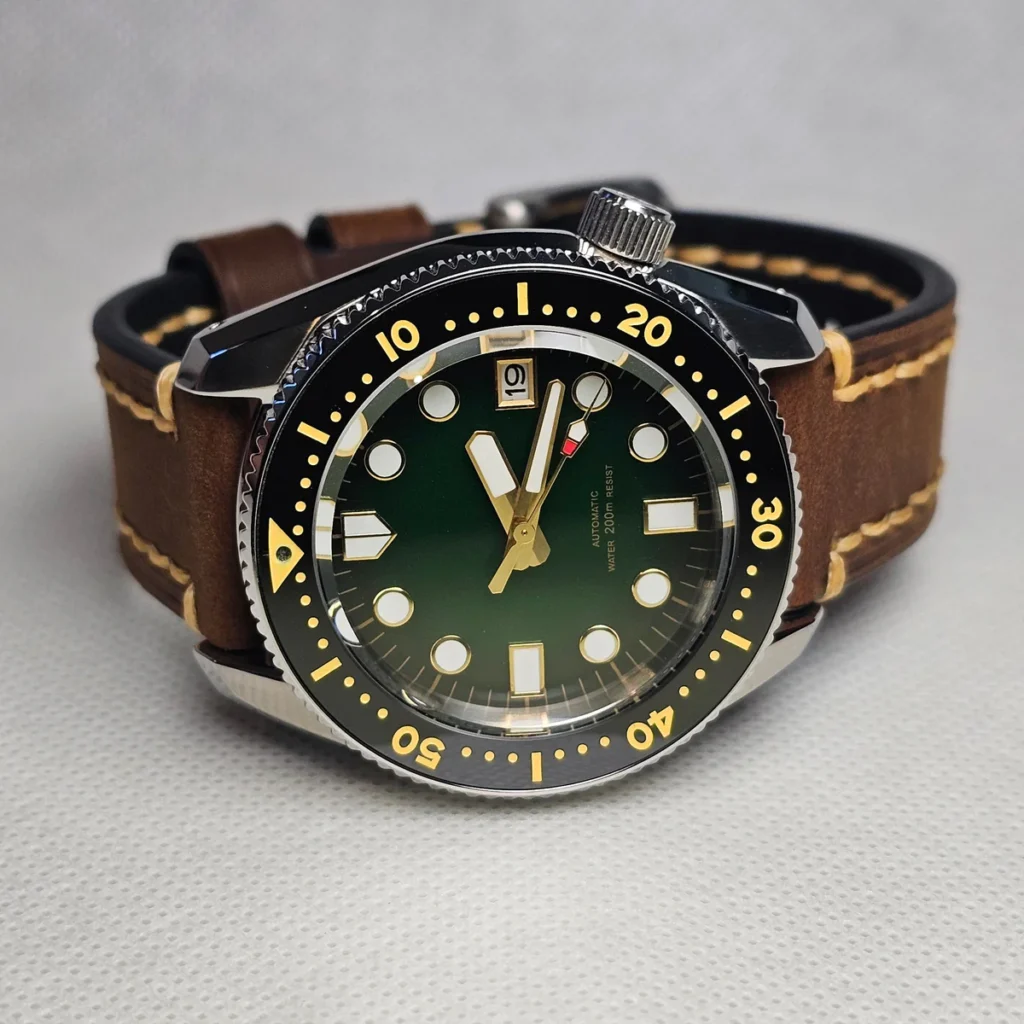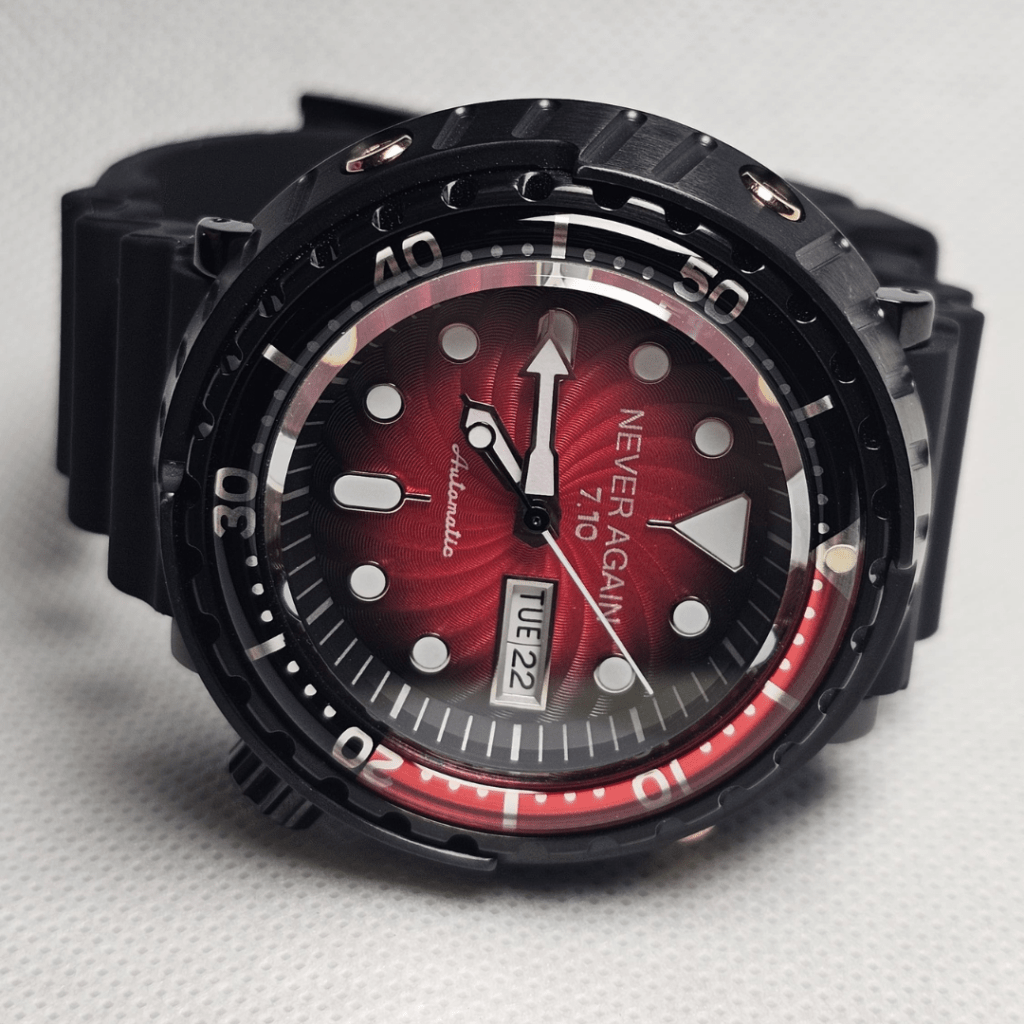
Sterile vs branded mod dials is not only a style question. The logo on a dial tells a buyer who supposedly made, authorized, or stands behind the watch. When that signal is inaccurate, a visually convincing build can become a trust problem.
A sterile dial carries no brand name or logo. A custom maker dial identifies the actual maker or workshop. A branded aftermarket dial uses a mark associated with another company, sometimes with permission and often without it. Those three objects may look similar in a parts listing, but they do not communicate the same thing.
This guide explains the practical differences for builders and buyers. It is general educational information, not legal advice. Trademark and consumer-protection rules vary by country, and commercial sellers should obtain advice for the markets where they operate.
The Short Answer
A sterile dial is usually the clearest option when a builder wants no branding. It does not claim that an unrelated company made the finished watch. A properly disclosed custom maker mark can be equally honest because it identifies the real source.
An unauthorized branded aftermarket dial is different. A trademark exists partly to identify the source of goods. The United States Patent and Trademark Office describes that source-identifying role directly. The World Intellectual Property Organization explains that unauthorized use becomes trademark infringement when a mark on identical or similar goods creates a likelihood of confusion, while counterfeiting is a more specific category involving a sign identical or essentially indistinguishable from the registered mark.
That does not mean every modified watch is counterfeit. It means the origin of the dial, the authorization behind the mark, the way the watch is described, and the market where it is sold all matter.
What Is a Sterile Watch Dial?
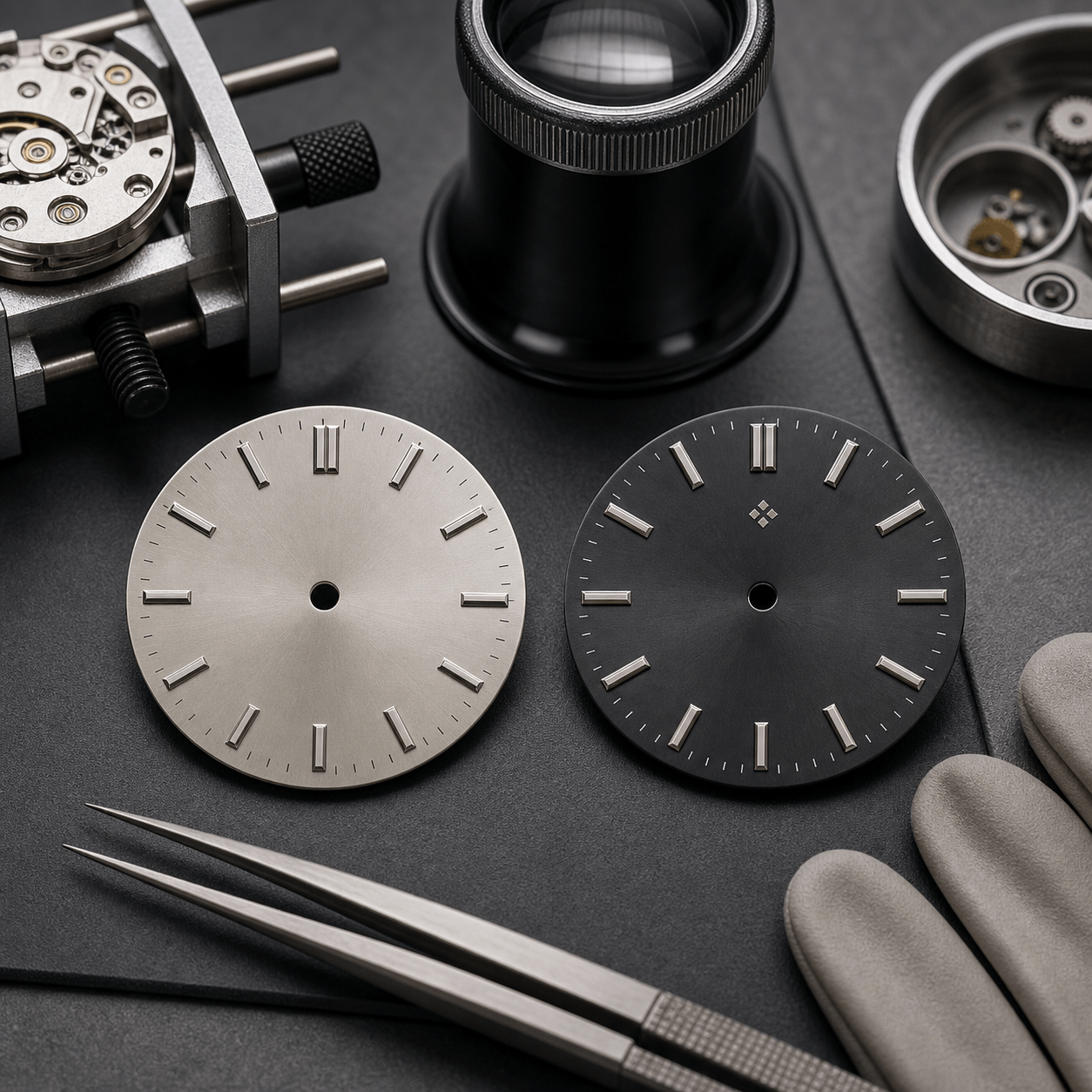
A sterile dial has no brand name, logo, or maker signature on its visible surface. It may still include hour markers, a minute track, a date window, depth rating, material description, or other functional text, but it does not present a company mark as the source of the watch.
Builders choose sterile dials for several legitimate reasons:
- They want a clean, minimal layout.
- They do not want to claim a connection to a watch brand.
- They plan to add their own authorized maker mark later.
- They are prototyping proportions before committing to a logo.
- The dial texture or material is meant to be the focal point.
Sterile does not automatically mean high quality. A blank dial can still have weak printing, poor marker alignment, thin lume, rough edges, or the wrong date-window position. It simply answers the branding question honestly: no visible company is being presented as the maker.
What Is a Branded Aftermarket Dial?
An aftermarket dial is a replacement or build component produced outside the original watch manufacturer’s normal supply chain. It can be sterile, carry the aftermarket maker’s own mark, use a commissioned client mark, or reproduce another company’s branding.
The last category creates the difficult part. A dial carrying a famous watch logo may be described online as a “replacement,” “custom,” “mod,” “OEM style,” or “aftermarket.” Those labels do not themselves prove authorization. A seller can disclose that a dial is aftermarket while still using a mark that signals a different commercial source to the person who later sees the watch.
For builders, the practical question is not only, “Did the listing admit it was aftermarket?” It is also, “What will the finished watch communicate after the listing and packaging are gone?”
Modified, Homage, Replica, and Counterfeit Are Not Synonyms
Watch discussions become confused when every non-original object receives the same label. These categories need separation.
- Modified genuine watch: an authentic watch changed after sale. The case, movement, dial, hands, bezel, crystal, or bracelet may no longer match the factory configuration.
- Custom build: a watch assembled from compatible parts and presented under the actual builder, workshop, client, or no brand at all.
- Homage watch: a watch that borrows recognizable design language while carrying its own identity. Design rights can still matter, but it is not pretending to bear the original company’s mark.
- Replica or counterfeit: an object presented with branding or source signals intended to make it appear to be a genuine product from another maker.
Our guide to homage vs replica watches explores that broader boundary. The dial question is narrower: what source does the mark communicate, and is that communication truthful?
Why the Legal Answer Depends on Context
There is no useful one-line legal answer that applies to every country, private build, restoration, commercial listing, and import. Relevant rules may include trademark law, passing off or unfair competition, consumer-protection law, customs rules, platform policies, and contractual restrictions.
Three facts commonly change the risk:
- Authorization: Did the trademark owner authorize the dial or its use?
- Consumer confusion: Would a reasonable buyer or later viewer believe the branded watch or component came from the trademark owner?
- Commercial activity: Is the item being made, imported, advertised, or sold rather than kept as a private experiment?
Import rules can be especially unforgiving. U.S. Customs and Border Protection states that merchandise bearing counterfeit marks may be seized and warns that consumers importing counterfeit goods can face penalties. Its current guidance also describes only a narrow personal-use traveler exemption for certain trademark-restricted articles; that is not a general permission to order, manufacture, or resell branded aftermarket watch parts.
The safe editorial conclusion is therefore limited but firm: do not assume that adding the word “mod” makes unauthorized branding lawful. A commercial builder or seller should obtain jurisdiction-specific advice.
The Ethical Test Is Simpler Than the Legal Test
Even where a builder is uncertain about the legal line, the ethical line is easier to examine. Ask whether the dial creates borrowed credibility.
A famous logo can make an ordinary parts build look more valuable, more official, or more historically connected than it is. If the mark is doing that work without authorization, the builder is benefiting from a reputation the actual maker did not create. The problem becomes worse when the watch is sold, gifted without explanation, or later enters the used market with its history partly forgotten.
A sterile dial avoids that borrowed claim. A real custom maker mark does something better: it gives credit to the person or workshop responsible for the object.
Disclosure Must Survive the First Sale
A seller may write “aftermarket dial” in the original listing and consider the matter solved. That disclosure is useful, but watch ownership has a long memory and a short paper trail. Screenshots disappear. Gift recipients receive the watch without the listing. Used dealers may copy an incomplete description. A later buyer sees only the logo on the dial.
Good disclosure should exist in more than one place:
- The product title and first description paragraph.
- The component list or build sheet.
- The invoice or certificate supplied with the watch.
- Any caseback or maker mark, where appropriate.
- Future resale descriptions shared by the owner.
Do not use vague phrases such as “custom edition” when the important fact is that the branded dial is not factory-made. Say which parts are genuine, aftermarket, refinished, restored, or custom-produced.
How Buyers Should Read a Mod-Dial Listing
A trustworthy listing should answer practical questions without making the buyer decode euphemisms.
1. Who made the dial?
Look for a named dial maker, workshop, or supplier. “Custom” describes a category, not a source. If the seller cannot identify the manufacturer, treat claims about material, printing, lume, and durability as unverified.
2. Is the mark authorized?
If the dial carries a brand unrelated to the seller, ask whether it is an authentic factory dial, a refinished authentic dial, a licensed part, or an unauthorized reproduction. Those are materially different.
3. What else is original?
A genuine movement does not make the entire watch genuine. A genuine case with an aftermarket dial is still a modified watch. The listing should identify the movement, case, dial, hands, crystal, bezel, crown, bracelet, and any refinishing that affects identity or value.
4. Are the photos of the actual watch?
Renderings and supplier images cannot prove alignment, dust control, hand clearance, finishing, or the exact mark fitted to the delivered watch. Ask for clear photographs of the actual dial and completed build.
5. What will the paperwork say?
A build sheet should remain useful years later. It should not imply factory warranty, official collaboration, limited-edition status, or brand authorization that does not exist.
Why Accurate Branding Matters to Builders
Clear branding protects more than the buyer. It protects the builder’s own reputation. A workshop that signs its work can build a real body of evidence: consistent finishing, dial techniques, service history, and accountability when something needs correction.
That is stronger than hiding behind another company’s logo. It also leaves room for legitimate collaboration. A client may own a personal symbol, a company may commission a private-label dial, or an artist may license a design. The useful question is always the same: who owns the mark, who made the dial, and what permission exists?
For an honest view of the physical process, see how custom watch dials are made. Engraving, paint, texture, applied markers, chemical treatment, and hand finishing create real identity without borrowing a factory logo. Our Art Dials guide goes further into authorship, independent dial makers, and why provenance should be part of the finished design.
A Better Path: Sterile, Maker-Signed, or Properly Licensed
Builders have several clean options:
- Use a sterile dial and let material, proportion, and finishing carry the design.
- Add the builder’s own registered or established maker mark.
- Use a client-owned symbol with written permission and a clear private-commission record.
- Create a co-branded dial only when every named party has approved the use.
- Use an authentic service or replacement dial with documentation appropriate to the watch.
Rexx Timepieces provides the workshop route for personal builds where the idea, parts, dial, and final attribution can be discussed before assembly. Rexx StudioWorks represents the small-batch craft layer for workshop-made dial and engraving work. Neither route needs borrowed branding to make the object interesting.
Builder and Buyer Checklist
Before buying, installing, or selling a dial, record:
- Who manufactured and finished the dial.
- Whether every visible brand mark is authorized.
- Whether the dial is factory, refinished, aftermarket, sterile, or custom maker-signed.
- Which watch and movement platform it fits.
- Whether the date position, dial feet, marker height, and hand clearance are compatible.
- What the completed watch will be called in listings and paperwork.
- Which disclosures must follow the watch into future resale.
Compatibility keeps the watch functioning. Accurate attribution keeps the story functioning.
Sterile vs Branded Mod Dials: Common Questions
Is every aftermarket dial illegal?
No. Aftermarket describes a supply relationship, not a universal legal verdict. A sterile dial, an independent maker’s own dial, and a properly licensed client commission can all be aftermarket without pretending to come from the original watch manufacturer. The risk changes when protected marks, copied artwork, misleading origin claims, or unauthorized commercial use enter the picture.
Does removing the logo solve every problem?
Removing an unauthorized logo addresses the clearest source-identification issue, but it does not answer every possible design, copyright, patent, or consumer-protection question. It also does not make a poor-quality part good. The finished watch should still be described accurately and should not be packaged or advertised as an official model.
Can a client put a personal or company mark on a dial?
A personal symbol or company mark can be a legitimate custom direction when the client controls the mark and gives the workshop permission to use it. The agreement should identify who owns the artwork, where it may be used, whether the watch can be photographed publicly, and whether additional examples may be produced. Commercial projects deserve written terms rather than an assumption made in chat.
How should a modified watch be sold later?
Lead with the fact that it is modified or custom-built. Name the base watch if one exists, identify the movement and major components, state whether the dial is factory, refinished, aftermarket, sterile, or maker-signed, and avoid any suggestion of factory warranty or official collaboration unless that claim is documented. Clear disclosure may reduce the wrong buyer’s interest, but it increases trust with the right buyer.
Final Thoughts
The sterile vs branded mod dials debate becomes clearer when style, legality, and trust are separated. A sterile dial can be minimal or anonymous. A maker-signed dial can build honest identity. An unauthorized brand mark can create confusion that a small “aftermarket” note does not fully repair.
The best custom watches do not need to pretend they came from somewhere else. They can name the real maker, document the real parts, and let the actual work earn the buyer’s confidence.