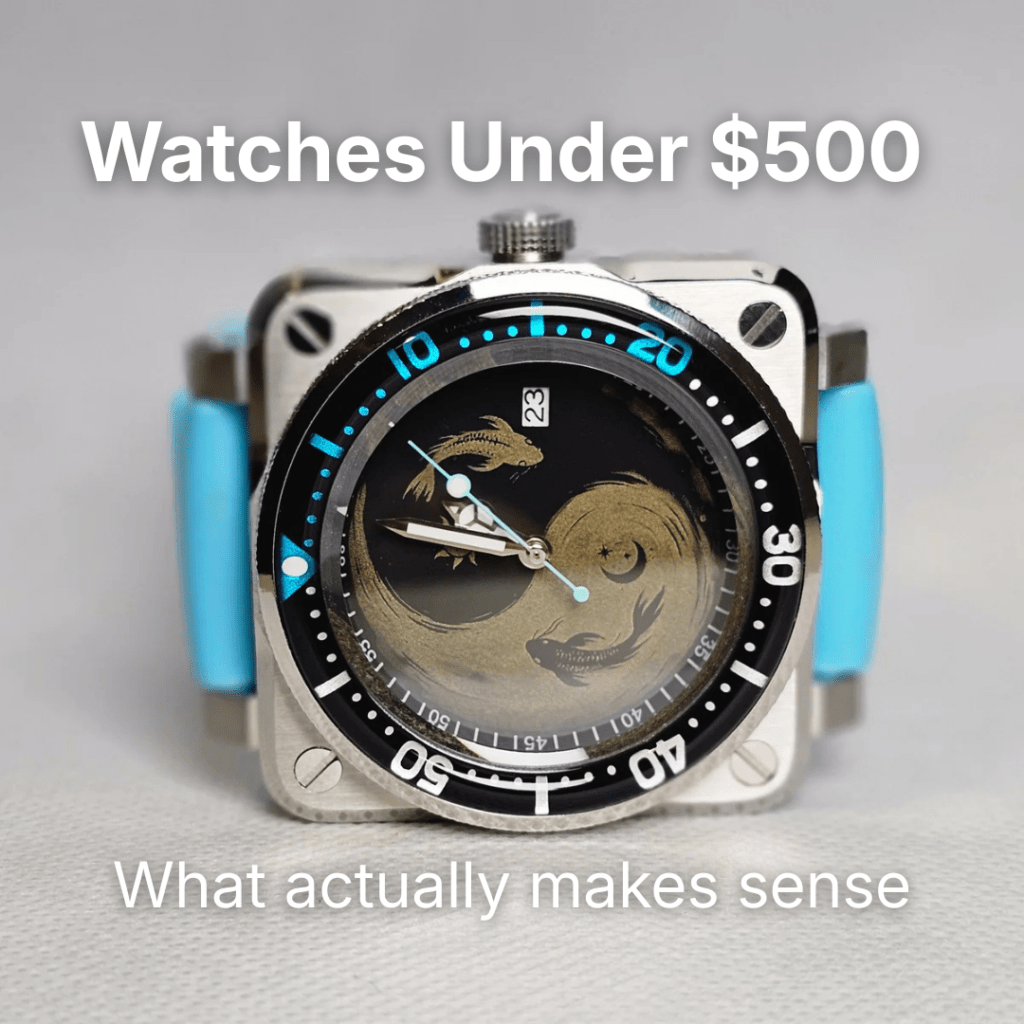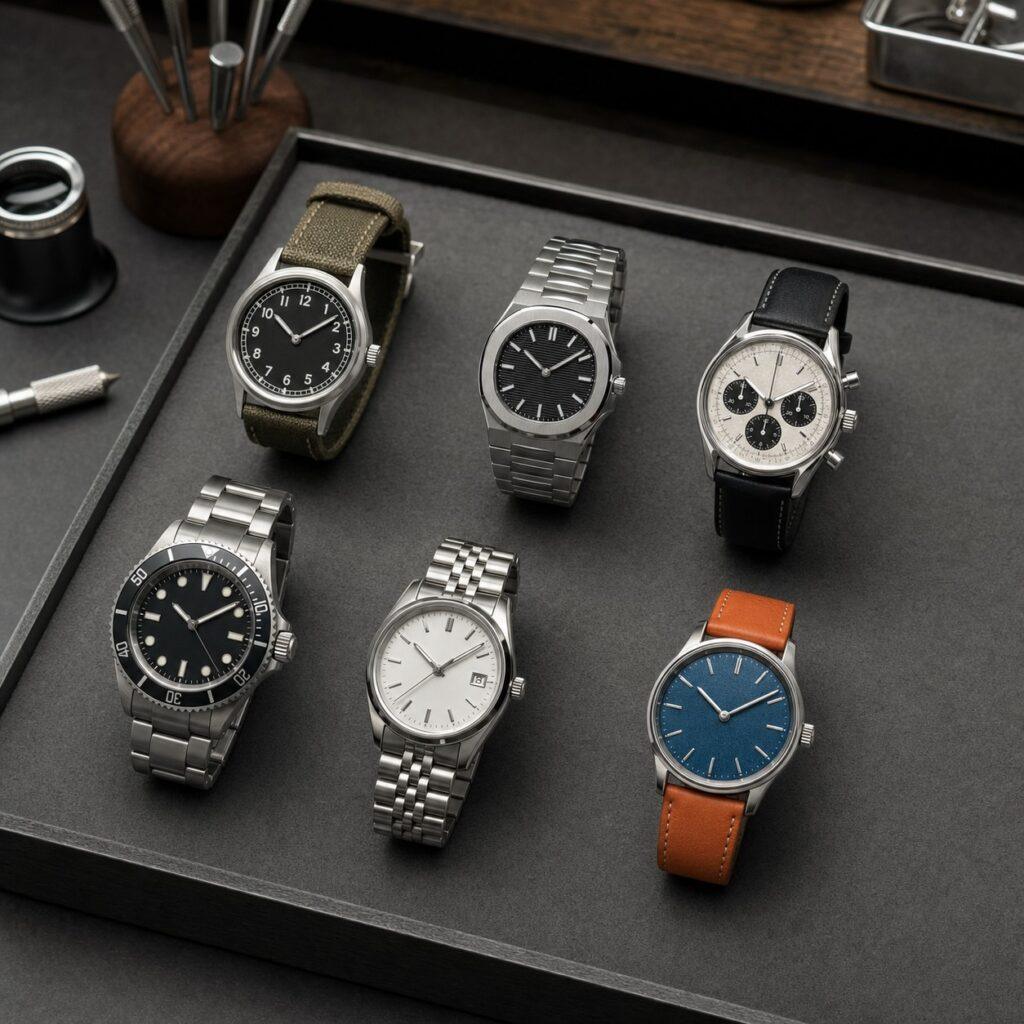
Watch renders vs real watches is not just a design debate. A watch render can be beautiful, and sometimes it is the first moment when an idea starts to feel real: the case shape looks clean, the dial is perfectly lit, the hands land exactly where they should, and every surface appears controlled.
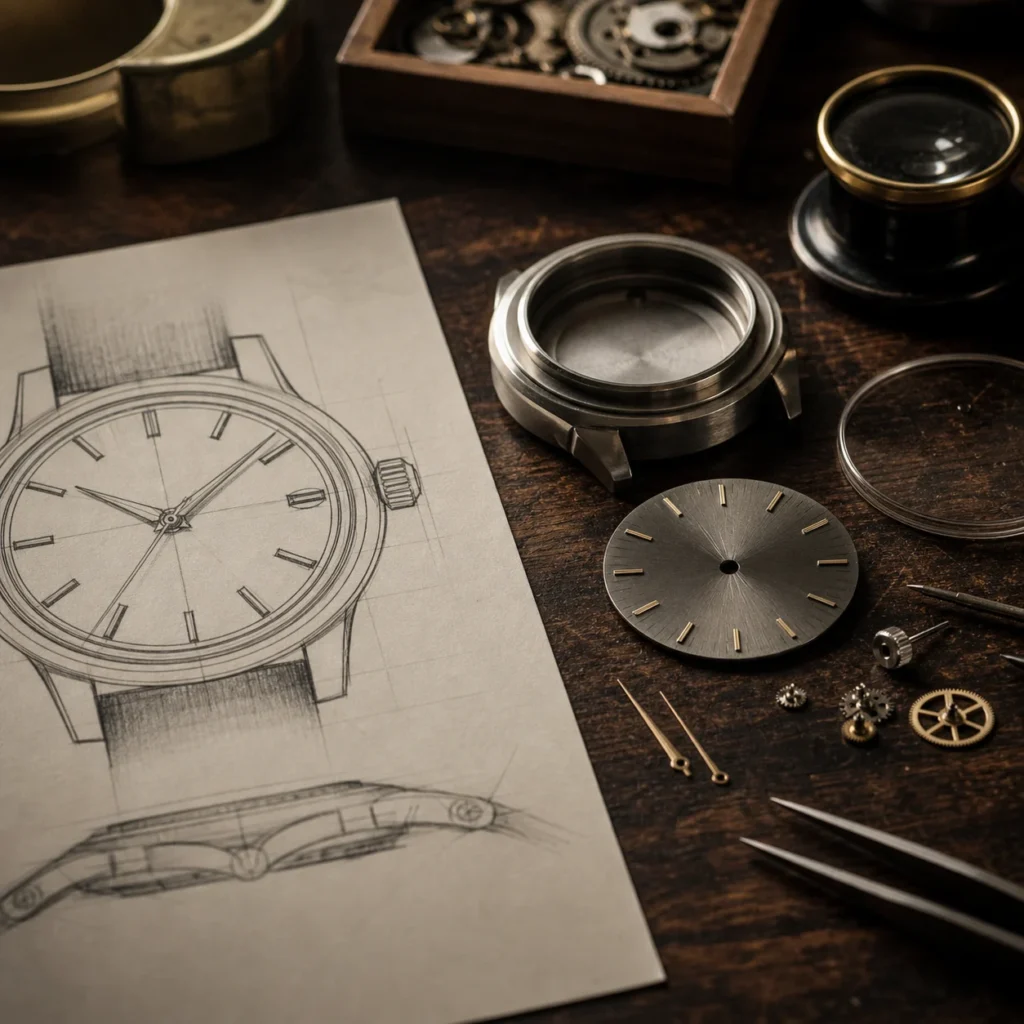
Then the watch arrives, or the first real photos appear, and the feeling changes.
The dial looks flatter than expected. The case is thicker from the side. The lugs sit differently on the wrist. The crystal catches reflections the render never showed. The hands are a little short, the bracelet feels heavy, or the whole watch simply has a different personality than the image promised.
This does not mean renders have no value. A good render can explain a design direction, especially before a watch exists. But a render is not proof. It can show the idea of a watch. The physical watch proves the design.
This subject came back into focus recently after Fratello discussed why watch renders so often leave collectors underwhelmed. It is a useful conversation because the problem is not only aesthetic. It affects buyers, microbrands, custom watch projects, and anyone trying to judge a watch before holding it.
Watch Renders vs Real Watches: A Render Shows the Idea, Not the Object
A render is usually made to communicate a concept clearly. It removes friction. It controls the lighting. It presents the case, dial, hands, indices, and strap under ideal conditions. That is useful when a brand wants to show a design before production, or when a custom watch builder wants to discuss options with a client.
The problem is that real watches do not live under perfect render lighting. They live under office lights, sunlight, car windows, phone cameras, restaurant tables, and the strange half-shadow of normal life. A dial that looks sharp in a render can become too reflective in person. A case that looks slim from the front can feel tall from the side. A color that feels rich on a screen can feel colder or duller under real light.
That is why the question is not whether a render is pretty. The question is what the render cannot tell you yet. The real value of a watch renders vs real watches comparison is that it separates presentation from proof.
Watch Renders vs Real Watches: The Details Renders Usually Hide
Most watch disappointment comes from details that are hard to judge in a clean image. Case thickness is one of the biggest. A watch can look balanced from above and still feel bulky because the midcase is tall, the caseback protrudes, or the crystal rises more than expected.
Lug shape is another. The lugs decide how the watch rests on the wrist. Long, flat lugs can make a moderate case feel larger. Short, curved lugs can make a watch wear more naturally. A render often shows the lugs as a shape, but not as a physical structure wrapping around a wrist.
Dial depth also matters. Printed markers, applied markers, textured surfaces, chapter rings, date windows, and hand height all create the actual face of the watch. In a render, those layers may look clean. In real life, they create shadows, reflections, spacing issues, and sometimes visual noise.
Even the strap can change the entire watch. A watch head may look refined in isolation, but the strap taper, thickness, stiffness, stitching, and hardware decide whether it feels elegant, casual, heavy, or cheap.
Why Case Shape and Thickness Matter More in Person
Collectors often talk about diameter first, but thickness and case geometry are what make many watches succeed or fail on the wrist. A 39mm watch can feel clumsy if the side wall is too tall. A 37mm watch can feel confident if the lugs, bezel, dial opening, and thickness work together. This is one reason the return of midsize dive watches is more than a diameter trend: the successful examples control the full case profile.
This is especially important with smaller independent watches and compact mechanical designs. A restrained watch gives less room for visual mistakes. The case cannot hide behind size. The dial cannot rely on loudness. The whole object has to be balanced.
That is why real side photos, wrist shots, and honest case measurements matter. The front view may sell the design, but the side view tells you whether the object has discipline.
For more on the materials side of that equation, The Watcher HQ has a separate guide to watch case materials. Material, finishing, and shape all affect how a watch feels beyond its listed size.
Dial Depth, Hands, and Reflections Change Everything
A watch dial is not a flat poster. It is a small construction of surfaces, heights, holes, reflections, and tolerances. The hands must clear the dial and each other. The indices need to sit cleanly. The crystal needs enough space. The dial color has to work with the hands and markers in real light.
This is where renders often feel too generous. They make hands perfectly visible. They make polished markers behave. They remove glare. They make color consistent across the dial. But anyone who has handled real watches knows that dial legibility is physical. It depends on contrast, finishing, angle, and light.
That is also why custom dial work is more complicated than simply placing a design on a circle. A good dial has to look right, fit the movement and case, leave proper hand clearance, and remain readable once assembled. If you want the practical side of that process, see our guide to how custom watch dials are made.
What Real Workshop Proof Tells You
Real workshop proof does something a render cannot do. It shows that the watch exists as an object with constraints.
A bench photo, wrist photo, macro image, assembly video, or case-side shot gives the buyer information. It shows proportions. It shows how the dial behaves under real light. It shows whether the case looks finished from more than one angle. It can reveal the strap, crown, crystal, bezel, movement holder, and caseback in a way that a render avoids.
This is one reason workshop-connected brands have an advantage when they show the process honestly. Rexx Timepieces custom watch work is not only about choosing a pretty concept. It is about getting the parts, dial, case, hands, and finishing to survive the bench. A custom idea still has to become a wearable mechanical object.
The same principle matters at the quieter end of the ecosystem. Meshberg’s workshop page gives context around small-batch watchmaking, dial work, and physical process. That kind of proof matters because refined proportions cannot be fully judged from a clean graphic alone.
If you want to see hands-on work rather than just read about it, the Rexx Timepieces YouTube channel is the proof layer: builds, dials, assembly, engraving, and workshop process.
How to Judge Watch Renders vs Real Watches Before Buying
If you are looking at a watch that is shown mostly through renders, slow down before judging it as finished. The render may be useful, but you should look for more evidence.
Start with wrist photos. They do not need to be glamorous. In fact, plain wrist photos can be more useful than perfect campaign images because they show scale. Then look for side views. A front-facing image hides thickness better than almost anything else. This is where watch renders vs real watches becomes a practical buying question, not just an aesthetic complaint.
Check the dial in more than one lighting condition. If every image is dark, dramatic, and heavily controlled, you may not know how readable the watch is in normal use. Look for macro shots of the hands, indices, date window, crown, case finishing, and crystal edge.
For preorder watches or microbrand releases, ask whether prototypes exist. A production-ready prototype is not the same as a render. It shows that the design has crossed from image into object.
For custom watches, ask a different question: what has been physically checked? Dial fit, hand clearance, case compatibility, crown position, crystal space, strap fit, and movement security are not decorative details. They are the difference between a design and a watch.
Why Watch Renders vs Real Watches Matter More for Microbrands and Custom Watches
Renders are common in the microbrand world because small brands often need to present a design before full production is complete. That is understandable. Tooling, prototyping, photography, and production all cost money. A render can help explain the vision early.
But trust depends on what comes next. For buyers, the watch renders vs real watches gap is really a trust gap: what has been shown, what has been built, and what has been proven?
A serious independent brand should move from render to prototype, from prototype to real photography, from real photography to clear specifications, and from specifications to honest delivery. The more transparent that path is, the easier it is for buyers to believe the watch.
This is part of the larger shift covered in our article on microbrand watches and independent watch culture. Independent brands do not need to imitate big luxury houses. They need to build trust in their own language: real process, clear specs, good communication, and watches that make sense in the hand.
The same is true for personal custom watches. A custom idea may begin with a sketch, reference, render, or mood. But the final watch must still obey proportion, readability, and mechanical limits. That is why custom work should involve conversation, not just an uploaded image. The strongest personal watches usually come from shaping the idea until it becomes wearable.
For that side of the topic, read how custom watches reflect personal style. The best custom details support the watch. They do not overwhelm it.
Product Photography Can Mislead Too
It is easy to blame renders, but real photography can also create false expectations. A photo can use extreme lighting, heavy contrast, selective focus, or angles that hide thickness. A watch can be photographed without any wrist context. A polished case can look cleaner in a studio than it ever does after one week of normal wear.
Good product photography should make the watch attractive, but it should not remove useful information. The best watch pages show more than one mood. They show the front, the side, the wrist, the caseback, the strap, and the details that affect daily use.
That does not make every page longer. It makes the page more honest.
Final Take: Watch Renders vs Real Watches Need Proof
A watch does not become real when it looks clean on screen. It becomes real when the proportions, materials, and mechanical decisions still make sense under light, on the wrist, and at the bench.
Renders are part of modern watchmaking and watch marketing. Used honestly, they are helpful. They let brands show ideas early. They let custom builders discuss options. They help buyers imagine a direction before the first physical example is finished.
But the render is the beginning of the conversation, not the proof. The strongest watch renders vs real watches test is simple: does the final object still make sense after the perfect lighting is gone?
Before buying, look for the physical evidence: wrist shots, side views, prototype photos, workshop process, dial close-ups, honest measurements, and real-world lighting. If a watch still looks good after all that, the design is probably stronger than the image that introduced it.
Quick Watch Renders vs Real Watches Buyer Checklist
- Do real wrist photos exist?
- Can you see the case from the side?
- Is the thickness listed clearly?
- Are the dial, hands, and markers visible in normal light?
- Are prototype or production photos available?
- Does the brand show real process, not only clean graphics?
- For custom watches, has compatibility been discussed before the build?
If the answer is yes to most of these, the watch has moved beyond presentation. It has started to prove itself.