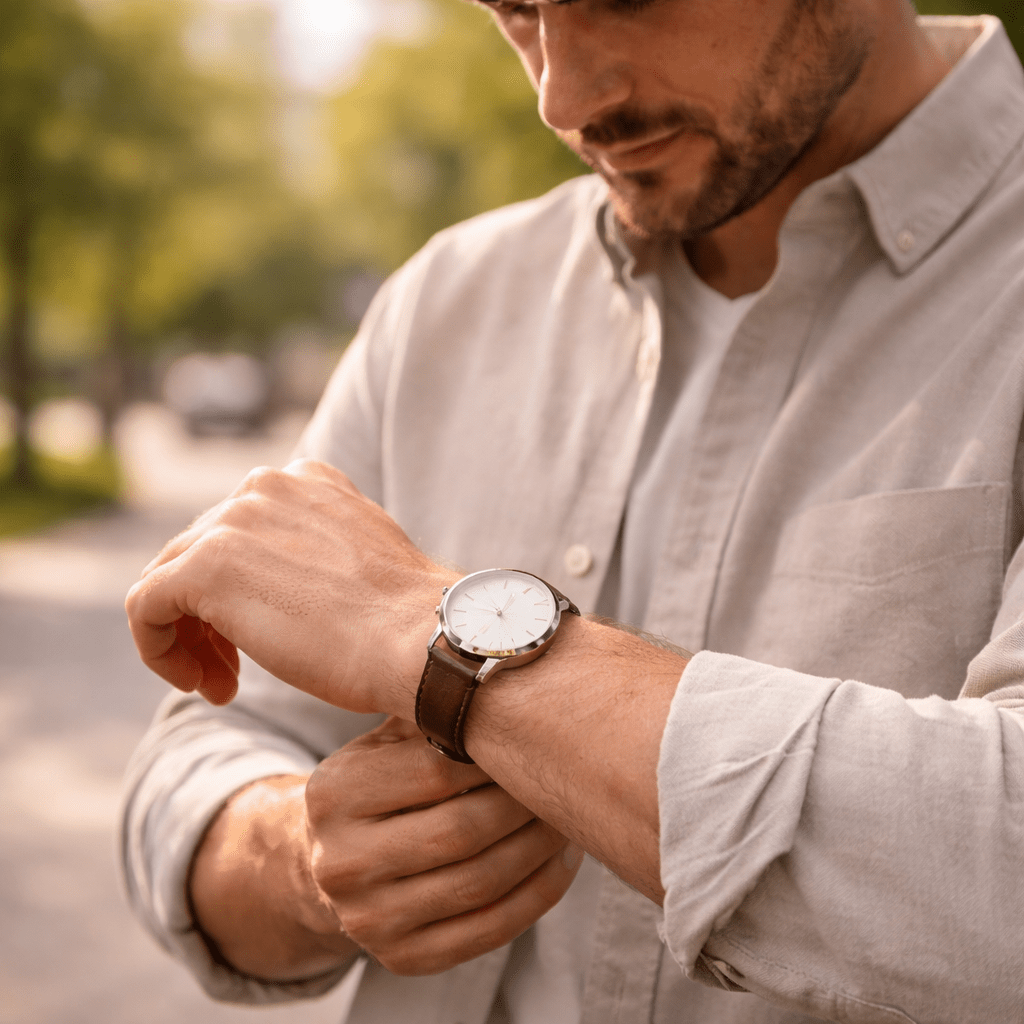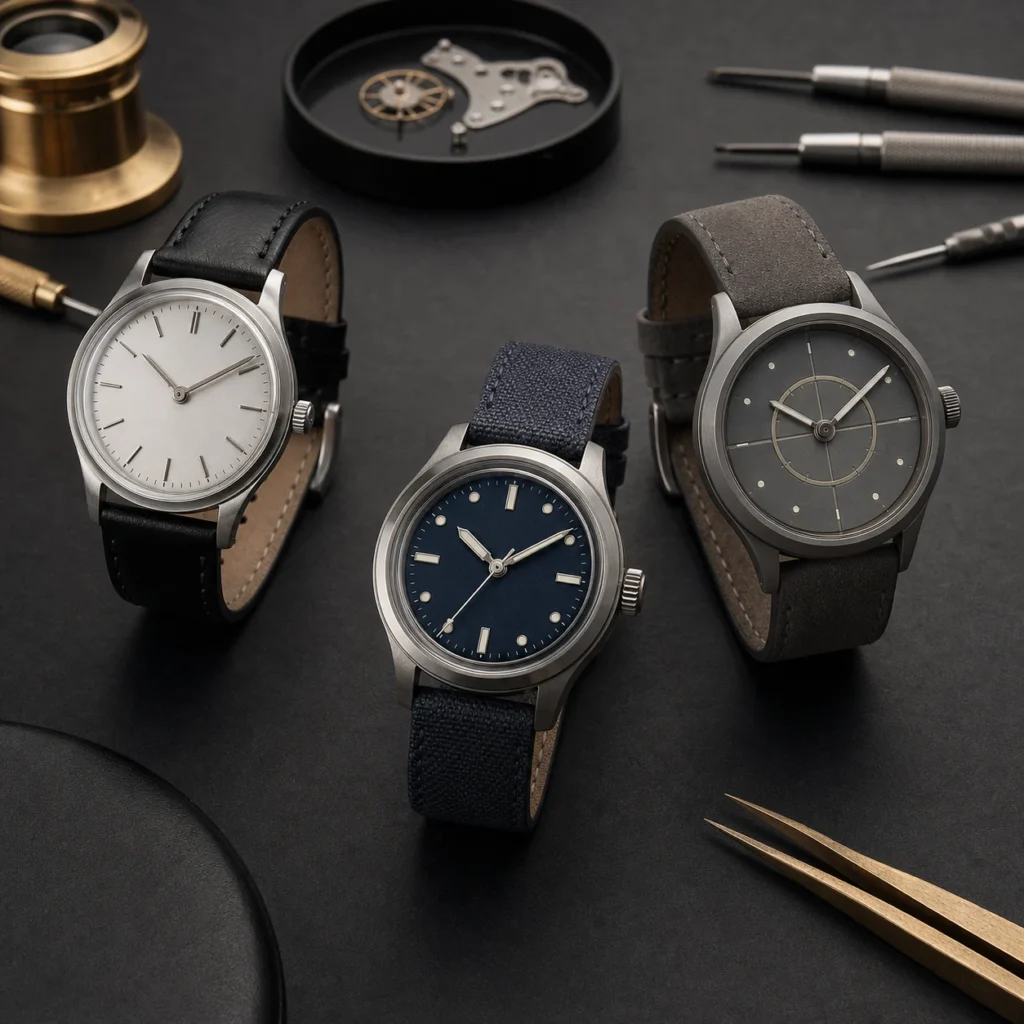
How Custom Watches Reflect Personal Style
How custom watches reflect personal style has less to do with adding unusual parts and more to do with making a clear set of choices. Case proportions, dial texture, hand shape, markers, strap or bracelet, movement, finishing, lume, and engraving all affect what the watch communicates and how it feels on the wrist.
The strongest custom watches are not necessarily loud. A restrained 36 mm case can be more personal than an oversized statement piece. A dark engraved dial can carry more identity than a bright color. A private caseback message can matter more than a visible logo. Custom work succeeds when every choice belongs to the same idea.
Start With a Wearing Brief, Not a Parts List
Before choosing a case or dial, describe how the watch should live. Is it a quiet daily watch, a technical tool watch, a workshop-made art object, a memory piece, or something designed around a specific event? Should it disappear under a cuff, feel substantial on the wrist, or become the first thing people notice?
This short wearing brief is more useful than a folder full of unrelated reference images. It gives the builder a way to judge every later choice. A polished case may suit a refined daily watch but fight a rugged tool-watch brief. A highly textured dial may be the center of an art watch, yet feel excessive when the goal is calm legibility.
The same principle appears in our guide to designing a custom milestone watch: decide what the watch needs to mean before deciding how much symbolism to put on it.
The Dial Carries the Personality
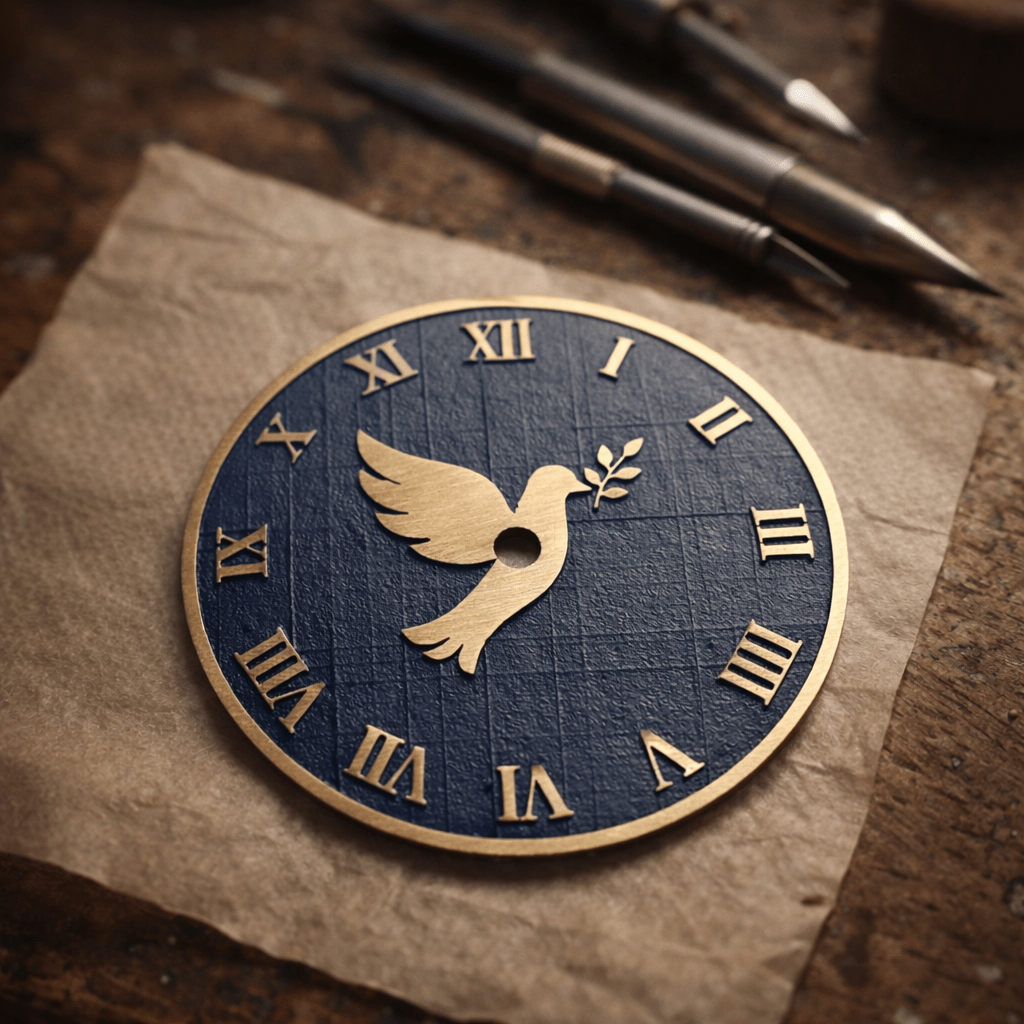
The dial is usually where personal style becomes visible first. It controls color, texture, markers, numeral style, logo placement, negative space, and the way light moves across the watch. A familiar steel case can feel completely different with a brushed dial, a deep engraved surface, a hand-painted finish, or a clean no-date layout.
Material matters as much as artwork. Engraving depth changes how shadows form. Chemical darkening can make high points and recesses react differently to light. Paint and airbrushing can produce color transitions that printing cannot. Applied markers create physical depth, while printed markers can support a flatter and more graphic design.
For the practical workshop sequence, read how custom watch dials are made. A dial is not only a picture. It must remain legible, fit the movement and case, clear the hands, and survive handling during assembly.
A specific example is Rexx’s blue aviation dial: an aircraft motif, winged emblems and commemorative dates share the face with raised numerals and minute markers. The maker’s post explains how the artwork becomes part of the dial itself, with the surrounding metal removed to leave the details raised.
Proportion Controls Presence
Case diameter is only one part of how a watch wears. Lug-to-lug length, thickness, bezel width, dial opening, crystal height, crown size, and strap taper can make two watches with the same listed diameter feel completely different.
A smaller watch often gives the dial more authority because the case does not dominate it. A larger watch can create room for stronger markers, complications, or a more technical layout. Neither approach is automatically better. The right choice depends on the wrist, the design brief, and the kind of presence the owner wants.
Our 36 mm vs 37 mm watch guide explains why a single millimeter can matter less than the total geometry. The Meshberg 37 Automatic is a useful ecosystem example of quiet proportions and small-batch restraint rather than size for its own sake.
Hands, Markers, and Lume Must Support the Dial
Hands and markers are often chosen late, but they can decide whether a custom watch feels resolved. Their shapes create rhythm across the dial. Their length determines whether the watch reads as precise or careless. Their finish controls contrast, and their lume can either unify the design or introduce an unwanted color.
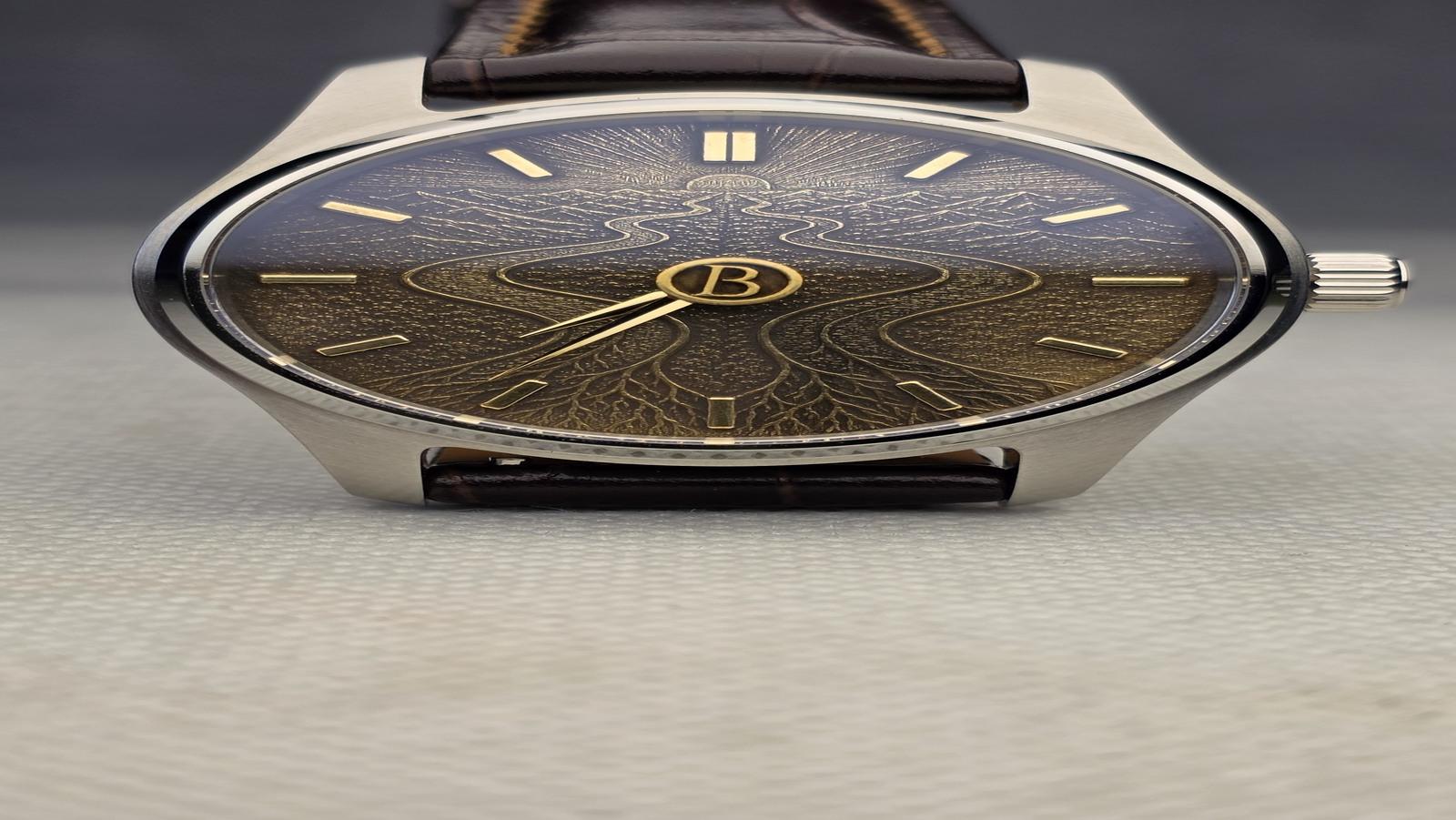
A detailed dial usually benefits from hands that remain easy to read without competing with the texture. A minimal dial can carry more distinctive hands because there is less visual information around them. Gold-tone markers may warm a chemically darkened surface, while polished silver hands may disappear against a reflective dial unless their shape or finish creates enough contrast.
This is also where technical compatibility enters the design. Hand-hole sizes must match the movement. The hand stack needs enough vertical clearance. The seconds hand cannot touch the crystal, and the hour and minute hands cannot collide. A combination can look convincing in a mockup and still fail at the bench.
A Simple Readability Check Before Committing
Judge a dial at normal wrist distance as well as in a close-up. Look at it straight on and at an angle, in diffuse light and brighter light. Check several hand positions: hands that are clear over one part of an engraved pattern can blend into another. Compare alternatives at the same physical scale, with the intended crystal where a real prototype is available.
Start with the hour and minute hands. Can you tell them apart quickly, and do their tips reach useful reference points? Then assess the decorative detail. In the Root of Our Legacy commission, the B initial forms a moving seconds hand. That is a different job from the hands used to read hours and minutes.
For a handmade dial from Rexx StudioWorks or an experimental Meshberg dial, the same check connects the surface work to daily use. A photograph can help compare contrast and proportions; it cannot confirm hand clearance or mechanical compatibility.
Strap and Bracelet Change the Entire Mood
A watch is not visually finished when the head is assembled. A brushed bracelet can make the same case feel architectural and technical. Brown leather can make it warmer. Black leather can sharpen the formality. Rubber can pull the watch toward sport or utility, while fabric can make it feel lighter and more casual.
The attachment also changes perceived size. A broad bracelet can make a compact watch feel more substantial. A strongly tapered strap can make a larger case feel more elegant. Color matters, but so do thickness, stitch color, texture, hardware finish, and the transition between the lugs and the strap.
Engraving Can Be Public or Private
Engraving does not have to announce itself from across the room. A symbol on the dial is public. A caseback message is private. An engraved rotor is revealed only when the watch is turned over. Each location changes the relationship between the object and its owner.
That distinction helps prevent a meaningful watch from becoming overloaded. If a date, name, phrase, and symbol all matter, they do not all need to appear on the dial. The dial can remain visually coherent while the caseback carries the personal story.
Movement Choice Is Technical Before It Is Emotional
Collectors often attach personality to movements, but movement choice begins with practical questions. Does it fit the intended case? Does it support the date position and hand layout? Is the stem height correct? Can it be serviced? Does the owner want automatic winding, hand winding, a visible rotor, or a slimmer quartz construction?
A decorated movement can add interest through an exhibition caseback, but it should not force the watch into the wrong proportions. A reliable, serviceable movement inside a coherent watch is usually a better decision than a more prestigious movement that compromises the case, dial, or budget.
Custom Does Not Mean Random
One of the easiest mistakes is combining every favorite feature at once. A bold case, ornate dial, unusual hands, bright lume, engraved bezel, and colorful strap may all be attractive individually, but together they can compete for attention.
Good custom watch design is edited. It establishes a hierarchy: one element leads, supporting elements reinforce it, and everything else stays quiet. The table below shows how common choices affect both style and function.
| Choice | What it communicates | What must be checked |
|---|---|---|
| Dial | The main visual identity | Diameter, feet or mounting, date position, legibility |
| Case proportions | Quiet, bold, technical, or refined presence | Movement fit, stem height, crystal and hand clearance |
| Hands and markers | Precision, formality, contrast, and rhythm | Hole sizes, lengths, lume color, vertical clearance |
| Finish | Tool-like, reflective, aged, or tactile character | Scratch visibility, contrast, consistency between parts |
| Strap or bracelet | The final wearing mood | Lug width, taper, thickness, hardware, comfort |
| Engraving | Public identity or private meaning | Available surface, depth, readability, future refinishing |
Three Coherent Custom Watch Directions
A quiet daily watch
Use a compact or moderate case, a restrained dial, clear hands, limited polished surfaces, and a comfortable tapered strap or bracelet. Personal meaning can live in a subtle texture or private caseback engraving.
A workshop art watch
Let one handmade or engraved dial lead the design. Keep the case and hands supportive, then use finishing and strap color to reinforce the material character. The aim is not maximum decoration. It is to give the craft enough space to be seen.
A technical tool watch
Prioritize legibility, grip, water-resistance architecture, lume, and a robust wearing system. Personal style can come through the color palette, bezel treatment, chapter ring, hand shape, or a specific functional layout.
Seiko Mods Are a Practical Entry Point
Seiko mods give collectors a practical way to discover their preferences because the parts ecosystem is broad and the movement architecture is familiar to many builders. Dials, hands, cases, bezels, crystals, chapter rings, crowns, and straps can be changed without designing an entire watch platform from zero.
The real value is not only variety. Making decisions teaches you what matters. You may begin with a color idea and discover that case thickness affects you more. You may plan a diver and realize that you prefer a clean field-watch dial. Read Seiko Mods: The Gateway to Custom Watches for the route from modification to a more personal build.
Full Custom Watch or Custom Dial?
A full custom watch makes sense when the case, dial, hands, strap, finishing, and movement all need to follow a particular brief. A custom dial is the better starting point when the face carries most of the personal meaning and the surrounding watch can be selected around it.
Through Rexx Timepieces custom watch builds, a customer can begin with an existing Rexx watch or a new build direction. A custom dial can also be ordered separately and installed on the Rexx watch the customer chooses, with the workshop confirming the required fit before assembly.
Rexx StudioWorks carries the handmade-dial and small workshop-object layer. Etsy is the platform, not the brand. For visible proof of builds, dials, engraving, assembly, and experiments, the Rexx Timepieces YouTube channel shows the work at the bench.
How to Brief a Custom Watch Builder
A useful brief does not need to be technical, but it should answer the questions that control the design:
- When and where will the watch be worn?
- Which current watch fits the wrist best, and why?
- Should the watch feel quiet, bold, technical, refined, playful, or sentimental?
- Which one feature must lead the design?
- Are there colors, symbols, complications, or materials that must be included or avoided?
- Does personal meaning belong on the dial, caseback, rotor, or packaging?
- Is long-term serviceability more important than visual novelty?
- What is the realistic budget, and where should it be concentrated?
Reference images are useful when they are explained. Instead of sending five watches and saying “something like these,” identify the specific case shape, hand style, dial texture, or proportion that matters in each one. That gives the builder a direction without asking for a copy.
What the Watch Says Without Words
A sterile tool watch suggests utility. A compact dress watch suggests restraint. A bright modded diver suggests play. A deeply textured handmade dial suggests craft. A memorial engraving carries private weight that may be invisible to everyone except the owner.
This connects custom watches to the broader subject of how wearing a watch changes you. A watch becomes part of routine, attention, and self-presentation. Custom work makes that relationship more deliberate.
Custom watches and microbrand watches are not the same, but they overlap in spirit. Both make room for smaller teams, unusual dials, direct communication, and points of view outside the largest legacy brands. Our guide to microbrand watch culture explores that independent layer in more detail.
Frequently Asked Questions
What makes a custom watch personal?
A custom watch becomes personal when its design choices follow the wearer’s actual taste, wrist, routine, or story. Personalization can be visible through the dial and case, or private through engraving and hidden details.
Does a custom watch need a custom movement?
No. Many strong custom watches use reliable third-party movements. The movement must fit the case, dial layout, hand set, service plan, and intended proportions. Coherence matters more than novelty.
Can I order only a custom dial?
Yes. A dial can be the starting point for a complete build or ordered separately. The workshop should confirm diameter, mounting method, movement layout, date position, and hand clearance before installation.
Are Seiko mods considered custom watches?
A Seiko mod is a form of customization built around a compatible platform. The depth varies from a simple bezel or strap change to a complete watch assembled from selected case, dial, hands, crystal, and movement components.
How do I avoid an overdesigned custom watch?
Choose one leading idea, give it visual priority, and make the remaining parts support it. Move private meaning to the caseback when it would crowd the dial, and let technical compatibility edit choices that work only in a rendering.
Final Thoughts
Custom watches reflect personal style when preference becomes a coherent physical object. The best examples are not random combinations of expensive or unusual parts. They are edited, technically compatible, and honest about what the owner wants to wear.
That is the value of workshop-led custom watchmaking. It connects taste to material, proportion, assembly, and daily use. The finished watch does not need to explain itself to everyone. It needs to feel resolved on the wrist for the person it was made for.