The Ritual of Wearing a Watch: Why It Still Matters in a Digital World
Wearing a watch still matters because it gives time a physical place. A phone can tell you the hour, but a watch changes how time feels: chosen, carried, adjusted, worn, and remembered.
That difference is why mechanical watches, custom builds, independent brands, and workshop-made dials still have meaning in a world where almost every screen already knows the time.
A Watch Is Not Just a Time Display
The practical argument against wearing a watch is easy: your phone is more accurate, more connected, and already in your pocket. If the only question is accuracy, the phone wins.
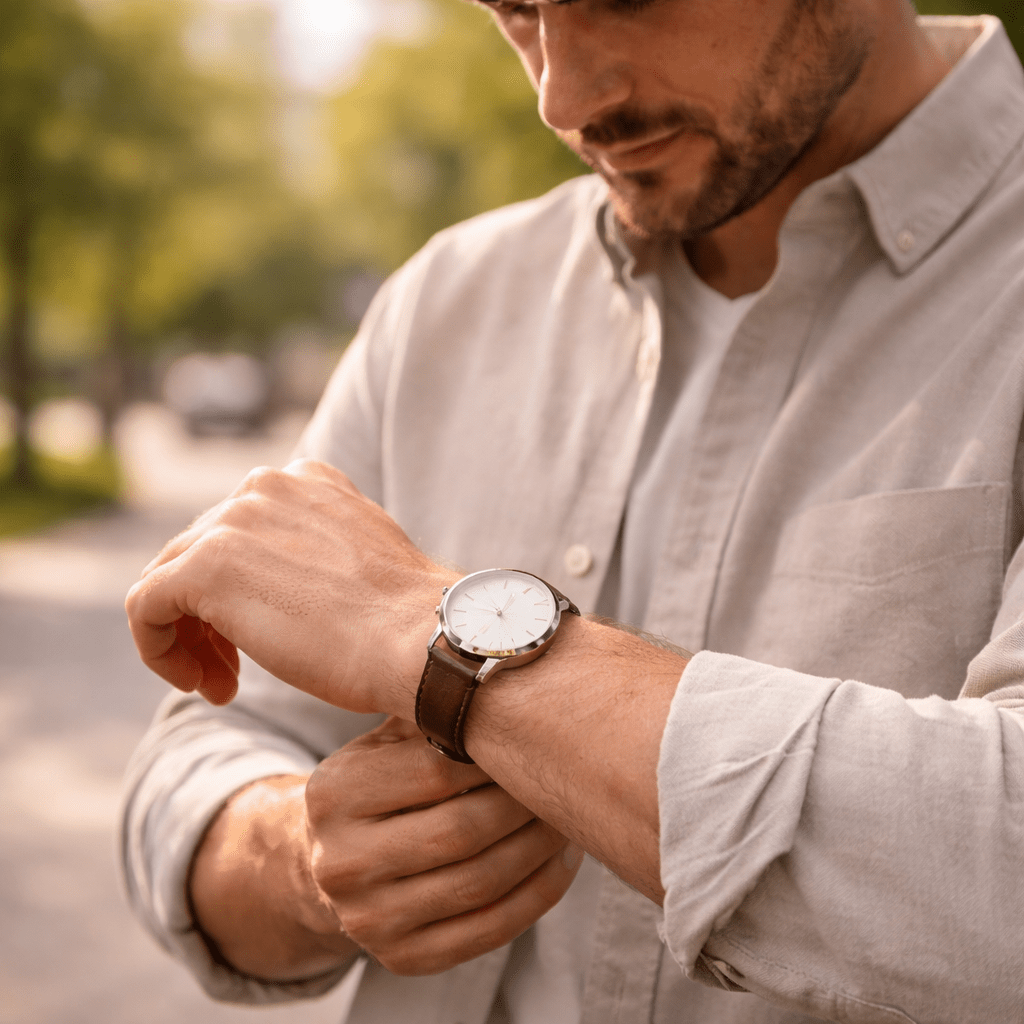
But watches are not only about receiving information. They are about the way a person chooses to meet time. A watch sits on the body. It has weight, texture, temperature, sound, wear marks, and a position in the day. You do not unlock it. You glance at it. That small difference matters.
A phone often pulls attention outward. A watch usually keeps the moment smaller. It answers one question without opening twenty more.
For the practical habit changes behind that difference, see how wearing a watch changes you.
The Morning Ritual
Most watch rituals are quiet. You choose what belongs on the wrist that day. Maybe it is a diver because the day will be rough. Maybe it is something slim because the shirt cuff matters. Maybe it is a custom build because it feels more personal than anything from a catalog.
Then comes the small sequence: pick it up, feel the case, set the time if needed, wind it if it has stopped, fasten the strap or bracelet, and check how it sits on the wrist. None of this is dramatic. That is exactly why it works.
Ritual is not always ceremony. Sometimes it is a repeated action that gives shape to the day.
Mechanical Time Feels Different
Mechanical watches are less efficient than quartz watches and phones. They can gain or lose seconds. They need movement, winding, service, and care. From a purely technological point of view, that makes them inconvenient.
From a human point of view, that inconvenience is part of the appeal. A mechanical watch is not just reporting time. Something inside it is working: a mainspring releases energy, gears divide it, the escapement controls it, and the hands translate that motion into something visible.
That makes time feel less abstract. It becomes a physical process on the wrist.
If you are new to that world, start with Beginner’s Guide to Mechanical Watches and Automatic vs Quartz vs Mechanical Watches.
Why Watches Carry Memory
Watches become attached to moments because they are present during them. A first mechanical watch, a travel watch, a graduation gift, a daily beater, a watch worn during a hard year, or a custom build made for a specific reason can collect meaning far beyond its spec sheet.
When the story is the reason for the build, our custom milestone watch guide explains how to translate an achievement, relationship, family history, recovery, or memorial into a watch without crowding the dial.
This is why two watches with similar movements can feel completely different to their owners. One is just a product. The other has a story.
That story can come from the person who gave it, the place it was worn, the scratches it collected, or the decisions behind the build. Case size, dial color, hand shape, strap choice, lume, and even small imperfections can become part of the object instead of separate from it.
Custom Watches Make The Ritual More Personal
A custom watch changes the ritual because the owner is not only choosing from what already exists. They are choosing direction: case, dial, hands, movement, color, texture, proportion, and feeling.
That does not mean every custom build is better than a factory watch. A good factory watch can be beautifully resolved. But a thoughtful custom build can carry a different kind of value because the decisions are closer to the person wearing it.
This is where Seiko modding became important. It gave more people a way to understand watches through parts, fit, compatibility, and assembly. If that path interests you, read What Is Watch Modding? and Seiko Modding Parts Explained.
The Workshop Layer Changes Everything
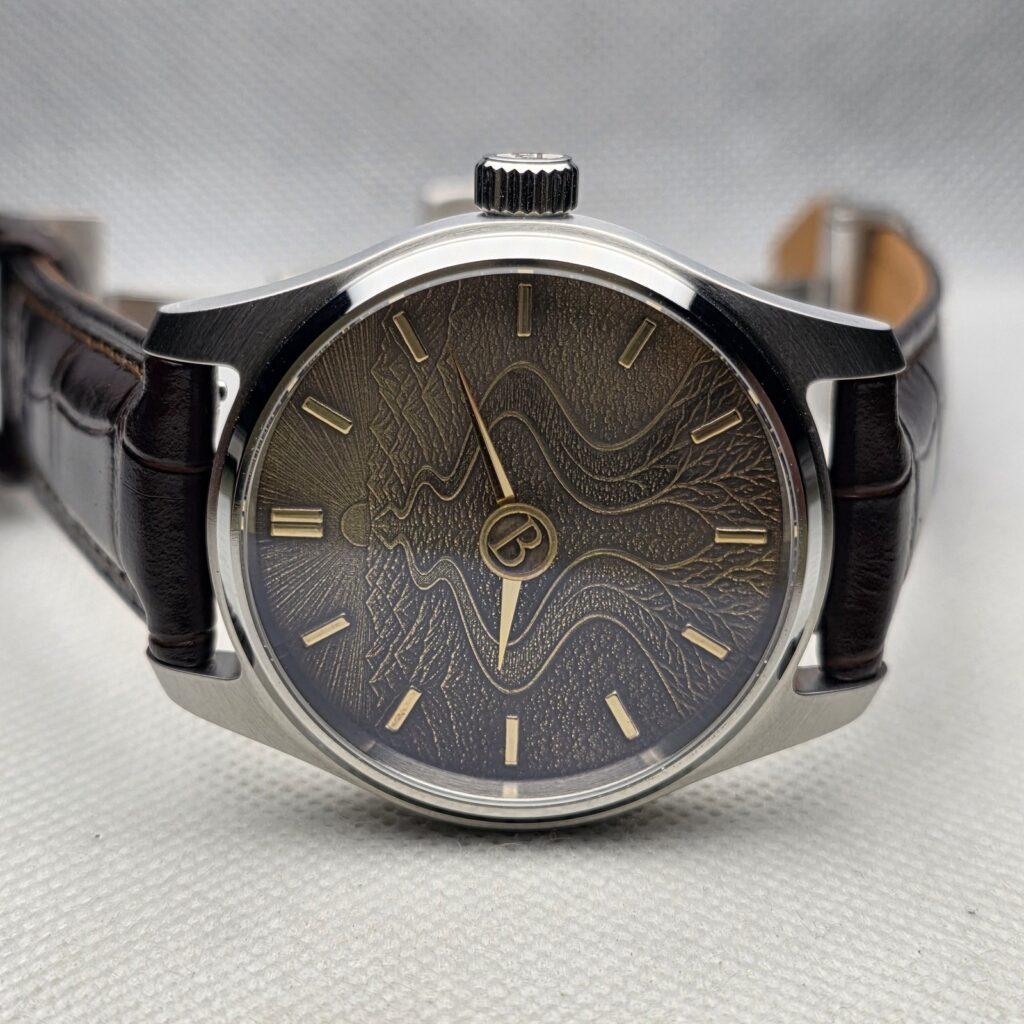
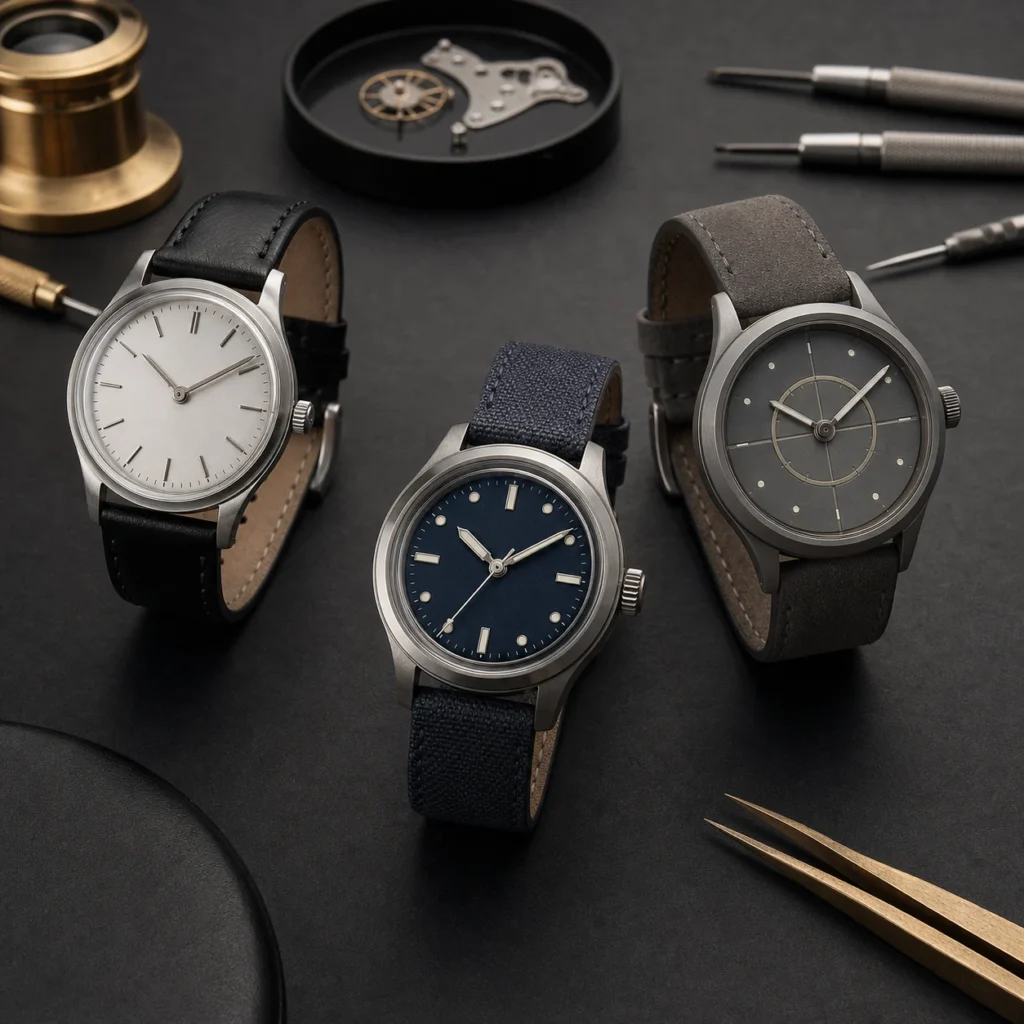
A watch feels different when you understand what had to happen before it reached the wrist. Dial design, surface preparation, laser engraving, hand setting, movement casing, regulation, testing, and finishing are not abstract details. They are the work behind the object.
That is one reason The Watcher HQ is connected to the broader workshop ecosystem. The articles explain the culture and mechanics, while the real build process appears through Rexx Timepieces, Meshberg Watches, Rexx StudioWorks, and the YouTube channel.
That connection matters because it keeps the writing close to the bench. A watch is not only an image, a price, or a spec table. It is also parts, tools, mistakes, adjustments, and decisions made by hand.
Independent Watches And Small-Batch Meaning
Independent watch brands and small-batch projects also live inside this ritual. They do not always compete by shouting louder than large brands. Sometimes their strength is the opposite: a clearer idea, smaller production, more focused proportions, or a dial that feels connected to the maker.
That is why a quiet 37mm automatic watch can be more interesting than a larger watch with a bigger marketing story. Scale, restraint, and intention matter. The ritual of wearing a watch is often strongest when the object feels considered rather than loud.
For more on that culture, read Microbrand Watches: How Independent Brands Are Reshaping Watch Culture.
Why The Ritual Still Matters
The ritual of wearing a watch matters because it creates a small point of contact between time and the body. It is not about rejecting technology. It is about keeping one piece of the day physical.
In a digital world, most experiences become smooth, fast, and invisible. Watches resist that. They have crowns, bezels, crystals, bracelets, straps, lume, scratches, dials, and movements. They ask to be handled.
That is why the ritual survives. Not because a watch is the most efficient way to know the time, but because efficiency is not the only thing people need from objects.
Final Thoughts
Wearing a watch still matters because it turns time into something you can choose and carry. The object can be simple, complicated, affordable, custom, independent, or handmade. What matters is that it becomes part of how the day feels.
A good watch does not have to announce itself. Sometimes it only has to sit on the wrist, do its work, and remind you that time is not only something on a screen.