Best Seiko Mod Parts (Complete Beginner Guide)
Choosing the best Seiko mod parts is one of the most important steps in building a custom watch. The parts decide how the watch looks, how it wears, how reliable it feels, and whether the final build looks intentional or random.
Beginners often focus on the exciting parts first: the dial, hands, bezel, and case. Those matter, but the real skill is knowing whether the parts work together mechanically and visually.
This guide breaks down the main Seiko mod parts, explains what each part does, what to check before buying, and how to think like a builder instead of just a parts collector.
If you are new to modding itself, start with What Is Watch Modding?. If you already have parts and want the assembly order, read How to Build a Seiko Mod.
The Short Answer
The best Seiko mod parts are not always the most expensive parts. They are the parts that fit the movement, case, dial, hands, and concept cleanly. A good build starts with compatibility, then adds design.
For most beginners, the safest path is an NH35 or NH36-based build with a known compatible case, 28.5mm dial where appropriate, matching hand sizes, a simple crystal/bezel setup, and a strap or bracelet that suits the case. Save unusual dials, GMT movements, custom engraving, and complex case combinations for a later build or a workshop project.
What Are Seiko Mod Parts?
Seiko mod parts are individual components used to customize or build a watch around Seiko-compatible platforms. Most modern builds use movements like the NH35 or NH36 because they are reliable, affordable, and supported by a huge aftermarket ecosystem.
A full build may include a movement, case, dial, hands, chapter ring, crystal, bezel, bezel insert, crown, stem, caseback, gaskets, bracelet, and strap.
That freedom is what makes Seiko modding powerful. It also means you are responsible for compatibility. A part can look perfect online and still be wrong for the build.
Why Choosing the Right Parts Matters
The best Seiko mod parts are not simply the loudest, rarest, or most expensive parts. They are the parts that work together.
A watch is a system. The movement controls the dial feet and hand sizes. The case controls the movement position and crown stem. The dial controls date window placement and hand contrast. The chapter ring controls depth and alignment. The bracelet controls how the watch actually wears.
Good builders think about four things at the same time:
- Mechanical compatibility: the parts physically fit and function together.
- Visual balance: the watch has a clear design direction.
- Wearability: the case, thickness, lug-to-lug, and strap work on the wrist.
- Execution risk: the build is realistic for the tools and skill level available.
This is the difference between a watch that looks assembled and a watch that feels designed.
Before Buying Parts: The Compatibility Checklist
Before ordering anything, check compatibility. This saves money, time, and frustration.
- Movement: NH35, NH36, NH34, Miyota, or another caliber?
- Dial diameter: does the dial fit the case opening?
- Dial feet: do they match the movement and crown position?
- Date window: does the window match the movement date position?
- Hand sizes: are the hour, minute, seconds, and GMT hand holes correct?
- Stem height: does the case match the movement?
- Chapter ring: is it required, and does it fit the case?
- Crystal: correct diameter, thickness, and profile?
- Bezel insert: correct outer and inner diameter?
- Bracelet: correct lug width and end-link fit?
If you are not sure about these checks, keep the first build simple. A common beginner-friendly path is an NH35 or NH36 diver-style build with a known compatible case, dial, and handset.
For the deeper parts foundation, read Seiko Modding Parts Explained.
How to Judge a Seiko Mod Parts Supplier
A supplier is not good because the photography is dramatic or the catalog is large. A good supplier gives you enough evidence to decide whether the part belongs in your build before you pay.
Look for listings that state the exact movement family, crown position, dial diameter, case opening, hand sizes, crystal dimensions, bezel-insert dimensions, and any spacer or chapter-ring requirement. “NH compatible” is too vague when NH35, NH36, and NH34 builds can differ in date layout, hand stack, dial clearance, and crown relationship.
Real photographs matter, especially for dials, hands, cases, and bracelets. Renders can explain a design, but they cannot prove brushing quality, color under natural light, marker alignment, lume application, end-link fit, or the finish of the part you will receive. A trustworthy listing should also explain whether photographs show the exact item, a production sample, or only a visual reference.
Supplier evidence checklist
- Exact dimensions rather than “fits most” language.
- Named movement and crown-position compatibility.
- Clear material and surface-finish description.
- Photos that show edges, backs, feet, threads, and contact surfaces.
- A return or defect policy that covers incorrect listings.
- A reachable business identity and a consistent history of support.
- Reviews that describe fit and after-sale service, not only appearance.
Reviews are useful signals, but they are not measurements. A five-star review from someone who has not assembled the part cannot confirm hand clearance, water resistance, or long-term plating quality.
Compatible Is Not the Same as Well Toleranced
Two parts can share the right nominal dimensions and still fit differently. Manufacturing tolerance controls the small variation around a stated size. That variation affects bezel action, crystal pressing, chapter-ring movement, bracelet end-link gaps, crown feel, gasket compression, and whether a dial sits flat.
This is why mixing parts from several suppliers increases uncertainty. Each individual listing may be “compatible,” but the final stack can combine tolerances in an unlucky direction. A slightly tall dial marker, a slightly thick hand, and a slightly low crystal may create contact even though every part was sold for the same movement family.
For a first build, buying the case, crystal, bezel, insert, caseback, crown, and movement spacer as a documented system is usually safer than assembling the case architecture from unrelated listings.
1. The Movement: NH35, NH36, and NH34
The movement is the engine of the watch. Without a reliable movement, even the best-looking build will not feel good long term.
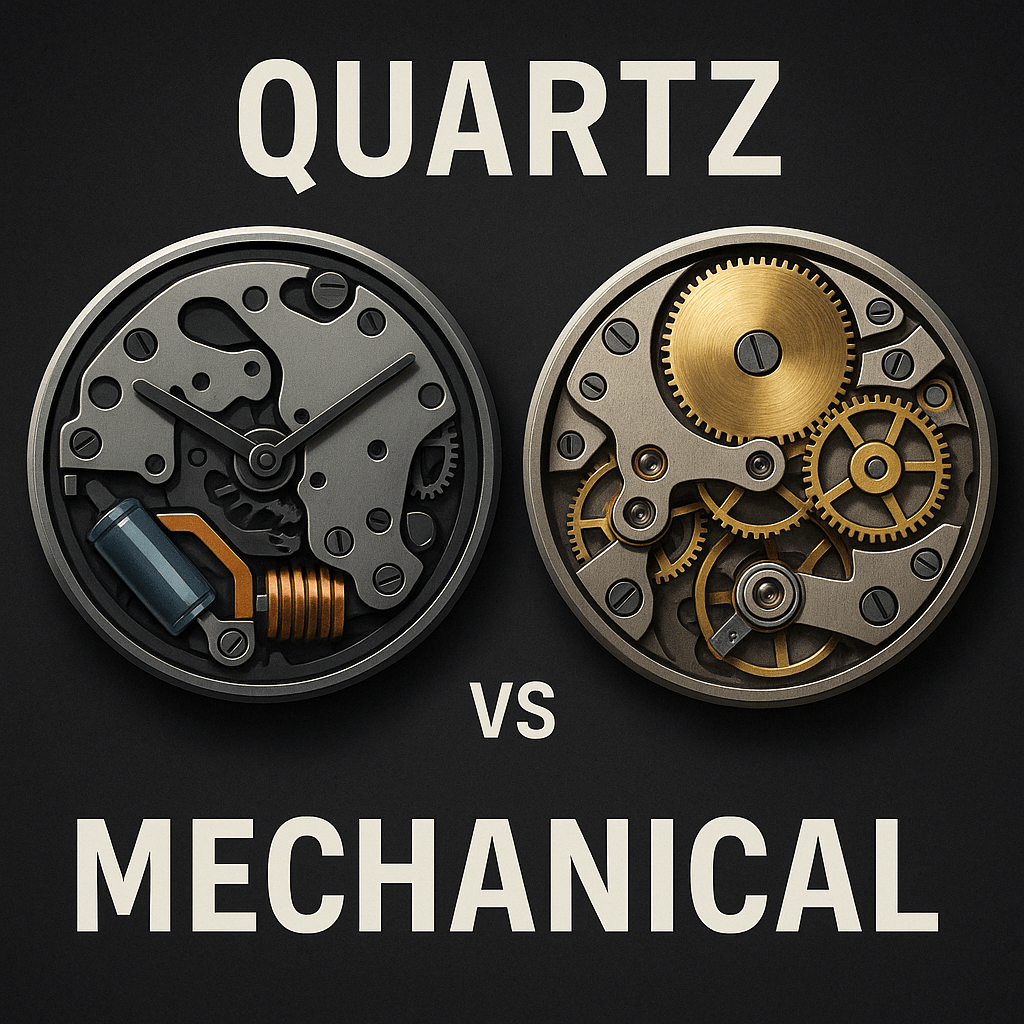
The NH35 and NH36 are common because they are durable, affordable, automatic, hand-winding, hacking, and widely supported by aftermarket cases, dials, and hands. The NH35 has a date display, while the NH36 usually has day and date. The NH34 adds GMT functionality, but it also adds more hand-stack and dial-layout considerations.
Watch for these movement issues:
- Wrong crown position for the dial feet
- Date window not lining up
- Wrong hand sizes
- Movement holder or spacer mismatch
- Stem cut incorrectly during casing
- GMT hand clearance on NH34 builds
For a first build, simpler is usually better. Learn on a straightforward movement before adding a GMT hand or unusual layout.
2. The Dial: The Identity of the Watch
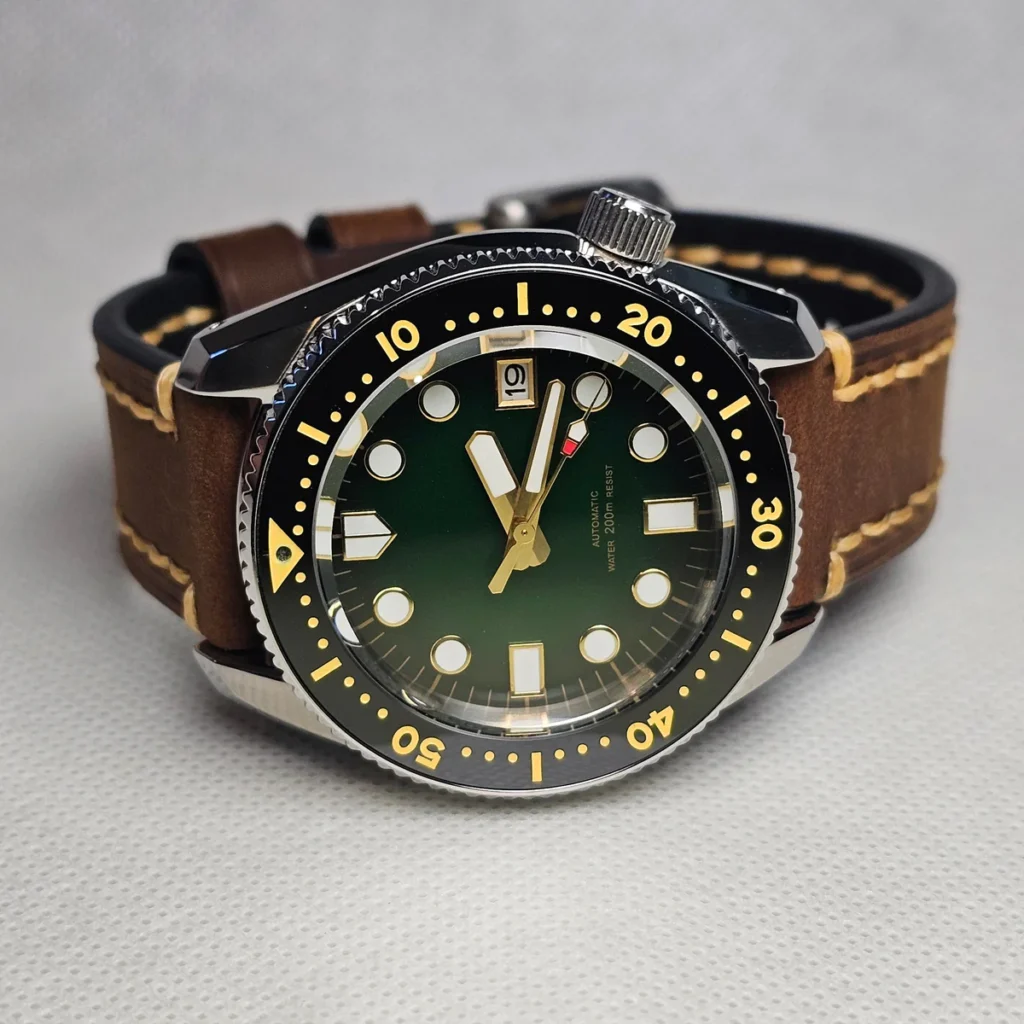
If the movement is the engine, the dial is the identity. It defines the watch more than any other visible component.
A dial controls texture, color, depth, typography, lume, logo placement, indices, date window position, and the overall mood of the watch.
Before choosing a dial, check:
- Diameter
- Dial feet position
- Date or no-date layout
- Marker height and hand clearance
- Contrast between dial and hands
- Whether the dial suits the case style
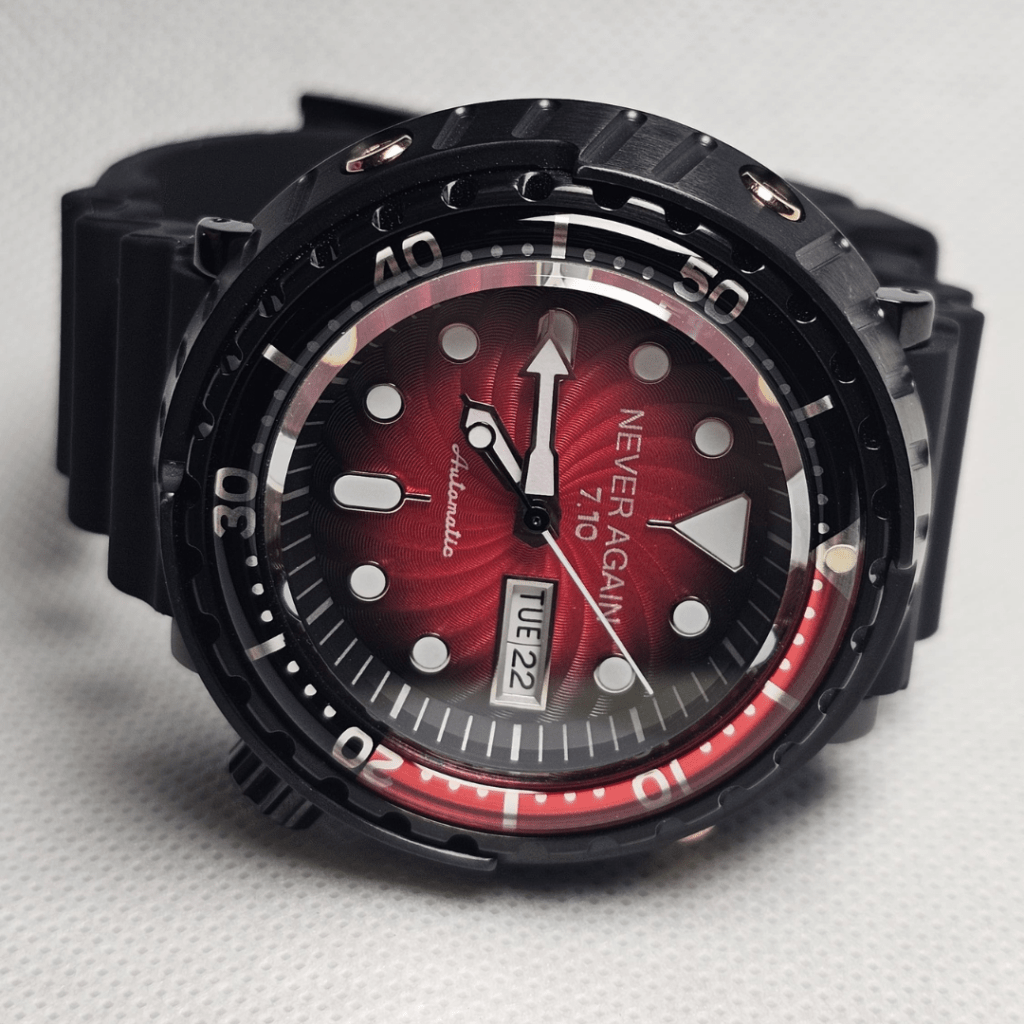
Custom dials push this even further. Engraved, painted, textured, or handmade dials can make the watch feel genuinely personal. This is where modding starts becoming craft rather than simple assembly.
Branding also needs a deliberate decision. A sterile dial, a maker-signed custom dial, an authentic factory dial, and an unauthorized branded aftermarket dial are not interchangeable descriptions. The logo affects attribution, resale disclosure, and buyer trust. Read our guide to sterile vs branded mod dials before treating a familiar logo as just another design element.
For the process behind this kind of work, read How Custom Watch Dials Are Made. You can also explore the workshop-made dial and craft side through Rexx StudioWorks.
3. Watch Hands: Small Detail, Big Impact
Hands look simple, but they can make or break a build. They control legibility, style, and mechanical clearance.
Different hand styles change the character of the watch:
- Mercedes hands: sporty, familiar, classic diver language.
- Snowflake-style hands: bold, graphic, and tool-watch oriented.
- Sword hands: functional, strong, and clean.
- Stick hands: minimal, dressier, and restrained.
- Cathedral or vintage hands: older, more decorative, and style-specific.
The most important rule is contrast. If the hands disappear into the dial, the build fails as a watch, even if the parts are beautiful.
Also check hand length. The minute hand should reach the minute track properly. The seconds hand should feel intentional, not too short or visually disconnected. On GMT builds, the GMT hand must also clear the rest of the stack.
4. Bezel and Inserts: Function Meets Design
Bezels add function, visual weight, and structure. They are especially important in dive, GMT-style, and tool-watch builds.
Different inserts serve different purposes:
- 60-minute inserts for dive timing
- 12-hour inserts for tracking another time zone
- 24-hour inserts for GMT-style builds
- Plain or sterile inserts for a cleaner look
Beyond function, the bezel frames the dial. A heavy bezel can make the watch feel aggressive. A cleaner insert can make the same case feel more refined.
Check insert size carefully. Outer diameter, inner diameter, thickness, and whether the insert is flat or sloped all matter.
5. Chapter Rings: Depth and Structure
Chapter rings sit between the dial and the crystal. Beginners often overlook them, but they can completely change the depth of a build.
A chapter ring can carry minute markers, a GMT scale, a plain finish, or a color accent. It can make the dial feel larger, deeper, cleaner, or busier.
The danger is alignment. If the chapter ring is slightly off, the whole watch looks wrong. This is especially obvious on builds with minute tracks or strong dial markers.
6. The Case: The Foundation of the Watch
The case defines the size, wrist presence, durability, and overall identity of the build.
Different case styles create different watches:
- Diver cases: bold, sporty, and practical.
- Dress cases: refined, compact, and cleaner.
- Field cases: simple, legible, and tool-like.
- Tuna-style cases: aggressive, protective, and high-presence.
- Hybrid cases: modern shapes that mix tool and everyday wear.
Do not judge the case only by diameter. Lug-to-lug length, thickness, bezel size, caseback shape, crown position, and bracelet fit matter just as much.
If you want a case-led example, read the Rexx build article Seiko SPB185 Mod: Custom NH35 Build.
7. Crystal, Crown, Caseback, and Gaskets
Small parts can cause big problems. Crystal, crown, caseback, and gasket choices affect durability, water resistance, and final fit.
Sapphire crystals are popular because they resist scratches better than mineral glass. Domed crystals can add vintage character, but they also change reflections and thickness. Crowns need the right stem fit. Gaskets need to be seated correctly.
Never assume a modded watch is water resistant just because the case says it is. If water resistance matters, the finished watch needs proper pressure testing.
8. Straps and Bracelets
Straps and bracelets are easy to treat as an afterthought, but they decide how the watch feels on the wrist. A great head on the wrong strap can still feel wrong.
Check lug width, end-link fit, clasp quality, taper, thickness, and whether the material matches the build. A thick leather strap can overpower a small case. A heavy bracelet can make a compact watch feel more substantial. Rubber can make a diver feel practical, while nylon can make a polished build feel casual.
Watch the Full Build Process
The video above is from Rexx Timepieces. Watching a full build makes the parts logic more obvious: the case, movement, dial, hands, crystal, crown, and strap all have to work together physically, not only visually.
How to Choose the Best Seiko Mod Parts
Choosing the best Seiko mod parts is about creating harmony. Start with the concept, then choose parts that support it.
A simple process works best:
- Choose the build type: diver, dress, field, Tuna, GMT-style, or dial-led custom.
- Choose the movement and case together.
- Choose the dial based on the case opening and date position.
- Choose hands based on readability and dial style.
- Choose bezel, insert, and chapter ring to support the dial.
- Choose strap or bracelet last, based on how the final watch should wear.
A clean, consistent build usually looks better than a complicated one. If too many parts are trying to be the focal point, the watch loses direction.
To see all these parts come together, read How to Build a Seiko Mod. To avoid common issues during assembly, read Common Seiko Modding Mistakes. To make sure you are using the right equipment, read Best Tools for Seiko Modding.
A Low-Risk First Order
Do not order an entire experimental build from an unfamiliar supplier at once. A low-risk test order can reveal packaging quality, dimensional accuracy, communication, shipping time, and how the seller handles a defect.
Start with one or two components that are easy to inspect before assembly. Measure them when they arrive. Compare the finish and dimensions with the listing. Keep screenshots of the specification page and record batch or order information. If the supplier changes a listing later, your build record still shows what was promised.
For expensive or one-off components, ask questions before buying. A useful answer names dimensions and compatibility. An answer such as “it should fit” transfers all the risk to you.
When Custom Work Makes More Sense
Some builds are simple enough for a beginner. Others are better handled by a workshop, especially when custom dials, engraving, hand finishing, unusual proportions, or expensive parts are involved.
If the design matters more than the learning process, working with an experienced builder can save time, parts, and frustration. Rexx Timepieces focuses on custom watches, dials, Seiko mods, and controlled workshop builds.
For a quieter independent watch direction, Meshberg Watches connects the same workshop thinking to small-batch mechanical watches and refined handcrafted dial ideas.
Final Thoughts
Understanding Seiko mod parts is the foundation of every great custom watch. The goal is not to buy the most parts or the loudest parts. The goal is to choose components that fit, function, and belong together.
Once you understand the parts, watch modding becomes more than a hobby. It becomes a design process.
If you want realistic build directions after learning the parts, continue with Best Seiko Mods You Can Actually Build.