Watch accuracy is usually expressed as a gain or loss in seconds per day, but that single number is only the beginning. A mechanical watch may run differently when it is fully wound, nearly unwound, dial up, crown down, warm on the wrist, or resting overnight. One quick reading can be useful, but it is not the same as understanding how the watch performs in real life.
This guide explains what seconds per day actually tells you, why published tolerances are not always directly comparable, how a timegrapher fits into the picture, and when a watch needs regulation rather than a full service.
Watch Accuracy: The Quick Answer
If a watch is running +8 seconds per day, it gains roughly 56 seconds in a week if the rate remains consistent. If it runs -8 seconds per day, it loses roughly the same amount. The sign matters, but consistency matters too. A stable watch that gains a predictable six seconds each day is easier to regulate than one that swings between gaining and losing large amounts.
| Average daily rate | Approximate weekly change | Approximate 30-day change |
|---|---|---|
| +2 sec/day | +14 seconds | +1 minute |
| +6 sec/day | +42 seconds | +3 minutes |
| -10 sec/day | -70 seconds | -5 minutes |
| +20 sec/day | +2 minutes 20 seconds | +10 minutes |
These are simple projections, not promises. The daily rate can change with position, power, temperature, magnetism, shock, wear, and the condition of the movement.
Accuracy and Consistency Are Not the Same Thing
Accuracy describes how close the watch stays to a reliable reference time. Consistency describes how repeatably it behaves. The distinction matters because a consistent rate can often be corrected by regulation, while an unstable rate may point to a deeper issue.
Imagine two watches tested for seven days:
- Watch A gains between five and seven seconds every day.
- Watch B gains 18 seconds one day, loses 12 the next, and finishes the week close to zero.
Watch B may appear more accurate if you look only at the final weekly total, but Watch A is behaving more predictably. A watchmaker wants to see the pattern, not just the final number.
Why One Day Is Poor Evidence
A single day can be distorted by how long the watch was worn, how active the wearer was, where the watch rested overnight, and how much power remained in the mainspring. Seiko advises evaluating a mechanical watch over about a week, while Grand Seiko recommends judging normal-use accuracy over roughly seven to ten days rather than relying on one day.
For a useful home test, compare the watch with the same reliable time source at approximately the same time each day. Record the difference without resetting the hands. After seven days, divide the total gain or loss by the number of days to find the average daily rate.
Published Movement Tolerances Need Context
Movement specifications are useful, but they describe different things under different test conditions. A manufacturer may publish a broad static range for an uncased movement. COSC tests movements under a formal laboratory protocol. METAS and Rolex test complete watches to their own standards. Those numbers should not be treated as if they came from one identical test.
| Movement or standard | Published rate | What the number describes |
|---|---|---|
| TMI NH35 family | -20/+40 sec/day | Static movement specification under stated factory test conditions |
| Miyota 9015 | -10/+30 sec/day | Movement specification published by Miyota |
| COSC mechanical chronometer | -4/+6 sec/day | Mean daily rate within a 15-day movement certification program |
| METAS Master Chronometer | 0/+5 sec/day | Complete-watch certification that also covers magnetic resistance, water resistance, and power reserve |
| Rolex Superlative Chronometer | -2/+2 sec/day | Rolex standard applied to the completed watch after casing |
A well-regulated NH35 can perform much better than its broad published range. That does not turn it into a COSC-certified movement, because certification includes controlled tests and documentation beyond a favorable daily reading. Conversely, a certified watch can still be affected by magnetism, impact, or a developing mechanical problem after it leaves the factory.
For practical comparisons between common movements, see our guides to Miyota 9015 vs NH35, Miyota 9015 vs Sellita SW200-1, and Sellita SW200-1 vs NH35.
A proprietary seal can test more than rate
Source check: September 28, 2026.
Jaeger-LeCoultre’s new High Precision Guarantee (HPG) illustrates why the scope of a certification matters. The manufacture says its seal combines performance testing with movement-finishing requirements. It tests the calibre for altitude effects, then the completed watch for shocks, positions and temperature. Its wearing simulation includes two dynamic days followed by a day at rest.
The Master Control Chronometre models introducing HPG use calibres that first undergo COSC certification; HPG then adds the manufacture’s own checks. These are separate stages, and HPG is a proprietary seal. The launch announcement also requires at least six of eight specified movement-finishing techniques. Those decorative criteria are distinct from timekeeping performance.
The September 16 HPG announcement does not publish a numerical daily-rate tolerance for the new seal, so it cannot be assigned a seconds-per-day figure in the comparison above. Jaeger-LeCoultre describes a broader collection rollout beginning in 2027; do not assume every existing model carries it.
What to check: identify the exact watch, whether testing covers its movement or the finished watch, and which numerical performance limits the maker actually publishes.
Position Changes the Rate
Gravity affects the balance and escapement differently as the watch changes orientation. A watch may gain while resting dial up and lose while resting crown down. This is called positional variation, and some amount is normal in a mechanical movement.
That is why a watchmaker checks more than one position. The relevant positions depend on the movement, the desired standard, and how the watch will actually be worn. Overnight resting position can sometimes offset a small daytime gain or loss, but it should not be used to hide severe instability.
Power Reserve and Winding State Matter
The force delivered by the mainspring changes as it unwinds. A healthy movement is designed to manage that changing torque, but its rate and amplitude can still differ between a full wind and the lower end of the power reserve.
Before comparing results, make sure the watch is wound consistently. For an automatic watch, normal wrist movement may be enough, but a desk-bound day may not replenish the same amount of energy as an active day. Our guide to mechanical watch power reserve explains how stored energy affects everyday use.
Temperature, Magnetism, and Shock
Modern movements are designed to tolerate ordinary temperature changes, but mechanical components still respond to their environment. More importantly, strong magnetic fields can disturb the regulating system. Speakers, magnetic clasps, tablets, tools, and other everyday objects can be relevant depending on their field strength and proximity.
A magnetized mechanical watch often runs unusually fast, but symptoms are not always identical. Seiko and Citizen both warn that magnetism can continue to affect a mechanical watch after the source is removed. Demagnetization is quick for a trained watchmaker, but a rate problem should still be diagnosed rather than guessed.
A hard impact can also shift regulation or damage a component. If the behavior changed suddenly after a drop, tell the watchmaker; that history is useful.
What a Timegrapher Actually Measures
A timegrapher listens to the escapement and estimates several useful values. It is one of the most efficient diagnostic tools at the bench, but it does not replace a real-world wear test.
Rate
Rate is the estimated gain or loss in seconds per day in the tested position. It is the number most people notice first, but it should be read alongside the other values and repeated in additional positions.
Amplitude
Amplitude is the angular travel of the balance wheel. It helps a watchmaker understand how much energy is reaching the regulating system. The correct interpretation depends on the calibre, winding state, position, lift angle setting, and service condition. A single universal amplitude target is not responsible advice.
Beat Error
Beat error describes the timing asymmetry between the two directions of the balance swing. Lower is generally preferable, but the acceptable value and repair decision depend on the movement and the full diagnosis.
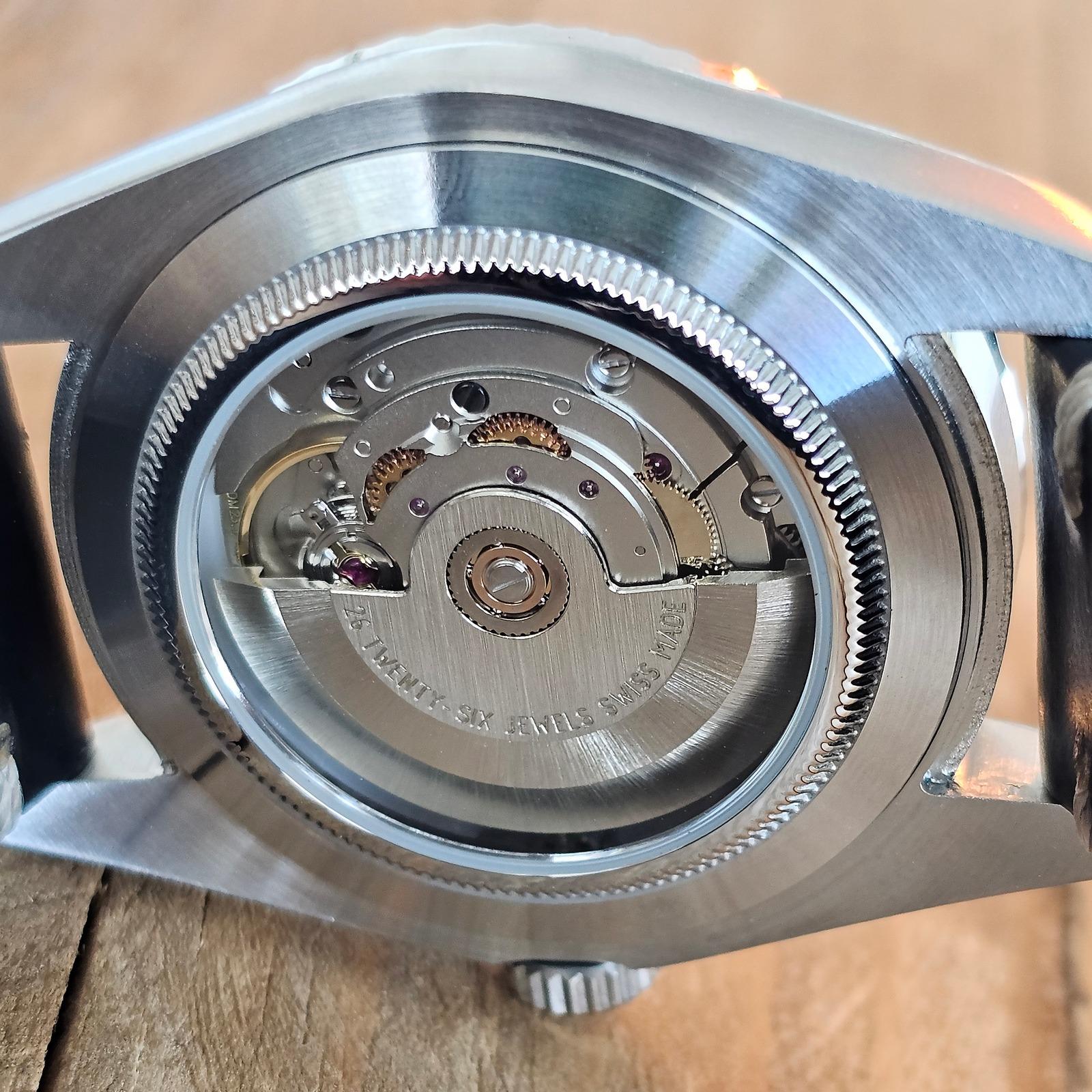
The featured photograph shows a Sellita SW200-1 through an exhibition caseback. The visible balance and regulator are part of the system behind the readings a timegrapher interprets. It is an example of one movement architecture, not a universal diagram for every mechanical watch.
How to Test Mechanical Watch Accuracy at Home
- Fully wind the watch according to the manufacturer guidance.
- Set it to a reliable reference time, including the seconds.
- Wear it normally rather than changing your routine for the test.
- At the same time each day, record the total gain or loss without resetting it.
- Note the overnight resting position and any day when the watch was barely worn.
- Continue for at least seven days.
- Divide the final difference by the number of days, then look at both the average and the day-to-day pattern.
A phone clock synchronized to network time is usually sufficient for a practical owner test. The purpose is not laboratory certification. It is to give the watchmaker a useful picture of normal behavior.
Regulation or Service?
Regulation adjusts the effective rate of an otherwise healthy movement. Service addresses the movement’s condition through inspection, cleaning, lubrication, replacement of worn parts where necessary, reassembly, and testing.
A consistent watch that is simply gaining or losing more than desired may be a regulation candidate. A watch with low or unstable amplitude, large positional differences, erratic rate, stopping, poor winding, contamination, or a long unknown service history may need more than adjustment. Regulating around a mechanical problem does not repair it.
For custom builds and workshop diagnosis, Rexx Timepieces works directly with movements, cases, dials, hands, and finished watches. The practical lesson is simple: measure first, understand the movement and the watch, then decide whether adjustment is appropriate.
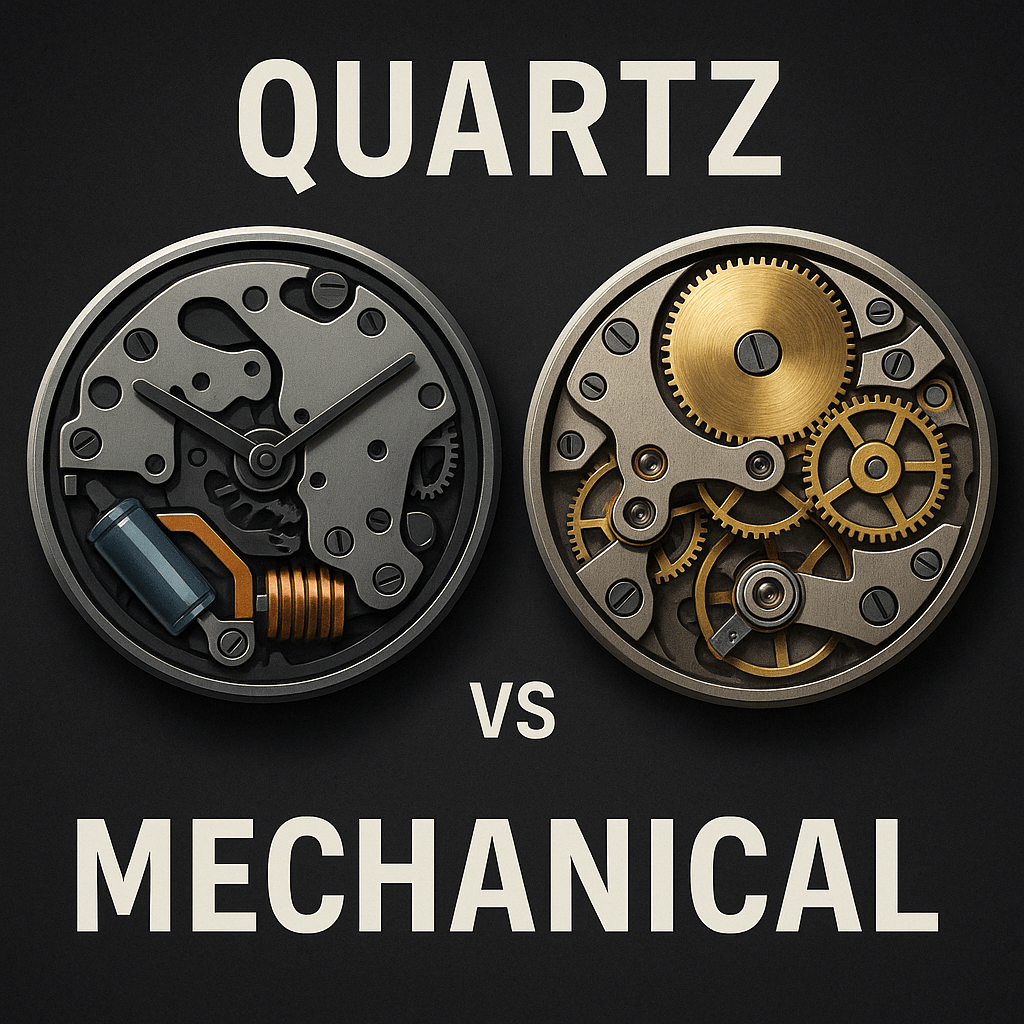
Mechanical Accuracy Versus Quartz Accuracy
Most quartz watches are substantially more accurate than ordinary mechanical watches because their regulating principle is different. If absolute timekeeping precision is the main requirement, quartz is usually the rational choice. Mechanical watches offer a different appeal: a serviceable miniature mechanism whose performance can be observed, adjusted, and understood.
Our guide to automatic, quartz, and mechanical watches explains the broader trade-offs. For a first mechanical watch, the beginner’s guide to mechanical watches covers ownership expectations beyond accuracy alone.
Frequently Asked Questions
Is 10 seconds per day good for a mechanical watch?
For many non-certified mechanical watches, a stable 10 seconds per day can be perfectly respectable. The right judgment depends on the movement’s published tolerance, the watch’s age and condition, and whether the rate is consistent across several days.
Should a new mechanical watch be regulated immediately?
Not from one quick observation. Give the watch a proper multi-day test unless the error is extreme or the watch is behaving erratically. Some sellers also prefer to inspect a new watch before adjustment because shipping, magnetism, or insufficient winding can confuse the first reading.
Can resting position improve watch accuracy overnight?
Sometimes. If the watch predictably gains in one position and loses in another, its overnight position may offset a small daily error. Test it rather than assuming. Large or changing positional differences deserve inspection.
Does a good timegrapher number guarantee good wrist accuracy?
No. A timegrapher reading is a controlled snapshot in a particular position and state of wind. It is valuable workshop evidence, but real use combines multiple positions, changing power, temperature, and the wearer’s routine.
Why did my mechanical watch suddenly start running fast?
Magnetism is one possibility, but it is not the only one. Impact, contamination, a displaced component, or another mechanical issue can also change the rate. A sudden large change should be tested by a competent watchmaker.
Sources and Testing Notes
This guide was checked on July 18, 2026 against official material from COSC, METAS, Rolex, TMI, Miyota, Witschi, Seiko, Grand Seiko, and Citizen. Published tolerances are summarized in their own test context and should not be read as one universal ranking.