Common Seiko Modding Mistakes (And How to Avoid Them)
Seiko modding mistakes are part of almost every builder’s journey. They happen when you are new, and they still happen when you have more experience. The difference is that experienced builders learn how to prevent the avoidable ones, slow down before the expensive ones, and recover when something does not go exactly to plan.
From the outside, modding can look simple. Choose a case, choose a dial, choose hands, fit the movement, close the watch, and enjoy the result. On the bench, it is more exact than that. You are working with tiny tolerances, fragile surfaces, moving parts, dust, pressure, alignment, and parts that may look compatible until the moment they are not.
This guide breaks down the most common Seiko modding mistakes, why they happen, how to avoid them, and how to think clearly when something goes wrong. The goal is not to make modding sound scary. The goal is to help you build cleaner watches with fewer ruined parts.
If you are new to this world, read this foundation first: What Is Watch Modding?.
The Short Answer
The most common Seiko modding mistakes are rushing, skipping compatibility checks, using the wrong tools, damaging the dial, misaligning the hands, cutting the stem too short, trapping dust under the crystal, assuming water resistance without testing, and forcing parts that do not want to fit.
The best prevention is a slower workflow: plan the build, confirm compatibility, prepare the workspace, inspect after every major step, and treat the finished watch as a mechanical object that needs testing, not only as a design photo.
Why Seiko Modding Mistakes Happen So Easily
Watch modding combines mechanical precision with hand work. That combination is exactly why it is rewarding, but it is also why mistakes happen so easily. You are not only choosing parts. You are installing, aligning, cleaning, inspecting, and correcting them by hand.
Most mistakes come from one of four causes:
- Rushing because you are excited to see the finished watch.
- Using tools that do not give enough control.
- Skipping compatibility checks before assembly.
- Working in a space that is too dusty, dark, or disorganized.
The good news is that these problems are fixable. Better preparation does not remove every mistake, but it removes many of the ones that damage dials, bend hands, scratch cases, or force you to reopen the watch.
1. Rushing the Build
Rushing is one of the most common Seiko modding mistakes. It usually happens after the parts arrive. You have the case, dial, hands, movement, and crystal in front of you, and the finished watch already exists in your head. That excitement is good, but it can make you skip the slow steps that keep the build clean.
Rushing leads to fingerprints on the dial, hands installed at the wrong height, dust trapped under the crystal, scratched case backs, and stems cut before the fit is properly checked. None of those mistakes feels dramatic in the moment. They usually happen because you tried to finish one step before the previous step was fully controlled.
The fix is simple but not always easy: break the build into stages. Prepare the movement and dial. Stop and inspect. Install the hands. Stop and inspect. Case the movement. Stop and inspect again. Do not treat the build as one long sprint. Treat it as a sequence of small checks.
2. Starting Without a Clean Workspace
Your workspace directly affects the finished watch. A messy bench creates distractions. Poor lighting hides dust and fingerprints. Loose parts on the mat make it easier to lose screws, hands, stems, and gaskets.
Before opening the movement or handling the dial, clear the bench. Set out only the tools and parts you need for the next stage. Use a clean mat, good lighting, a dust blower, Rodico or similar cleaning putty, and some kind of small parts tray. If the room is dusty, full of moving air, or covered in fabric fibers, the build will punish you for it.
This is not about making the workspace look pretty for photos. It is about reducing the number of things that can go wrong while your attention is on a tiny hand or a delicate dial surface.
For the tool setup behind cleaner work, read Best Tools for Seiko Modding.
3. Damaging the Dial
The dial is one of the easiest parts to damage and one of the hardest parts to repair. Fingerprints, scratches, tool marks, dust, and pressure dents can all show clearly once the watch is assembled. With glossy, dark, brushed, engraved, or handmade dials, even tiny marks can become obvious under the crystal.
Avoid touching the dial surface directly. Use finger cots or gloves. Use cleaning putty carefully. Support the movement correctly before installing hands. Never drag a tool across the dial, and never press on a visible finish.
This matters even more with custom dials. Rexx Timepieces and Rexx StudioWorks both sit close to the real workshop side of dial making, engraving, finishing, and small-batch craft work. When a dial is handmade or one-off, you cannot treat it like a cheap replaceable practice part.
For more context on dial work, read How Custom Watch Dials Are Made.
4. Misaligning the Hands
Installing hands is one of the most delicate parts of a Seiko mod. The hands must be aligned correctly, pressed to the right height, and kept parallel so they do not touch each other, the dial, or the underside of the crystal.
The most common hand-setting mistakes are:
- Installing the hour hand slightly off the marker.
- Setting the minute hand without checking midnight alignment.
- Bending the seconds hand while trying to seat it.
- Pressing a hand too low and causing it to rub.
- Leaving a hand too loose so it slips later.
The fix is patience and inspection. Use proper hand-setting tools, check alignment from multiple angles, rotate the hands through a full cycle, and confirm that nothing touches. The seconds hand is often the hardest part for beginners, so give it time.
5. Using the Wrong Tools
Wrong tools create damage quickly. A poor case opener can chew the case back. Bad tweezers can scratch or launch small parts. The wrong hand-setting tip can bend a hand. Improvised tools might work once, but they often leave marks you cannot remove.
The best tools for Seiko modding are not always the most expensive tools. They are the tools that give control. A stable movement holder, clean tweezers, cleaning putty, hand-setting tools, a caseback opener, a spring bar tool, magnification, and dust control will do more for a beginner than a drawer full of random equipment.
If you are building your first kit, use this as the companion guide: Best Tools for Seiko Modding.
6. Ignoring Compatibility Between Parts
Not all Seiko mod parts fit together just because they are listed for Seiko-style builds. Movement type, dial feet, hand sizes, crown position, case dimensions, crystal dimensions, bezel inserts, chapter rings, and stem setup all matter.
The movement choice is the first compatibility decision. Use our NH35 vs NH36 vs NH34 comparison to check date, day-date, GMT hand-stack, dial, crown-position, and case requirements before ordering parts.
Compatibility mistakes usually appear late. The dial does not sit correctly. The stem does not line up. The hands fit the movement but clash with the dial design. The bezel insert looks right online but does not match the actual bezel. The case accepts the movement, but the chapter ring or dial opening changes the look.
Before ordering parts, verify:
- Movement compatibility
- Dial size and dial feet position
- Hand sizes for the exact movement
- Case and crown position
- Crystal, bezel, and insert measurements
- Stem and crown fit
For a stronger parts checklist, read Best Seiko Mod Parts and Seiko Modding Parts Explained.
7. Cutting the Stem Too Early
Stem cutting is a small step that can create a big headache. If the stem is cut too short, the crown may not engage correctly. If it is too long, the crown may not sit flush against the case. Beginners often rush this because it feels like a simple measurement job.
Measure slowly. Test fit carefully. Remove small amounts at a time. Remember that crown threading, case shape, gasket compression, and final seating can all affect the fit. It is better to trim gradually than to ruin a stem and wait for a replacement.
8. Forgetting About Dust Until the End
Dust is one of the most annoying problems in watch modding because it often appears only after the watch is almost finished. You close the case, admire the dial, tilt it under light, and suddenly a tiny particle becomes the only thing you can see.
The solution is to treat dust control as a constant process, not a final cleaning step. Use a blower before casing. Inspect under strong light. Keep the dial covered when you pause. Avoid working near fabric, fans, open windows, or dirty surfaces.
Do not rely on one final inspection. Inspect after dial installation, after hand setting, before casing, and after closing. It feels slow, but reopening the watch is slower.
9. The “OOPS” Mistake, and Why It Matters
Not every mistake destroys a build. Sometimes a mistake becomes part of the story. That does not mean you should be careless, but it does mean a builder should learn to think creatively when something unusual happens.
In one real build, the number 3 was engraved where the 9 should have been. That is a clear mistake. Instead of discarding the dial, the build was completed with a small engraving next to it: “OOPS : ]”.
The result became memorable because the mistake was handled honestly and creatively. It was not hidden. It became part of the object. That is a very workshop-driven lesson: sometimes the answer is not to pretend the mistake never happened, but to decide whether it can become something intentional.
This is also a useful reminder about original craft work. A handmade dial, engraved surface, or custom build is not a disposable render. It is physical material. When something goes wrong, the builder has to decide whether to repair, remake, or reinterpret it.
10. Handling Parts Too Aggressively
If something does not fit, forcing it is usually the wrong answer. Watch components are small and delicate. Hands bend. Dial feet snap. Movement parts can be damaged. Case surfaces scratch. Gaskets pinch.
When a part resists, stop and ask why. Is it the wrong size? Is the angle wrong? Is the movement not seated correctly? Is the tool applying pressure in the wrong place? Is there a compatibility issue you missed?
Controlled pressure is part of watch work. Force is not.
11. Not Testing Before Closing the Case
Closing the case feels like the finish line, but it should not happen until the build has been checked. One of the most frustrating beginner mistakes is sealing the watch, noticing a problem, reopening it, adding dust, fixing the problem, and then repeating the cycle.
Before closing the case, check:
- Hour and minute hand alignment
- Seconds hand clearance
- Full hand rotation
- Date change, if the movement has a date
- Crown positions
- Stem action
- Visible dust or fingerprints
- Gasket placement
This checklist takes a few minutes. Skipping it can cost much longer.
12. Assuming Water Resistance After a Mod
A modified watch should not be assumed water resistant just because the case was originally rated. Once the case has been opened, parts replaced, or the crown, stem, crystal, or gaskets handled, the original assumptions change.
If water resistance matters, the watch needs proper pressure testing. Without testing, avoid making strong claims and avoid treating the watch like a sealed factory diver. This is especially important if you build for someone else.
13. Not Knowing When to Stop DIY
DIY modding is excellent when the goal is learning. It is less ideal when the watch needs to be perfect, meaningful, expensive, or gift-ready. There is a difference between a practice build and a finished custom watch.
If the project involves a custom dial, engraved part, unusual case, expensive component set, or emotional meaning, it may be smarter to work with a builder. Rexx custom watches exist for that exact middle ground: the owner can guide the idea without taking every technical risk alone.
For the decision side, read Should You Build Your Own Watch?.
Real Build in Progress
The almost-finished stage is where many mistakes happen. You can see the watch coming together, and that makes it tempting to hurry. This is exactly when you should slow down.
Check the hands again. Check the dial again. Check the caseback and gasket. Check the crown action. The last ten percent of the build is where the final result becomes clean or frustrating.
Final Result: When Everything Comes Together
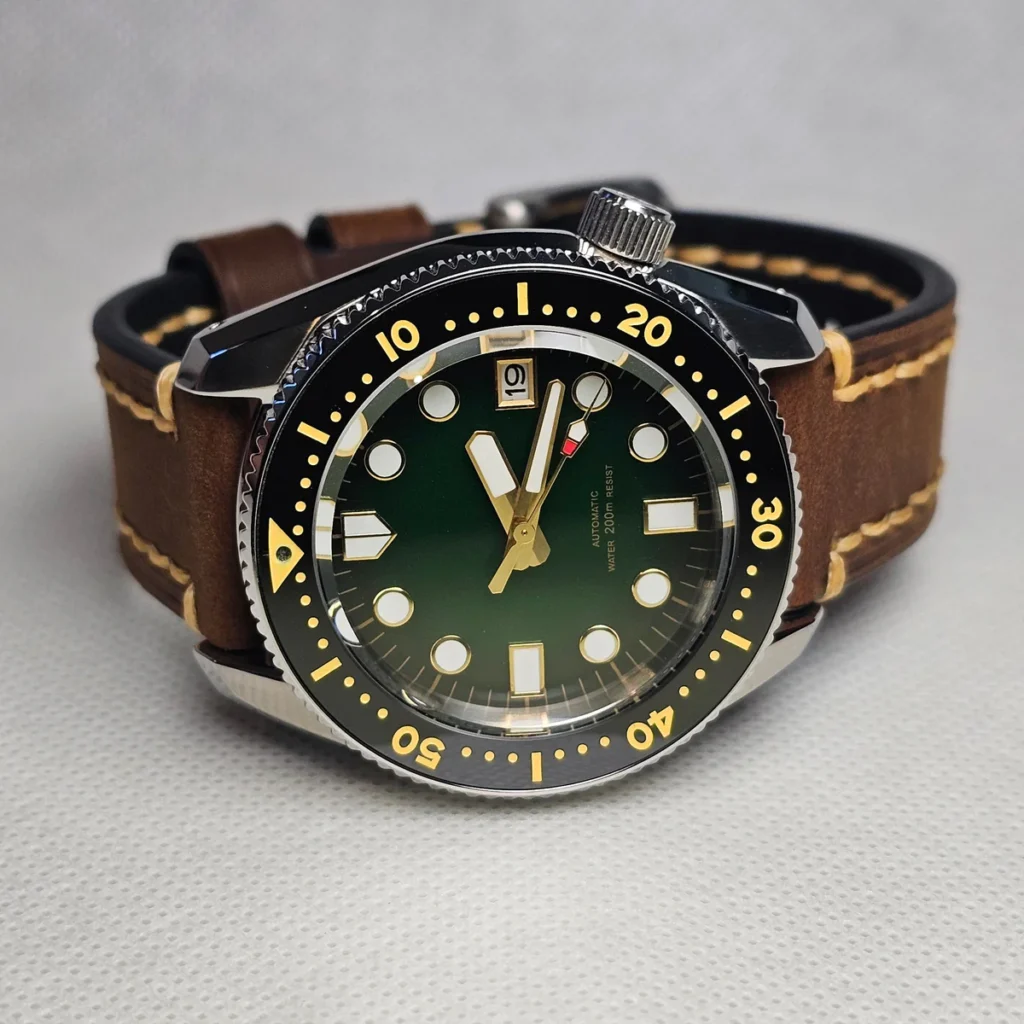
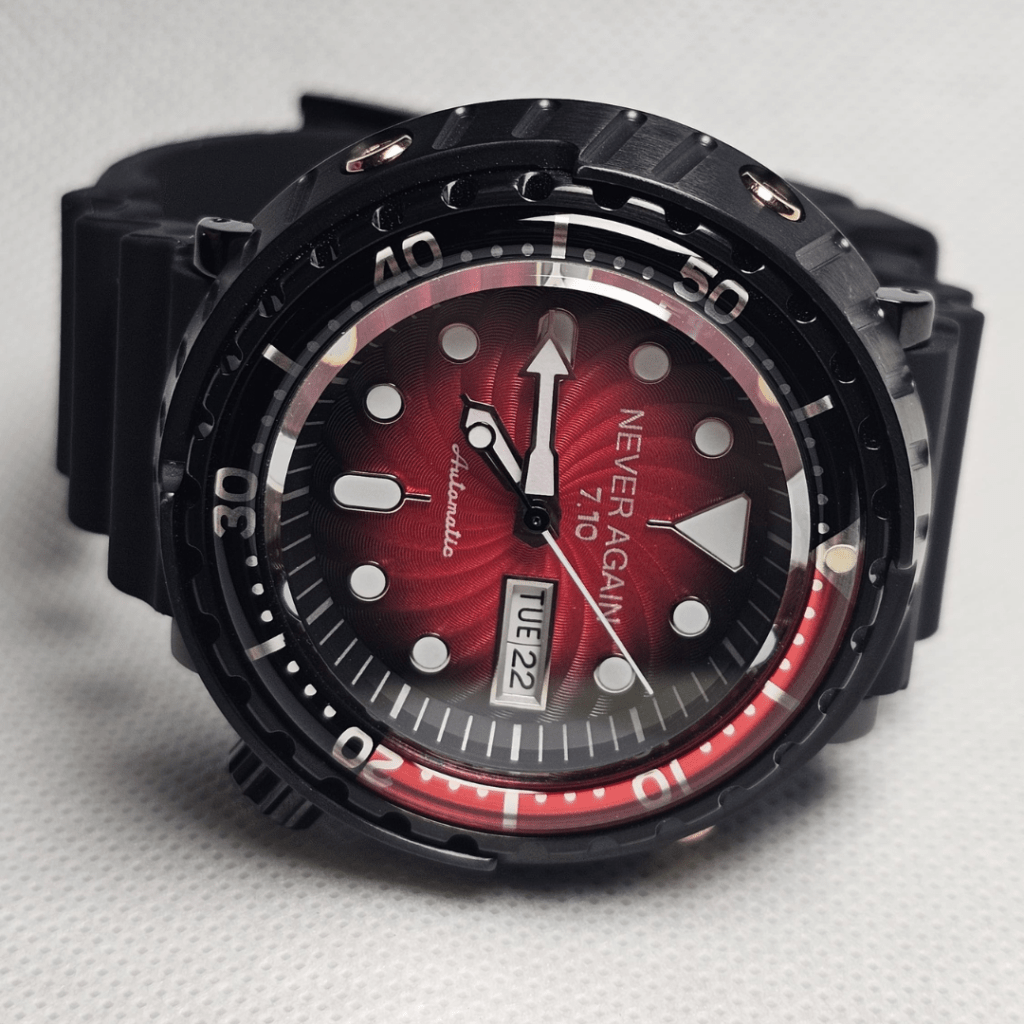
When the process is controlled, the parts come together into a watch that feels intentional. That is the difference between a build that only looks good in a quick photo and a build that feels clean when you hold it, set it, wear it, and inspect it closely.
The same discipline matters across the wider ecosystem, from custom Rexx Timepieces builds to the quieter small-batch work behind Meshberg Watches.
For full build structure, continue here: How to Build a Seiko Mod.
Watch a Real Build, Mistakes Included
The Rexx Timepieces YouTube channel shows real build work, Seiko mods, dial making, engraving, assembly, and workshop process. That matters because mistakes are easier to understand when you see the actual sequence, not only the finished photo.
The video above is from Rexx Timepieces and belongs in this article because it shows process, not just outcome. Real workshop footage helps explain why slow checks matter.
Final Thoughts
Seiko modding mistakes are not something to fear, but they are something to respect. Every builder makes them. The goal is to make fewer careless mistakes, understand why they happen, and build a workflow that gives you more control each time.
Use the right tools. Check compatibility before ordering. Handle dials carefully. Inspect before closing the case. And when something unusual happens, pause before deciding whether it is ruined. Sometimes the build can still become something better than expected.
For more build ideas and directions, read Best Seiko Mods You Can Actually Build.